 0473 644 098 · Mon–Fri 9am–5pm AESTHelp & FAQ


French Champagne – Growers, Houses, And The Struggle Over What Luxury Actually Means

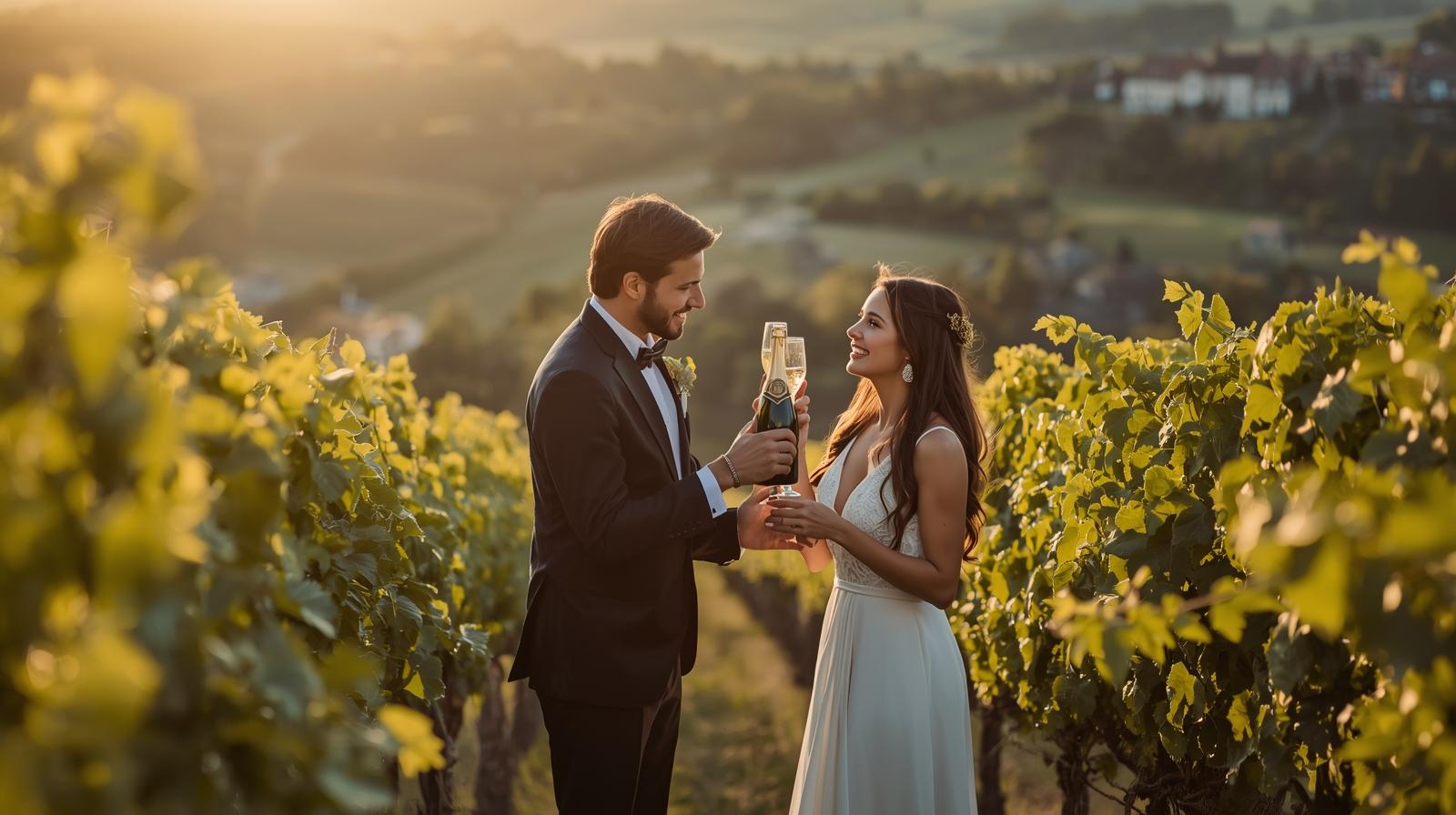
French Champagne finds itself in an identity crisis that nobody predicted and few can articulate clearly. For three centuries, the region defined sparkling wine excellence through a deceptively simple formula. Large houses purchased grapes from thousands of small growers, blended them across multiple vineyards and vintages, and sold the result as consistent luxury. The system worked brilliantly until growers discovered they could bottle their own wine, express individual terroir, and sell it for comparable prices while keeping all the profit. Simultaneously, English producers started making sparkling wine from identical chalk soils in cooler climates, demonstrating that Champagne’s geological advantages weren’t exclusive. The result is a region forced to justify premium prices not through heritage or regulation but through actual, demonstrable quality.
Jancis Robinson, writing for Jancis Robinson Wine Reviews in January 2025, captured the tension perfectly. “The interesting thing isn’t that grower Champagnes are necessarily better. It’s that they represent a completely different proposition. Where houses offer polish and consistency, growers offer discovery and individual expression. Increasingly, educated wine drinkers want discovery.” This shift from consistency to discovery represents more than changing consumer preference. It questions whether the model that built Champagne’s commercial dominance remains relevant in an era when drinkers value authenticity over predictability.
The Chalk Nobody Talks About Until Somebody Questions It
Champagne’s geological foundation receives endless romantic description yet insufficient chemical explanation. Seventy million years ago, ancient oceans covered the Paris Basin. As these seas gradually receded, they deposited marine sediments that hardened into belemnite chalk, the calcified skeletons of microscopic organisms compressed over millennia. This isn’t picturesque backstory. The chalk performs specific functions that transform grapes into wine in ways other soils cannot replicate.
Charles Curtis MW, author of Vintage Champagne and former Head of Wine at Christie’s New York, explained the chalk’s essential function. “The chalk makes the perfect terroir for growing Champagne because it holds enough water without holding too much. So it drains, but it holds enough water so that the vines can be nourished. It gives the vines the nutrients that they need.” The chalk, composed of more than 80 percent calcite, possesses remarkable porosity. It holds between 300 and 400 litres of water per cubic metre, functioning as a natural aquifer.
During summer drought periods when vines across warmer French regions struggle with water stress, Champagne’s chalk gradually releases stored moisture, maintaining consistent hydration. This geological advantage matters because it prevents the irregular ripening that plagues vineyards on less water-retentive soils. The chalk also absorbs heat during daylight hours and releases it gradually through cooler nights. Medieval Benedictine monks observed this phenomenon without understanding the chemistry, identifying slopes in Aÿ and Le Mesnil-sur-Oger as superior vineyard sites centuries before soil science could explain why.
Yet climate change has disrupted how this chalk functions. Warmer average temperatures mean grapes ripen faster and achieve higher potential alcohol levels. Curtis noted that “now in the time of global warming, the regular wine that you make in Champagne is getting better, you know, almost every year, almost noticeably from year to year.” The water table, recharged through millennia under cooler conditions, now depletes faster than precipitation replenishes it. Some producers have begun drilling deeper wells to access reserves that previously rose closer to the surface.
Blending As Philosophy: How Consistency Nearly Became Champagne’s Weakness
For more than a century, Champagne’s commercial success rested on a proposition that seemed unassailable. Consistency. The large houses understood that global distribution required wines capable of tasting identical whether consumed in Melbourne or Manhattan. This demanded blending grapes across multiple vineyards, multiple grape varieties, and frequently multiple vintages. Moët & Chandon sources fruit from up to 80 different vineyard parcels for single cuvées. Veuve Clicquot Ponsardin pioneered the reserve wine system, storing still wine across multiple years to blend into non-vintage expressions that maintained remarkable annual similarity.
This approach built Champagne’s global reputation. A restaurant in Sydney could reliably serve Veuve Clicquot Ponsardin brut knowing it would satisfy patrons seeking celebration, luxury, and dependability. The large houses mastered brand architecture, distribution networks, and consumer psychology. Marketing budgets ran into millions. The system worked commercially with extraordinary efficiency.
Yet blending to achieve consistency created an unavoidable consequence. In solving the reliability challenge, houses had essentially abstracted Champagne from geography. The chalk, the specific hillside exposure, the microclimate distinction between Ambonnay and Cramant, these terroir characteristics necessarily disappeared into homogenous blends valued for dependability rather than individuality. A Champagne enthusiast could spend decades consuming Moët & Chandon or Laurent-Perrier without encountering a bottle that surprised them, challenged them, or revealed something genuinely novel about the region’s diverse terroirs.
By the 1990s, educated wine consumers in major markets began questioning this model. They traveled to wine regions, read specialist publications, developed opinions about producer quality. The monolithic prestige of large-house Champagne gradually eroded among knowledgeable drinkers. They noticed that English sparkling wine, produced with identical traditional method techniques in similar chalk soils, achieved comparable quality for substantially lower prices. They discovered grower Champagnes from producers like Domaine Jacques Selosse or Egly-Ouriet that expressed individual vineyards with clarity and specificity that house blends deliberately avoided.
Anselme Selosse And The Grower Movement That Changed Everything
Anselme Selosse inherited Domaine Jacques Selosse in Avize in 1974, precisely when almost no grower in Champagne bottled their own wine. The economic logic appeared straightforward. Small producers lacked capital for expensive production equipment, cellaring infrastructure, and marketing budgets. They sold grapes to large houses at prices determined by the Échelle des Crus village classification system. This arrangement had structured Champagne economics for generations.
Selosse rejected this model entirely. He began farming organically when conventional viticulture dominated the region. He severely restricted yields, understanding that concentrated grapes produced more complex wines. In the cellar, he employed indigenous yeasts rather than commercial strains, blocked malolactic conversion to preserve acidity, and aged wines in oak barrels. These techniques violated Champagne’s prevailing orthodoxy about how excellent sparkling wine should be produced, yet they were methods Burgundy domaines had successfully employed for decades.
Richard Juhlin, widely considered the world’s foremost Champagne expert and author of 4000 Champagne tasting notes, observed the transformation that Selosse sparked. “When I came and met producers like this, a small grower, having grapes in one of the 17 Grand Cru villages, one of the best, and produced something very clean, very special and very terroir driven, I got this mission. I saw that these growers, look at the price, the bargains you could get from some great growers from Grand Cru and Premier Cru villages.” Juhlin noted that he found phenomena “which were things that were not found before” in his exploration of grower Champagnes compared to the established house system.
The wines Selosse produced were undeniably excellent, expressing Côte des Blancs terroir with precision and complexity that existing Champagne offered no parallel to. He demonstrated something revolutionary within conservative Champagne. Individual terroir expression was possible within the appellation without compromising quality or authenticity. Other growers noticed. Francis Egly at Egly-Ouriet in Ambonnay began producing single-vineyard Champagnes from Pinot Noir-dominated holdings. The Bérêche brothers in Montagne de Reims started bottling biodynamically farmed fruit. Jérôme Prévost of La Closerie focused exclusively on Pinot Meunier, a variety the large houses often dismissed as workmanlike filler for blending.
Gradually, a movement formed not through coordination or manifesto but through individual producers deciding their grapes deserved expression rather than anonymity. The designation Récoltant-Manipulant, or RM on labels, indicated a grower who produced wine exclusively from their own vineyards. This label code, previously meaningless to consumers, suddenly became shorthand for discovery, terroir expression, and authenticity.
Yet as Robinson noted in her 2025 analysis, “RM on the label is not a shortcut to quality.” Among 16,200 grape growers in Champagne, fewer than 4,000 bottle their own wine. Of those, perhaps 500 produce genuinely excellent Champagne. The remainder range from competent to mediocre, sometimes producing wines that are coarse, simple, or lacking the refinement that either elite houses or the finest growers consistently achieve.
The Houses That Adapted Without Apologizing
While grower Champagnes captured specialist attention, several large houses adapted their production philosophies in ways that preserved commercial scale while improving qualitative expression. Charles Curtis MW addressed the false dichotomy directly. “I don’t think there’s any way you could possibly say they’re innately lower in quality than somebody who grows the grapes themselves and makes their own wine. Then they’re limited by their own vineyards as to what is available to them to make champagne with. And now there are some extraordinarily high quality récoltant manipulants of grower Champagnes. And I do drink a lot of grower Champagne. But I’ll tell you the truth of the matter is this.” His point being that producer philosophy matters far more than producer classification.
Louis Roederer, one of the largest houses, progressively increased estate-owned vineyard holdings to over 240 hectares, more than two-thirds of their total needs. This vertical integration allowed control over farming practices, harvest timing, and fruit quality in ways purchasing grapes from independent growers cannot achieve. Krug, despite its prestige positioning, operates with grower-like attention to individual parcels. The house vinifies every parcel separately in small oak barrels, maintaining distinct vineyard identities before blending.
The philosophy at Krug centers on what Olivier Krug, sixth generation family member, articulated as terroir reverence. From the Krug philosophy documents, “One cannot obtain a good wine without using good elements and good ‘terroirs’. It’s possible to obtain seemingly good cuvées through the use of unremarkable or even mediocre elements and wines, but these are exceptions on which we must never rely. Otherwise, there is a risk that our process will fail or our reputation will be ruined.” This statement, originally from founder Joseph Krug’s diary in 1848, demonstrates that terroir focus predated the modern grower movement by over a century.
Jacquesson, technically a Négociant-Manipulant rather than a grower, operates with grower philosophy. The house farms sustainably and organically across its holdings, employs vintage-specific rather than house-consistent blending, and releases its base cuvée with sequential numbering rather than maintaining fixed house style. This acknowledges vintage variation as authentic expression rather than problem requiring correction. These houses demonstrate that size itself isn’t incompatible with quality or terroir expression. What matters is philosophy.
The Dosage Debate: Zero Sugar And What It Actually Reveals
One unexpected development within contemporary Champagne involves dosage, the small amount of sugar solution added after disgorgement to balance acidity and shape final flavor. Traditional brut Champagne contains up to 12 grams of sugar per litre. Extra brut contains between zero and six grams. Brut Nature, also called zero dosage, contains less than three grams with no sugar added during production.
For decades, dosage functioned as house signature. Producers used specific sugar levels to create consistent house style, masking vintage variation and balancing wines from less ripe years. Yet starting in the late 1980s, several producers began releasing zero dosage Champagnes, arguing that sugar obscured rather than enhanced terroir expression. Laurent-Perrier relaunched their Ultra Brut in 1981 after an earlier attempt at “great wine without sugar” in the late nineteenth century. The wine represented a philosophical statement. Champagne could stand without sweetness if the fruit quality justified it.
Eric Asimov, chief wine critic for The New York Times, addressed this trend directly in his December 2013 column explaining extra-brut and zero dosage styles. He noted that among grower-producer Champagnes, “dosages were often markedly lower than in the past, reflecting a confidence that excellent fruit required minimal intervention.” The zero dosage movement revealed uncomfortable truths about Champagne production. If a wine required substantial sugar addition to taste balanced, it suggested the base wine lacked sufficient quality, ripeness, or complexity.
Climate change complicated this equation. Warmer vintages naturally produce grapes with lower acidity and higher sugar levels. Some producers have responded by reducing dosage as ripeness increases naturally. Others maintain traditional dosage levels, producing wines that taste progressively richer and less fresh. The choice reveals producer philosophy. Those focused on terroir expression adjust dosage according to vintage conditions. Those prioritizing house consistency maintain fixed dosage regardless of base wine characteristics.
Recent Vintages: What 2019, 2020, And 2021 Actually Revealed
Recent Champagne vintages demonstrate how climate change has transformed production decisions and separated skilled producers from those relying on consistent conditions. The 2019 vintage proved exceptional. Spring brought challenges including frost, mildew issues, and uneven flowering that reduced yields substantially. Yet summer sunshine and September conditions allowed exceptional ripeness while preserving acidity. Resulting Champagnes displayed concentrated complexity and structure that wine investment specialists immediately recognized as exceptionally age-worthy.
Essi Avellan MW, Finnish Master of Wine and leading Champagne specialist, evaluated the 2002 vintage at twenty years maturity and provided perspective on what exceptional Champagne vintages can achieve. “It takes some 20 years for Champagne’s finest Cuvées to show their true colours, with an array of tertiary characters blooming showing aged richness and density. The very best are still on their way up delivering huge drinking pleasure right now.” Her observation matters because it articulates that Champagne’s greatest expressions require patience, a philosophy increasingly relevant as climate change accelerates ripening and producers must decide whether to pursue immediate approachability or extended aging potential.
The 2020 vintage presented different challenges. Warmer temperatures, higher humidity inviting phytosanitary pressures, and late-season rains providing rehydration meant conditions proved manageable but variable. Some producers extracted exceptional wines through careful vineyard management and selective harvesting. Others produced acceptable results lacking distinction. The vintage clarified which producers possessed skill to adapt to climate-changed conditions and which relied on favorable vintage conditions to produce consistent quality.
The 2021 vintage, affected by devastating spring frost and summer hail, surprisingly produced wines of notable quality from skilled producers. The restricted crop, combined with rigorous selection, generated Champagnes with unusual brightness and tension. This suggested that yield restriction itself, when managed properly, could generate quality even in difficult conditions. What consecutive vintages demonstrated is that Champagne’s future quality rests less on geological inevitability and more on producer competence.
The Australian Perspective: What Tyson Stelzer Found
Tyson Stelzer, Australian wine critic and author of six editions of The Champagne Guide, has documented Australia’s unique relationship with Champagne with particular precision. His research revealed that Australia recorded the largest percentage growth in 2020 among Champagne’s leading markets, overtaking the UK in per capita consumption for the first time. Yet as Stelzer noted, “Compared with Champagne’s other biggest importers, Australia ranks lowest in prestige Champagne and rosé sales, lowest in average price per bottle, lowest in consumption of grower and cooperative Champagnes, and Australia imports the smallest number of Champagne houses, growers and cooperatives.”
Stelzer’s analysis revealed that nearly 97 percent of Champagne sold in Australia comes from négociant houses, compared to less than 73 percent globally. Australia imported just 118 négociant houses in 2020, the smallest number in Champagne’s top ten markets. More strikingly, grower market share in Australia dropped to just 1.7 percent in 2020, compared with 18.7 percent globally, making Australia’s grower shipments just one-eleventh of their global average.
This data matters because it suggests Australian consumers, despite drinking enormous quantities of Champagne, remain largely unexposed to the grower revolution that has transformed Champagne appreciation in Europe and North America. The dominance of large houses and supermarket distribution has essentially frozen Australian Champagne culture at a stage that more mature markets moved beyond years ago. For Australian wine drinkers seeking to understand contemporary Champagne properly, this represents both challenge and opportunity.
Food, Culture, And Why Champagne Deserves Better
Despite philosophical fragmentation and quality debates, Champagne remains rooted in fundamental cultural function. The wine celebrates. It marks moments of significance. This isn’t marketing positioning. It’s genuinely what Champagne does across centuries and continents. Yet Champagne’s versatility at the table often goes severely overlooked.
Eric Asimov has consistently advocated for Champagne as table wine rather than purely celebratory drink. In his October 2014 Wine School column, he encouraged readers “to envision Champagne in a more casual setting, like a pair of worn jeans rather than a formal tuxedo.” The acidity cuts through richness beautifully. Fatty fish preparations, custard-based dishes, butter sauces, all find balance in Champagne’s lift. Brut Nature Champagnes, with minimal added sugar, pair exceptionally well with sophisticated cuisine, from seafood tartares to complex preparations using umami-rich ingredients.
A Blanc de Blancs Champagne complements delicate seafood with precision that heavier wines cannot match. A structured Blanc de Noirs from Montagne de Reims can partner roasted poultry or modest meat preparations with grace and refinement that demonstrates Pinot Noir’s food-friendly character. This functionality, this ability to enhance rather than overpower meals, remains one of Champagne’s distinguishing characteristics. Yet it’s consistently overshadowed by marketing emphasizing luxury, celebration, and special occasions.
The Value Crisis That Nobody Wants To Discuss
Champagne’s greatest contemporary challenge isn’t climate change, English competition, or grower rebellion. It’s value perception. Entry-level Champagne typically costs between 45 and 65 Australian dollars. Comparable quality English sparkling wine costs 40 to 60 dollars. Excellent Prosecco costs 20 to 30 dollars. Quality New World sparkling wines from cool climates cost 30 to 50 dollars.
For celebrations where brand recognition matters, price becomes secondary. Consumers happily spend 60 dollars for Veuve Clicquot Ponsardin expecting consistency and recognizable luxury. Yet for everyday consumption and serious wine drinking, price becomes negotiable. A wine enthusiast building a collection increasingly considers whether a 55 dollar Champagne offers sufficient qualitative advantage over a 40 dollar English sparkling wine or 35 dollar quality Prosecco to justify the premium.
Michel Bettane, one of France’s most influential wine critics and co-founder of the Grand Tasting wine event, addressed the role of critics in shaping value perception. “While he has a role as a judge, his judgement must not be brutal. He also has the role of an educator. But we must not tell people what they should like. We are not gurus.” This perspective matters because it acknowledges that critics guide rather than dictate, suggesting consumers must ultimately develop their own value judgments rather than deferring to authority.
The large houses respond by emphasizing heritage, tradition, and consistency. The growers respond by emphasizing terroir expression and individual philosophy. Both answers contain truth, yet neither fully addresses the value question. Some grower Champagnes, particularly from renowned producers like Egly-Ouriet or Domaine Jacques Selosse, command prices approaching or exceeding large houses. The economic advantage that grower Champagnes initially offered has substantially diminished as critical recognition drove demand higher.
Looking Forward: Champagne Without Apology
The trajectory ahead appears increasingly clear. Champagne will become more diverse, more terroir-focused, and more quality-discriminating. The era of undifferentiated Champagne as monolithic luxury category has ended. Consumers increasingly distinguish between excellent Champagne, adequate Champagne, and industrial Champagne. Marketing that once made brand synonymous with quality has fractured against the reality of variable producer competence.
Climate change will continue forcing adaptation through site selection, farming techniques, and harvest timing. Grower Champagne will probably stabilize at perhaps 10 to 15 percent of regional production, a meaningful minority rather than dominant force. English sparkling wine will improve and expand, claiming market share from Champagne’s lower quality tiers. The legal protection of the Champagne name will endure, yet it will matter progressively less as competition demonstrates that the name guarantees neither quality nor value.
What seems genuinely transformative is that Champagne has finally stopped defending itself defensively and started engaging with the reality of modern wine culture. The finest Champagne today represents genuine qualitative achievement rather than mere luxury positioning. Understanding the difference between a grower’s individual expression and a house’s carefully constructed blend becomes practically meaningful for consumers willing to engage seriously.
The chalk remains, the terroir endures, and the commitment to quality is finally, genuinely, being matched by winemaking that respects it. For Australian wine drinkers willing to look beyond brand recognition and marketing narratives, contemporary Champagne offers discovery that previous generations couldn’t access. The region has stopped apologizing for what it isn’t and started celebrating what it genuinely is. That transformation matters more than any vintage rating or critic score ever could.
 Shiraz
 Cabernet Sauvignon
 Pinot Noir
 Grenache
 Merlot
 Red Wine Blends
 Chardonnay
 Riesling
 Pinot Gris
 Semillon
 Viognier
 Grenache Rosé
 Pinot Noir Rosé
 Shiraz Rosé
 Sangiovese Rosé
 Aglianico Rosé
 Clairette Rose
 Champagne
 Prosecco
 Sparkling Shiraz
 Blanc de Blanc
 Blanc de Noir
 Pet Nat
 Moscato
 Topaque
 Port
Port Sherry (dry & sweet)
 Muscat & Tokay
 Vermouth