 0473 644 098 · Mon–Fri 9am–5pm AESTHelp & FAQ


Pinot Gris vs Pinot Grigio: Same Grape, Completely Different Wine (And Why One Costs Double)

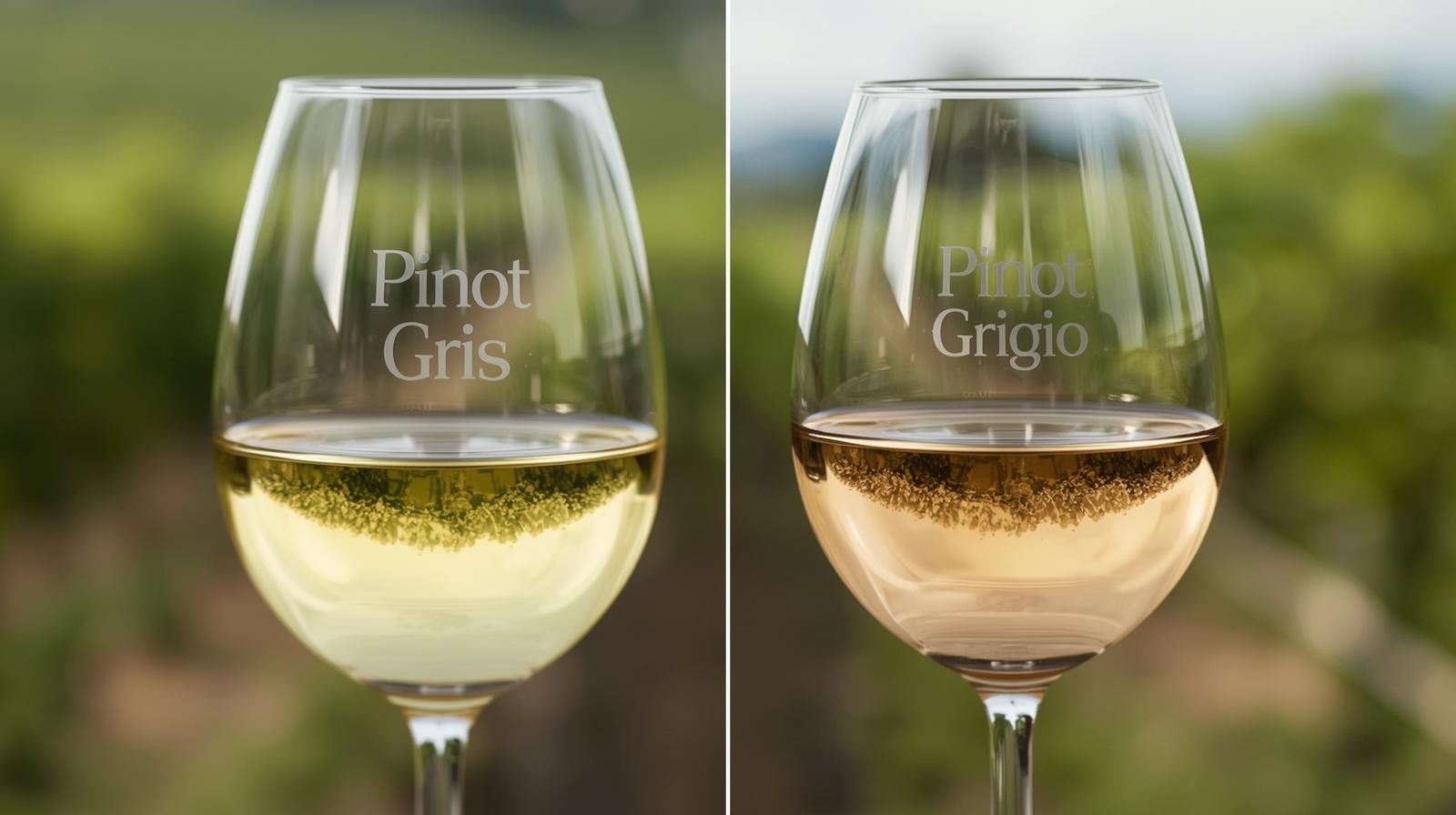
Pinot Gris and Pinot Grigio represent one of wine’s most confusing identity crises. They’re the same grape. Genetically identical. Zero DNA difference. Yet somehow a bottle of Alsatian Pinot Gris costs 45 Australian dollars while Italian Pinot Grigio from the supermarket costs 18, and they taste absolutely nothing alike. One is rich, full-bodied, sometimes aged in oak, with flavors of ripe stone fruit and honey. The other is crisp, light, aggressively neutral, designed to be consumed ice-cold without thinking too hard. This isn’t marketing spin or terroir mystique. It’s deliberate winemaking philosophy producing radically different results from identical genetic material.
Tim Atkin MW, one of Britain’s most respected wine critics, captured the cultural baggage surrounding Pinot Grigio perfectly when researching his article “Searching for the Perfect Pinot Grigio.” He noted that admitting you like Pinot Grigio “feels a bit snobby, almost… grapist.” Yet even people who buy it aren’t enthusiastic. One drinker told him: “I only buy it in a restaurant when everything else is really expensive and the person I am with doesn’t like wine that much.” This brutal honesty reveals Pinot Grigio’s peculiar market position. It’s simultaneously one of the world’s most popular white wines and one of the most dismissed by serious wine drinkers.
The Grape That Mutated And Confused Everyone
Before understanding why Pinot Gris and Pinot Grigio taste so different, you need to understand what this grape actually is. Pinot Gris emerged as a genetic mutation of Pinot Noir sometime during the Middle Ages in Burgundy. The mutation deactivated anthocyanins, the compounds responsible for red grape skin color, but not completely. Unlike Pinot Blanc, where anthocyanins are fully inactive and skins remain light like typical white grapes, Pinot Gris retained partial pigmentation. The result is a grape with grayish-blue, sometimes pinkish-purple skin that looks visually bizarre compared to conventional white grape varieties.
This gray tinge explains the name. Gris means gray in French. Grigio means gray in Italian. Same grape, same description, different language. Yet by the eighteenth century, distinct regional styles had already emerged. In Alsace, producers allowed Pinot Gris to ripen fully, sometimes leaving grapes on the vine well past normal harvest to develop concentrated sugars and complex flavors. In northeastern Italy, particularly Friuli-Venezia Giulia and Alto Adige, producers harvested earlier, prioritizing crisp acidity and fresh fruit character over richness and body.
These weren’t random choices. They reflected climate reality and cultural preference. Alsace, despite being relatively far north, benefits from the rain shadow of the Vosges Mountains, creating surprisingly warm, dry growing conditions that allow extended hang time without rot pressure. Italy’s alpine regions, influenced by cooler temperatures and shorter growing seasons, favored earlier picking to preserve the natural acidity that would otherwise decline as grapes continued ripening.
Alsace: Where Pinot Gris Became Serious Wine
In Alsace, Pinot Gris occupies a position of genuine prestige. The grape is one of four noble varieties permitted in Grand Cru vineyards alongside Riesling, Gewürztraminer, and Muscat. Producers ferment it in neutral oak foudres or stainless steel, aged on lees for texture, sometimes allowing partial malolactic conversion to soften acidity. The resulting wines are full-bodied, often between 13.5 and 14.5 percent alcohol, with flavors of ripe pear, peach, apricot, honey, and distinct smokiness.
Jancis Robinson MW, reviewing a Villa Wolf Pinot Gris from Germany’s Pfalz region (which follows Alsace style), described the wine as having “rich aromas on the nose of ripe apples and pears, a touch of honey, spice and apricot but also an underlying minerality and citrussy streak. Lovely depth of fruit in the mouth giving richness and roundness without too much alcohol.” This captures what Alsatian-style Pinot Gris achieves at its best. It’s serious wine, capable of aging, structured enough to pair with rich food, complex enough to reward contemplation.
Alsace also produces late-harvest styles designated Vendanges Tardives and Sélection de Grains Nobles, where Pinot Gris reaches extraordinary concentration and sweetness while maintaining acid balance. These wines can age for decades, developing tertiary flavors of caramel, nuts, and dried fruit that rival great sweet wines from anywhere. Yet they remain relatively unknown outside specialist circles, overshadowed commercially by Sauternes or Tokaji despite comparable quality.
The best Alsatian Pinot Gris comes from specific Grand Cru sites. Wines from Zind-Humbrecht, Domaine Weinbach, Trimbach, or Albert Mann demonstrate what the grape can achieve when treated with ambition and rigor. These bottles cost between 35 and 80 Australian dollars, positioning Alsatian Pinot Gris in direct competition with quality white Burgundy or premium New World Chardonnay. The wines justify the price through complexity, aging potential, and genuine terroir expression.
Italy: Where Pinot Grigio Became A Commercial Phenomenon
Italian Pinot Grigio occupies an entirely different philosophical space. The style emphasizes lightness, freshness, simplicity, and immediate drinkability. Grapes are harvested early, often at lower sugar levels, fermented cold in stainless steel, bottled young, and shipped quickly to market. The goal is producing neutral, inoffensive white wine that pairs with food without dominating it, refreshes on hot days, and costs little enough that consumers don’t think twice about opening another bottle.
This approach succeeded commercially beyond anyone’s expectations. Pinot Grigio became Italy’s most exported white wine, with production concentrated in the Veneto, Friuli-Venezia Giulia, Trentino, and Alto Adige. The delle Venezie DOC, created in 2017 and covering these northeastern regions, became Europe’s largest wine appellation by volume. Yet volume came at a quality cost. Much Pinot Grigio, particularly from the flat Venetian plain, is over-cropped, under-ripe, and aggressively bland.
Tim Atkin MW addressed the quality problem directly. “There are two reasons for Pinot Grigio’s comparative under-performance in Italy: the first is that the grape is often over-cropped, leading to a dilution of flavour in the finished wine; the second is another case of mistaken identity. Much of what is labelled as ultra-trendy Pinot Grigio in Italy is, in fact, less fashionable Pinot Bianco or even Trebbiano.” This revelation matters because it suggests that some commercial Pinot Grigio isn’t even the grape variety the label claims.
Yet exceptional Italian Pinot Grigio exists. Alto Adige, with its high-altitude vineyards and German-influenced winemaking precision, produces Pinot Grigio of remarkable quality. Producers like Elena Walch, Alois Lageder, and Tiefenbrunner make wines with genuine aromatics, mineral character, and complexity that rival anything from Alsace. Friuli-Venezia Giulia, particularly the Collio and Colli Orientali subzones, produces Pinot Grigio with depth and interest, sometimes employing brief skin contact to create ramato style wines with copper color and phenolic texture.
These serious Italian Pinot Grigios cost between 25 and 50 Australian dollars, positioning them well above supermarket offerings but below Alsatian equivalents. They demonstrate that Italian Pinot Grigio can express terroir and quality when producers prioritize it over volume.
The Australian Confusion: Which Style Are We Actually Making?
Australia occupies an awkward middle ground in the Pinot Gris versus Pinot Grigio debate. Some producers label their wines Pinot Gris, signaling Alsatian-influenced richness. Others use Pinot Grigio, indicating Italian-style crispness. Yet the label doesn’t always match the wine. Some Australian “Pinot Grigio” is riper and richer than Italian examples. Some Australian “Pinot Gris” is lighter and crisper than Alsatian versions. The result is consumer confusion and inconsistent quality.
Cool-climate Australian regions, particularly Tasmania, Mornington Peninsula, and Adelaide Hills, have produced genuinely excellent Pinot Gris. Tasmania’s combination of cool temperatures, extended growing season, and marine influence suits Pinot Gris beautifully. Warren Proft, winemaker at Chrismont in Victoria’s King Valley, explained his approach to the Italian style clearly. “What makes our Pinot Grigio style so distinctive is the decision to harvest the fruit early, to achieve light floral fruit flavours with good natural acidity. The juice is handled oxidatively to naturally remove any colour and unwanted tannins prior to settling and racking, then fermented cool in stainless steel to preserve fruit flavours.”
This technical precision, harvesting early but managing oxidation carefully and fermenting cool, represents contemporary Australian Pinot Grigio at its most thoughtful. Yet many Australian producers simply harvest whenever ripeness seems adequate, ferment in stainless steel, and bottle the result as whichever designation they think will sell better. The lack of stylistic consistency makes it difficult for Australian drinkers to develop clear preferences or understand what differentiates the styles.
Tasmania represents Australia’s best hope for quality Pinot Gris. The attached Holm Oak Vineyards article noted that “a cooler climate suits this grape variety as the natural acidity as well as the aromatics are retained in the resulting wines.” Tasmanian Pinot Gris demonstrates “beautiful lifted pear and jasmine aromatics with a powerful palate and complexity as a result of wild ferment. It has a lovely, crisp natural acidity and a slightly oily texture in the mouth.” This describes Pinot Gris achieving genuine quality through site selection and thoughtful winemaking rather than generic commercial production.
Oregon: The New World Approach To Alsatian Richness
Oregon’s Willamette Valley has embraced Pinot Gris with enthusiasm matching its commitment to Pinot Noir. David Lett of Eyrie Vineyards planted the first Pinot Gris in Oregon in 1966, understanding that the variety’s cool-climate origins suited the valley’s maritime-influenced growing conditions. By the 1990s, Oregon Pinot Gris had established a distinct identity somewhere between Alsatian richness and Italian crispness.
Oregon regulations require wines labeled Pinot Gris to contain 90 percent of the variety, ensuring authenticity absent from some Italian commercial bottlings. The style typically emphasizes ripe pear and apple flavors, moderate body, refreshing acidity, and clean finishes. Some producers age in neutral oak or employ extended lees contact for texture, while others ferment entirely in stainless steel for purity.
Antonio Galloni’s Vinous reviewed numerous Oregon Pinot Gris bottlings, with scores typically ranging between 88 and 92 points for quality examples. One review of Archery Summit Willamette Valley Pinot Gris Vireton 2022 noted: “The 2022 Pinot Gris Vireton opens with crisp orchard fruits and lemon oils offset by a hint of tropical citrus. Pleasantly mineral.” This describes Oregon Pinot Gris at its characteristic best, balancing fruit clarity with mineral undertones and bright acidity.
Oregon Pinot Gris typically costs between 20 and 35 Australian dollars, positioning it as affordable quality wine rather than luxury bottling. Producers like King Estate, A to Z Wineworks, Ponzi, and Adelsheim make consistently excellent Pinot Gris that delivers genuine value. The wines suit American preference for fruit-forward approachability while maintaining enough structure and acidity to pair well with food.
The Food Pairing Reality Nobody Talks About
Despite all the stylistic differences, Pinot Gris and Pinot Grigio share one essential characteristic. They’re phenomenally food-friendly. The acidity, whether razor-sharp in Italian Pinot Grigio or more moderated in Alsatian Pinot Gris, cuts through richness beautifully. The relatively neutral flavor profile doesn’t compete with complex dishes. The moderate alcohol doesn’t overwhelm delicate preparations.
Italian Pinot Grigio pairs brilliantly with seafood, salads, light pasta dishes, and antipasti. The crisp acidity cleanses the palate, the minerality complements briny oysters or clams, and the lightness allows subtle flavors to shine. This isn’t accidental. Italian producers designed Pinot Grigio specifically as table wine for everyday meals, not as contemplative fine wine for special occasions.
Alsatian Pinot Gris handles richer preparations. Roast pork with cream sauce, duck confit, mushroom risotto, aged cheeses, these dishes find perfect balance in full-bodied Pinot Gris. The weight matches the food’s intensity, the acidity provides structure, and the complexity of ripe fruit and honey flavors complements savory depth. Some Alsatian producers even suggest pairing Pinot Gris with spicy Asian cuisine, particularly Thai or Vietnamese dishes where sweetness and acidity balance heat.
The Australian and Oregon middle-ground styles work beautifully with roast chicken, grilled fish with herb butter, creamy pasta dishes, and soft cheeses. They’re versatile in ways that heavily oaked Chardonnay or aggressively mineral Riesling cannot match.
The Price Question That Defines Everything
The price difference between Italian Pinot Grigio and Alsatian Pinot Gris isn’t arbitrary. It reflects genuine differences in production cost, yield management, and aging investment. Italian Pinot Grigio often comes from high-yielding vineyards producing 10 to 12 tons per hectare. The wine ferments for weeks, not months, and ships within months of harvest. Total production time from harvest to retail is perhaps six months.
Alsatian Pinot Gris comes from lower-yielding Grand Cru sites producing 4 to 6 tons per hectare. The wine ferments slowly, ages on lees for months, sometimes sees oak contact, and may rest in bottle before release. Total production time can extend beyond a year. The quality difference justifies price premiums, but only for consumers who value complexity over simple refreshment.
Tim Atkin MW, after blind tasting numerous Pinot Grigios, found wines of genuine quality and value. Reviewing one exceptional example, he wrote: “Wow. Like a concentrated Pinot Grigio…Very mineral, mouthwatering finish, and long too. Would be a good match with roast pork.” His discovery proves that serious Pinot Grigio exists, but it requires seeking producers committed to quality over commercial volume.
The Practical Guide: Which Bottle For Which Moment
Understanding Pinot Gris versus Pinot Grigio ultimately comes down to understanding what you’re buying and what you expect from it. When you encounter a bottle labeled simply “Pinot Grigio” at 18 to 25 dollars, you’re getting commercial wine designed for refreshment. It should taste crisp, clean, and forgettable. If it tastes flat, oxidized, or aggressively neutral, it’s underperforming its mandate. If it tastes pleasant and refreshing, it’s succeeded.
When you encounter “Pinot Gris” at 35 to 55 dollars, you’re buying wine that should offer genuine complexity. Ripe stone fruit, honey, occasionally spice or smoke, texture from lees contact or oak aging, acidity that structures rather than dominates. The wine should reward contemplation, pair thoughtfully with food, and possibly improve in bottle over several years. If it tastes thin, soapy, or one-dimensional, the price represents poor value.
Australian producers increasingly understand this distinction. Serious Tasmanian and cool-climate Victorian Pinot Gris sits comfortably in the 25 to 50 dollar range, offering genuine quality and terroir expression that justifies the investment. Basic Australian “Pinot Grigio” at 12 to 20 dollars occupies the refreshment category, competing with Italian examples and generally delivering similar quality for similar price.
For Australian wine drinkers seeking value, ignore the Italian supermarket Pinot Grigio entirely. Instead, seek quality producers from Alto Adige or Collio, where 30 to 45 dollars delivers genuine wine rather than commodity product. For those interested in exploring Alsatian richness without Alsatian prices, Oregon Pinot Gris offers remarkable value, delivering complexity and structure for 20 to 35 dollars that rivals Alsatian bottles costing nearly double.
Most importantly, recognize that this single grape variety encompasses two fundamentally different wine categories. Italian Pinot Grigio exists to accompany casual meals and hot summer days without requiring thought. Alsatian Pinot Gris exists to demonstrate what cool-climate viticulture can achieve when ambition replaces commerce. Both have merit. The problem emerges only when producers blur the distinction, selling unambitious Pinot Grigio at Pinot Gris prices or mishandling Pinot Gris viticulture until it tastes like expensive mediocrity. For Australian consumers willing to engage seriously, this grape offers genuine diversity, remarkable value at multiple price points, and consistent deliciousness across regional expressions. The trick is simply understanding which expression you’re actually buying and whether the bottle delivers on its promise.
 Aglianico
 Barbaresco
 Barbera
 Beaujolais
 Blaufrankisch
 Bourgogne
 Burgundy
 Cabernet
 Cabernet Franc
 Cabernet Malbec
 Cabernet Merlot
 Cabernet Sauvignon
 Cabernet Sauvignon Merlot
 Cabernet Sauvignon Shiraz
 Carignan
 Chateauneuf du Pape
 Chianti
 Cinsault
 Corvina
 Dolcetto
 Gamay
Gamay Gamay Noir
 Grenache
 Lagrein
 Malbec
 Mataro
 Mencia
 Merlot
 Monastrell
 Montepulciano
 Mourvèdre
 Nebbiolo
 Nero D’Avola
 Pinot
Pinot Pinot Meunier
 Pinot Nero
 Pinot Noir
 Primitivo
 Red Wine Blend
 Rosso
Rosso Rouge
Rouge Sangiovese
 Saperavi
 Shiraz
 Shiraz Cabernet
 Shiraz Malbec
 Shiraz Mataro
 Shiraz Tempranillo
 Shiraz Viognier
 Syrah
Syrah Tempranillo
 Touriga
 Zweigelt
 Albariño
 Arneis
 Blanc
Blanc Botrytis
 Chablis
 Chardonnay
 Chenin Blanc
 Clairette
 Fiano
Fiano Friulano
 Garganega
 Gewurztraminer
 Grenache Blanc
 Grùner Veltliner
 Muscadet
 Pinot Grigio
 Pinot Gris
 Riesling
 Roussanne
 Sauvignon Blanc
 Sauvignon Blanc Semillon
 Savagnin
 Semillon
 Semillon Sauvignon Blanc
 Sweet Semillon
 Verdelho
 Vermentino
 Viognier
 Vouvray
 Grenache Rosé
 Mataro Rosé
 Rosato
 Sangiovese Rosé
 Tempranillo Rosé
 Blanc de Blanc
 Brut
Brut Brut Cuvee
 Champagne
 Methode Traditionelle
 Pet Nat
 Prosecco
 Sparkling Chardonnay
 Sparkling Chardonnay Pinot Noir
 Sparkling Cuvee
 Sparkling Red
 Sparkling Pinot Noir
 Sparkling Riesling
 Sparkling Rosé
 Cuvée Rosé
 Sparkling Pinot Rosé
 Sparkling Shiraz
 Moscato
 Muscat
 Topaque
 Port
Port Tawny Port
 Sherry
 Tawny
Tawny Vermouth
 Gin
Gin