 0473 644 098 · Mon–Fri 9am–5pm AESTHelp & FAQ


Australian Wine in 2030: How Today’s Trends Will Reshape Regions, Producers and the Glass

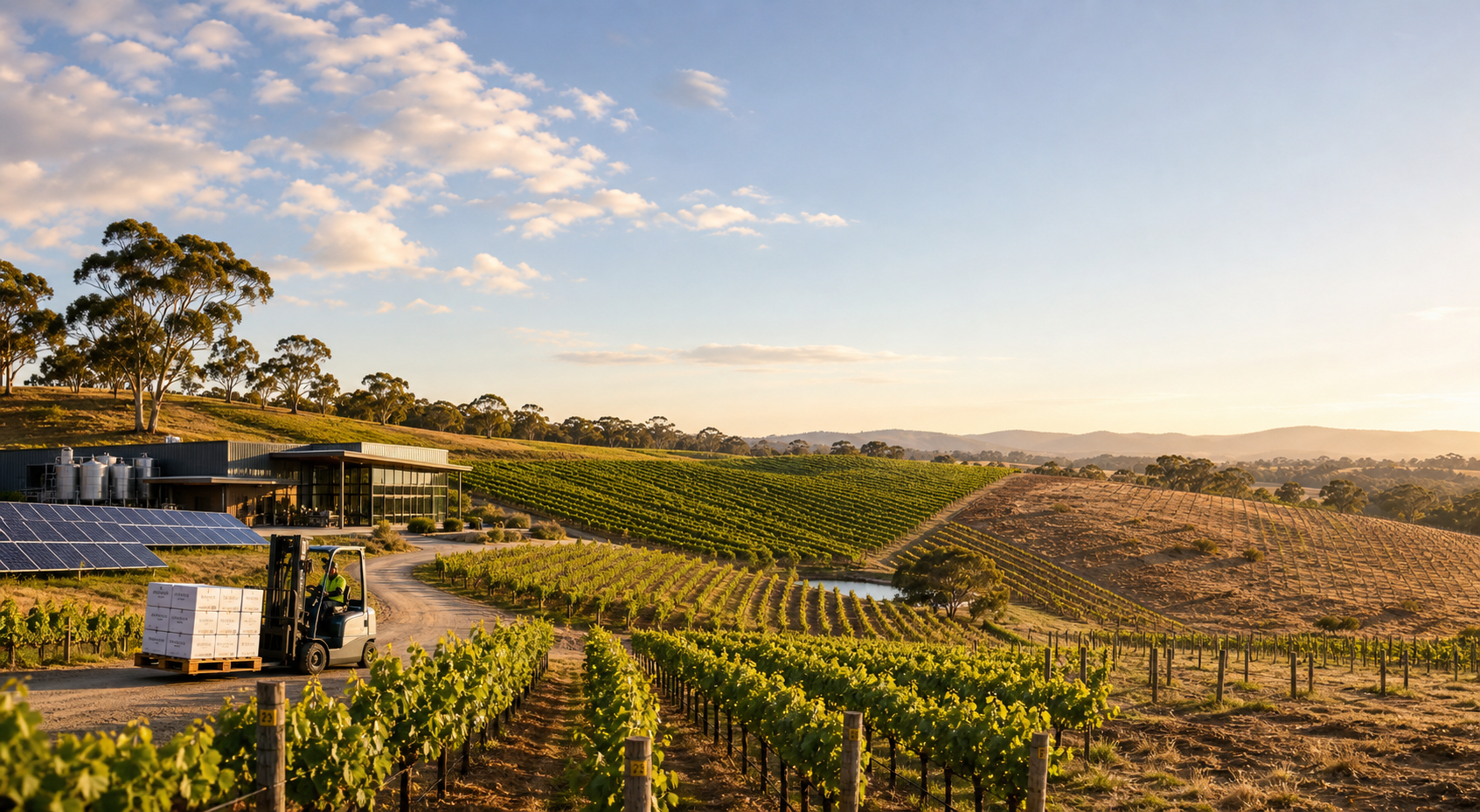
By 2030, the Australian wine industry is likely to be smaller, leaner and more climate‑driven, but also more clearly focused on quality, sustainability and regional character. If current trends continue, there will be fewer growers and brands, more consolidation around powerful portfolios, and a sharper divide between commodity wine and genuinely fine, place‑driven bottles.
Australian wine industry outlook to 2030
Current projections already point to a sector under structural pressure. Industry revenue has been declining at around 3 to 4 percent annually in recent years, with oversupply, softer exports and lower per‑capita alcohol consumption all weighing on profitability. Analysts expect only modest overall growth through to 2030, meaning many producers will need to adapt or exit rather than wait for a broad demand boom to rescue them.
At the same time, bodies like Wine Australia and KPMG argue that the next few years will be defined less by volume and more by “value per litre”, brand strength and strategic focus on profitable segments. In other words, the industry will still be large by global standards, but much less forgiving of undifferentiated bulk wine or vineyards that cannot produce fruit at a viable cost.
Wine oversupply and consolidation in Australia
The hard reality shaping everything between now and 2030 is oversupply. Recent analysis for the Wine Industry Readiness and Resilience project suggested that at least 17 to 20 percent of Australia’s bearing vines are surplus to long‑term requirements, with a significant share of vineyard capacity uneconomic at current prices. Senate evidence from large inland regions has already documented thousands of hectares being pulled out, with grower numbers falling sharply as contracts dry up.
If those trends continue, the next few years will likely bring a major reshaping of who actually grows grapes and makes wine. Expect more mergers and acquisitions as mid‑sized companies seek scale, portfolio breadth and cost efficiencies, a trend already visible in moves like the global Vinarchy merger. Smaller producers who survive will tend to fall into two camps: hyper‑local, direct‑to‑consumer estates with loyal followings, and nimble contract‑driven brands built around clear niches rather than broad, generic ranges.
Climate change and Australian wine regions by 2030
Climate is the other big pressure that will reshape where and how Australian wine is made by 2030. Studies of projected warming show that many wine regions will be 0.2 to 1.1 degrees warmer on average by 2030, with compressed growing seasons, earlier harvests and increased heat stress. Climate atlas work and broader modelling both suggest that all wine regions remain viable, but that classic “cool‑climate” sites will need significant adaptation to preserve current styles.
Draft sector plans talk about a 2030 horizon where the industry has embedded practices that “safeguard viticultural assets and increase resilience,” with environmental, social and governance (ESG) priorities central to business decisions. For Mediterranean‑climate regions like the Barossa Valley and Margaret River, which may become less suitable for certain varieties by mid‑century, the next decade will likely involve more shade cloth, adjusted trellising, earlier picking, variety shifts and perhaps a quiet re‑evaluation of what each region’s flagship style should be.
Featured Wines

Bec Hardy Shiraz 2024 (6 Bottles) McLaren Vale, SA
Add to Cart
$27.00
/ bottle
$162.00 for a case of 6
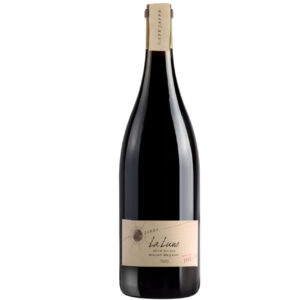
Cape Jaffa Biodynamic La Lune Shiraz 2019 (6 Bottles) Mt Benson, SA
Add to Cart
$108.00
/ bottle
$648.00 for a case of 6
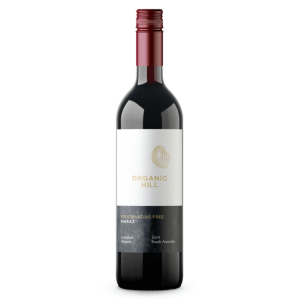
Organic Hill Preservative Free Montepulciano 2024 (12 Bottles) South Australia
Add to Cart
$22.92
/ bottle
$275.00 for a case of 12
Sustainability and emissions reduction in Australian wine
Sustainability will move from marketing claim to operational discipline. Wine Australia’s Emissions Reduction Roadmap has already identified a 42 percent emissions reduction opportunity by 2030 from changes in vineyard practice, winery operations and supply chain logistics. If the sector takes this seriously, drinkers will see more lightweight bottles, renewed interest in alternative packaging and a push toward renewable energy at winery level.
Industry strategy documents imagine a 2030 where Australian wine is “world‑leading” for sustainable practice, not just competitive on price. That will matter for export markets under increasing regulatory and consumer scrutiny, but it will also feed into local tourism, as regions market themselves as destinations where environmental care and wine quality go hand in hand.
Changing Australian wine consumer trends
Domestically, consumption is shifting rather than disappearing. Cost‑of‑living pressures and health consciousness are driving drinkers to buy less, but better, with a tilt toward lighter styles, alternate varieties, rosé and spritzed or lower‑alcohol options. Reports from large retailers and analysts suggest that by 2030, the “centre of gravity” for many Australian drinkers will be fresher reds, chilled reds, textural whites and visually appealing wines that align with social, food‑centric occasions rather than heavy, contemplative drinking.
Wine formats will also diversify. Growth in cans, smaller bottles and convenient multi‑packs is already underway and is expected to continue, especially amongst younger urban consumers. Online sales and direct‑to‑consumer clubs have become standard tools since the early 2020s, and by 2030 the most successful wineries are likely to be those that have genuinely integrated digital channels with cellar‑door experiences and tightly segmented mailing lists.
The future of Australian wine exports by 2030
On the export front, the picture is mixed but not bleak. The removal of Chinese tariffs has seen volumes rebound, but analysts note that export revenue remains well below pre‑tariff highs and overall industry revenue has still fallen in recent years. Trade bulletins talk about “small pockets of growth” amid a broader decline, especially in premium segments and certain destinations, rather than a broad‑based boom.
If those trends persist, 2030 will likely see a more diversified export portfolio, with less reliance on any single country and a stronger focus on higher‑value wines that can withstand currency swings and competition from Europe and South America. Australia’s position as a top‑five global producer should hold, but success will depend on telling a clearer regional and varietal story rather than leaning on generic “Australian Shiraz” at discount prices.
What Australian wine regions might look like in 2030
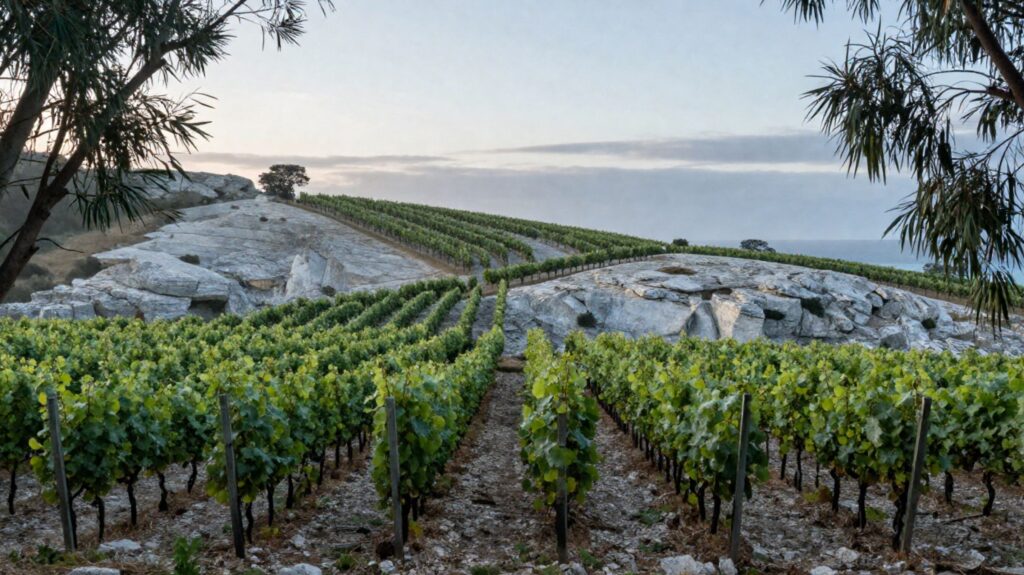
Taken together, these forces point toward a map of Australian wine in 2030 that looks familiar, but with different emphasis. Inland warm regions that historically supplied large volumes of inexpensive red may have fewer vines and a smaller grower base, focused on the most efficient sites and supported by targeted government and industry programs. Coastal and elevated cool‑climate regions, from Tasmania and the Yarra Valley to parts of the Adelaide Hills, will likely command more of the fine‑wine spotlight, particularly for Pinot Noir, Chardonnay, lighter Shiraz and alternative varieties suited to a warming climate.
Regionally distinct storytelling will be more important than ever. Research has long pointed out that Australia’s varietal differentiation between regions is weaker than in some European countries, but sector plans for 2030 emphasise “regional distinctiveness” as a strategic goal. If producers follow through, consumers should see clearer stylistic signatures from places like Great Southern, Canberra District, Heathcote or Orange, rather than a broad sea of look‑alike wines.
Here is something genuinely encouraging in all this. While the next few years will almost certainly be painful for parts of the industry, especially growers in oversupplied regions, the combination of consolidation, climate adaptation, sustainability and consumer sophistication has the potential to leave Australia with a sharper, more confident fine‑wine identity by 2030. For drinkers and collectors who care about terroir and thoughtful winemaking, the wines that emerge from that process could be some of the most interesting Australia has ever produced.








 Shiraz
 Cabernet Sauvignon
 Pinot Noir
 Grenache
 Merlot
 Red Wine Blends
 Chardonnay
 Riesling
 Pinot Gris
 Semillon
 Viognier
 Grenache Rosé
 Pinot Noir Rosé
 Shiraz Rosé
 Sangiovese Rosé
 Aglianico Rosé
 Clairette Rose
 Champagne
 Prosecco
 Sparkling Shiraz
 Blanc de Blanc
 Blanc de Noir
 Pet Nat
 Moscato
 Topaque
 Port
Port Sherry (dry & sweet)
 Muscat & Tokay
 Vermouth