 0473 644 098 · Mon–Fri 9am–5pm AESTHelp & FAQ


Sparkling Shiraz: How Australia Invented the World’s Most Iconic Festive Red Fizz

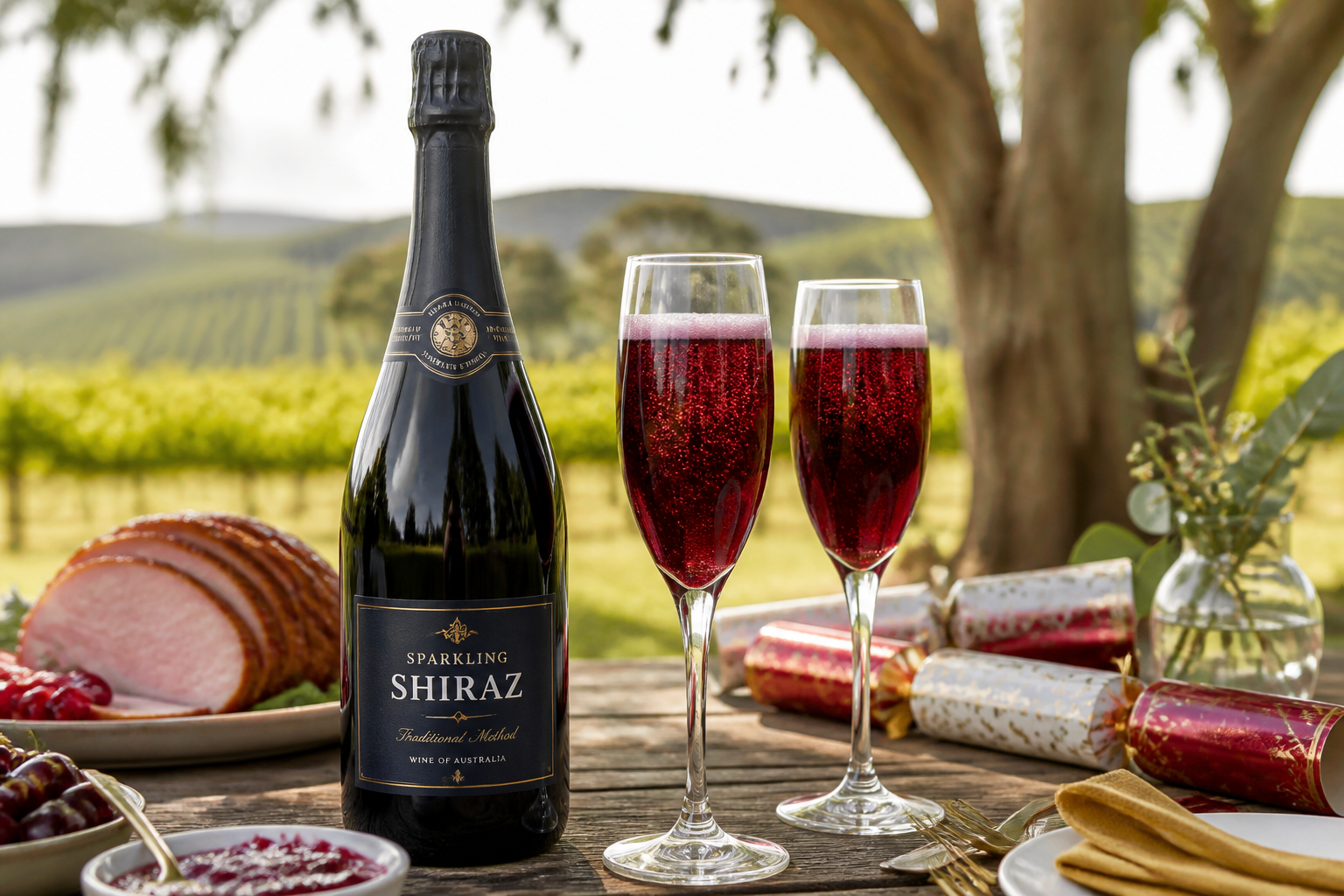
Australia really did invent Sparkling Shiraz, and the story behind it is one of the most uniquely Australian chapters in wine. This is fizz born from improvisation, geography and a streak of irreverent creativity.
Sparkling Shiraz history: how Australia created its own sparkling red
Sparkling Shiraz is an Australian original, a wine style that simply does not exist in any meaningful way outside this country. In the late nineteenth century, local winemakers were desperate to make traditional “Champagne‑style” wines, but they did not yet have plantings of Chardonnay, Pinot Noir or Pinot Meunier, so they turned to the grape they had in abundance: Shiraz.
The first experiments in sparkling red go back to 1881, when Frenchman Auguste D’Argent made a “sparkling Burgundy” for the Victorian Champagne Company in Melbourne. That wine was apparently rosé coloured and the venture did not last, but it planted the idea that Australian still red could be reimagined as sparkling. A little over a decade later, French winemaker Edmond Mazure began applying the traditional Champagne method to Shiraz at the Auldana winery near Adelaide, and from those trials the modern template for Sparkling Shiraz emerged.
In Victoria’s Grampians, Seppelt brought in Champagne maker Charles Pierlot to craft the first traditional‑method sparkling wines in the Great Western cellars. With no classic Champagne varieties planted locally, Pierlot followed the same logic and used the region’s intense Shiraz fruit for his sparkling experiments, effectively locking in Great Western as one of the birthplaces of Sparkling Shiraz.
From “Sparkling Burgundy” to a strictly Australian classic
For most of the twentieth century, Australians did not call this wine Sparkling Shiraz at all; on labels and wine lists it was “Sparkling Burgundy”. The name reflected the old habit of borrowing European regional terms rather than grape names, and for generations it appeared at weddings, church events and Christmas lunches under that title.
Change came in the late twentieth century as France tightened control over its appellations. Burgundy became a protected term for wines from the French region, and Australian producers had to rebrand their fizzy reds. Many simply switched to Sparkling Shiraz, making the grape the hero and, almost by accident, cementing the wine as something proudly and explicitly Australian.
By the 1950s, houses such as Best’s were reviving their Great Western Sparkling Burgundy, and later Sparkling Shiraz, as a natural extension of their Shiraz production, helping to keep the style alive as tastes shifted toward dry table wines. Over time, what began as an improvisation became a Christmas‑table fixture and a signature of Australian wine culture.
 $44.17
/ bottle
$265.00 for a case of 6
$44.17
/ bottle
$265.00 for a case of 6
Hungerford Hill Cardinal Sparkling Shiraz NV
Shipped by
Hungerford Hill
$44.17
/ bottle
$265.00 for a case of 6
 $34.00
/ bottle
$204.00 for a case of 6
$34.00
/ bottle
$204.00 for a case of 6
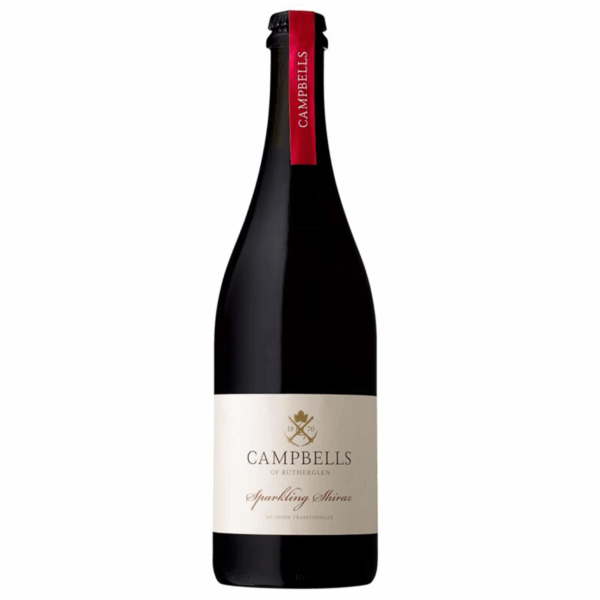
Campbells Sparkling Shiraz NV
Shipped by
Campbells of Rutherglen
$34.00
/ bottle
$204.00 for a case of 6
 $31.67
/ bottle
$190.00 for a case of 6
$31.67
/ bottle
$190.00 for a case of 6
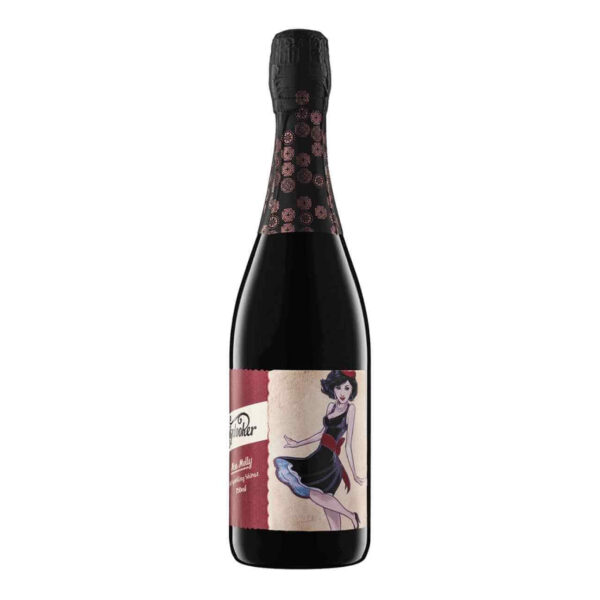
Mollydooker Miss Molly Sparkling Shiraz
Shipped by
Mollydooker Wines
$31.67
/ bottle
$190.00 for a case of 6
 $60.17
/ bottle
$361.00 for a case of 6
$60.17
/ bottle
$361.00 for a case of 6
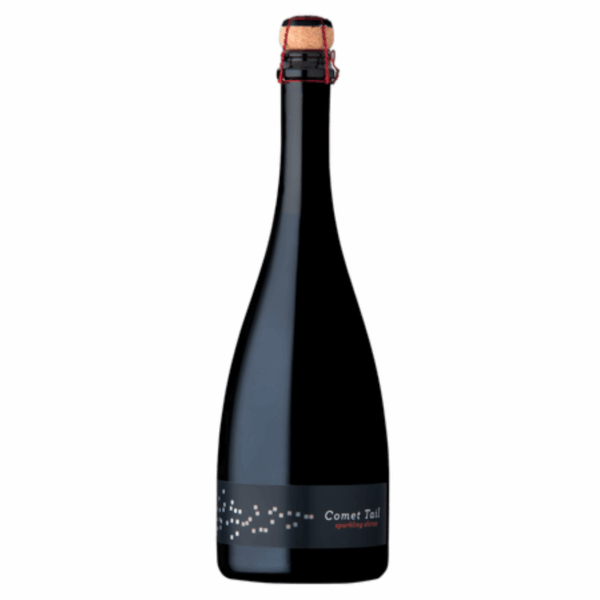
Samuel's Gorge Comet Tail Sparkling Shiraz
Shipped by
Chace Agencies
$60.17
/ bottle
$361.00 for a case of 6
 $27.00
/ bottle
$162.00 for a case of 6
$27.00
/ bottle
$162.00 for a case of 6
PepperGreen Estate Sparkling Shiraz NV
Shipped by
PepperGreen Estate
$27.00
/ bottle
$162.00 for a case of 6
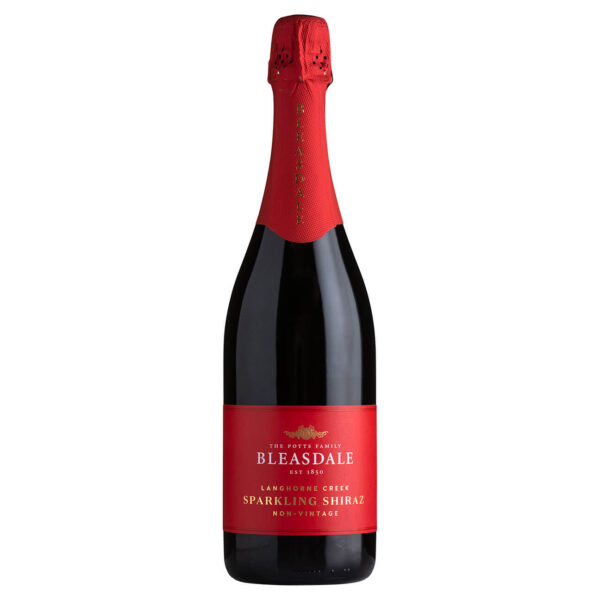 $26.67
/ bottle
$160.00 for a case of 6
$26.67
/ bottle
$160.00 for a case of 6
 265 pts
 How Sparkling Shiraz is made (and why it feels so rich)
Despite the playful idea of a red wine with bubbles, traditional Sparkling Shiraz is a serious, labour‑intensive wine to make. It usually starts life as a still Shiraz fermented and matured much like any other quality red: on skins for colour and tannin, then often aged in older French or American oak for complexity.
To create the bubbles, winemakers follow the classic method used for Champagne. The still base wine is bottled with a small addition of sugar and yeast, which triggers a second fermentation inside the bottle; the trapped carbon dioxide becomes the fine bead of bubbles. After that, bottles rest on their lees, sometimes for years, developing savoury, toasty and chocolatey layers that sit on top of ripe dark fruit. When ready, they are disgorged to remove the sediment, topped up with a small dose of wine and sugar, then finished with cork and wire cage.
The end result is a deep crimson sparkling wine, often smelling of blackberries, plums, liquorice, spice and sometimes a hint of cocoa or Christmas pudding. It feels richer and more mouth‑coating than most sparkling wines, yet the bubbles keep it lifted and surprisingly drinkable, especially when well chilled. For anyone browsing Sparkling Shiraz wine for the first time, that contrast between plush fruit and brisk fizz is usually the big surprise.
Australian regions that do Sparkling Shiraz best
Although Sparkling Shiraz can be found in many corners of the country today, a handful of regions really define the style. Great Western in the Grampians is widely recognised as one of its spiritual homes, with producers such as Seppelt and Best’s building reputations on ageworthy, complex examples. The cool nights and moderate days there help Shiraz keep freshness and spice, which translate beautifully into structured sparkling reds.
South Australia plays an equally important role. Barossa Valley, with its old‑vine Shiraz, gives some of the most opulent, full‑bodied Sparkling Shiraz, while McLaren Vale and parts of Langhorne Creek add darker fruit and plush tannin. Cooler regions such as Adelaide Hills put a different spin on things, bringing brighter red‑fruit notes and a finer mousse to the glass. Western Australia has its share of notable bottles too, with Frankland River and Geographe fruit being used to craft elegant, structured examples following classic traditional‑method techniques.
For drinkers wanting to buy Sparkling Shiraz online today, those regional names are useful signposts: Great Western and the Grampians for historic, savoury structure, Barossa and McLaren Vale for power and richness, Adelaide Hills and WA for freshness and finesse.
Why Sparkling Shiraz became the taste of an Australian Christmas
Culturally, Sparkling Shiraz is most closely associated with Christmas in Australia, and the reasons are quite practical. December is hot, families gather around ham, turkey and roast pork, and the meal needs a red wine with enough flavour to stand up to rich food but enough chill to be refreshing. A bottle of deeply coloured, frothy Shiraz, served straight from the fridge, ticks every box.
Producers from Great Western to Margaret River now lean into this association, releasing special bottlings in time for the festive season and pairing them with recipes featuring glazed ham, duck, turkey and even chocolate desserts. Guides consistently recommend serving Sparkling Shiraz well chilled to maximise refreshment but not so cold that the flavours shut down; taking the bottle out of the fridge a few minutes before pouring is often suggested as the sweet spot. Over time, those habits have turned what began as a quirky style into something many Australians now see as part of the holiday ritual.
Why this uniquely Australian fizz still matters
Sparkling Shiraz may be playful, but it is also one of Australia’s most distinctive contributions to global wine. Commentators regularly describe it as a style that unites the country’s Shiraz strength with the craftsmanship of traditional sparkling production, and modern demand suggests it is more than just a nostalgic curiosity. In recent years, producers across the Grampians, Barossa, McLaren Vale, Adelaide Hills and Western Australia have been refining their versions, dialling in better balance, longer ageing and more precise fruit sources.
For curious drinkers, Sparkling Shiraz offers a gateway into both Australian history and contemporary winemaking. It speaks of French technicians improvising with local grapes, of church cellars and bush weddings, of Christmas lunches and barbecues under gum trees. And for anyone only now discovering the style, there has never been a better moment to start browsing Sparkling Shiraz wine from different regions and seeing just how varied this “only in Australia” classic can be.
 Shiraz
 Cabernet Sauvignon
 Pinot Noir
 Grenache
 Merlot
 Red Wine Blends
 Chardonnay
 Riesling
 Pinot Gris
 Semillon
 Viognier
 Grenache Rosé
 Pinot Noir Rosé
 Shiraz Rosé
 Sangiovese Rosé
 Aglianico Rosé
 Clairette Rose
 Champagne
 Prosecco
 Sparkling Shiraz
 Blanc de Blanc
 Blanc de Noir
 Pet Nat
 Moscato
 Topaque
 Port
Port Sherry (dry & sweet)
 Muscat & Tokay
 Vermouth