 0473 644 098 · Mon–Fri 9am–5pm AESTHelp & FAQ


Best GSM Blends in Australia: Top Regions for Grenache Shiraz Mourvèdre

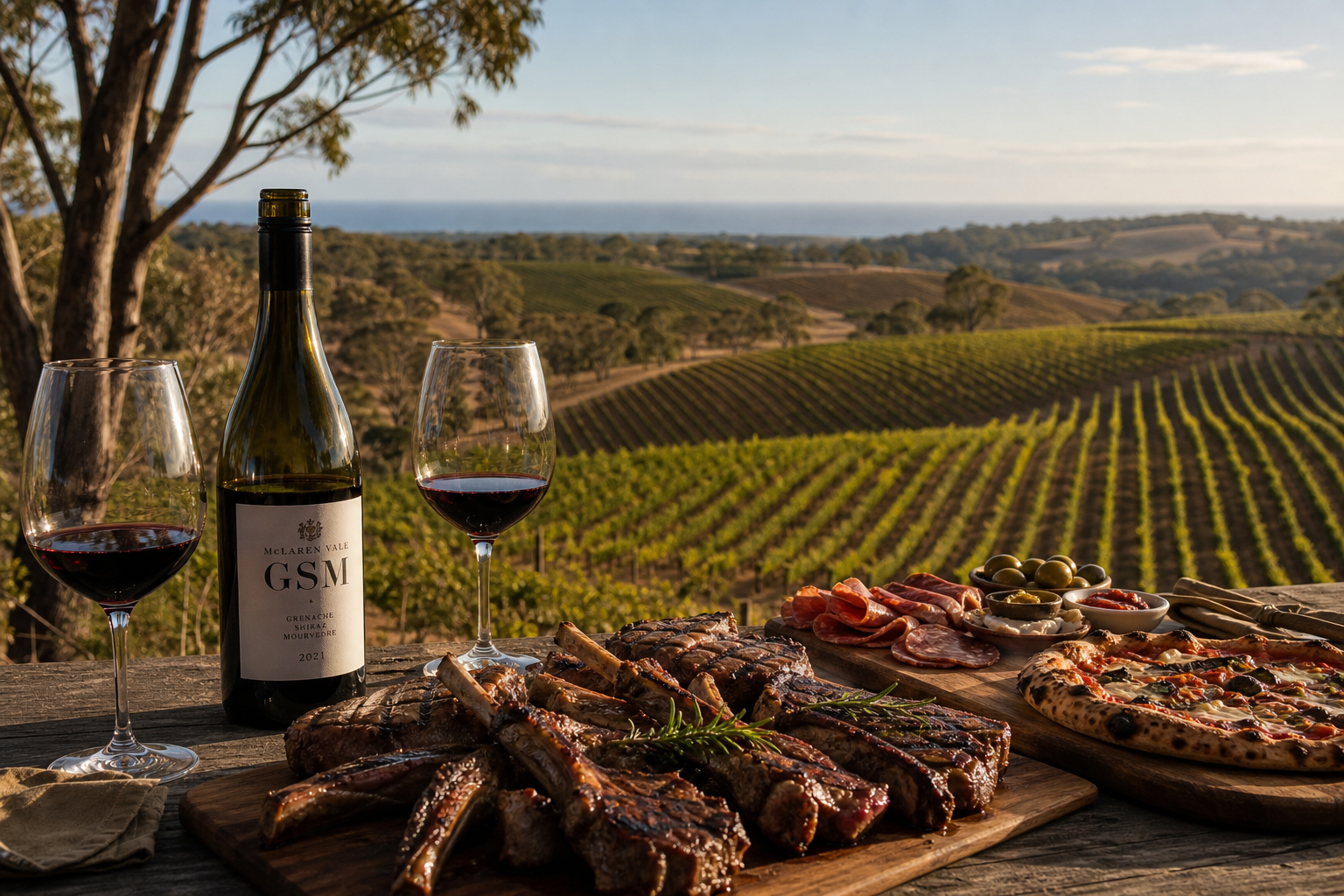
GSM has become one of Australia’s most recognisable red blends, yet many drinkers only have a hazy sense of what those three letters actually mean. At its best, GSM is a showcase for warm‑climate vineyards and old vines, and Australia now produces some of the most distinctive examples in the world.
What a GSM blend really is
GSM stands for Grenache, Shiraz and Mourvèdre (often called Mataro in Australia), three southern Rhône varieties that have found a comfortable second home in warm, dry regions of South Australia. Each grape brings something different to the glass. Grenache tends to contribute red fruit, sweetness of flavour and perfume; Shiraz adds mid‑palate weight, dark fruit and spice; Mourvèdre supplies structure, savouriness and a subtle earthy or gamey edge.
The blend’s traditional spiritual home is the southern Rhône, particularly appellations such as Châteauneuf‑du‑Pape and Côtes du Rhône, where these varieties have been planted together for centuries. Australia, however, gave the style a new name and a modern marketing identity. The now‑familiar “GSM” acronym was coined here in the 1990s and quickly caught on; today it is used globally as shorthand for this Rhône‑inspired trio. In sensory terms, most Australian GSM wines are medium to full‑bodied, plush and generous, with sweet red and dark berries, spice, soft tannins and a smooth, often chocolate‑edged finish.
How GSM became an Australian classic
Although these grapes arrived in Australia in the 19th century, planted extensively in regions such as the Barossa Valley and McLaren Vale, they spent much of the 20th century in the background. Grenache and Mourvèdre were often destined for fortified wines or anonymous bulk blends; Shiraz, particularly from the Barossa, grabbed the spotlight as Australia’s flagship red.
The modern story of GSM as a table wine blend really takes off in the late 1980s and early 1990s. Wine Australia points to Barossa vigneron Charlie Melton as a pivotal figure, blending fruit from old, dry‑grown Grenache and Mataro vines with Shiraz to create a Rhône‑style red that treated these varieties as a quality asset instead of a problem to be solved. That shift in mindset coincided with a broader move towards regional identity and site expression; suddenly, old‑vine Grenache and Mataro planted on warm, low‑vigour sites looked like treasure, not dead weight.
By the 2000s, GSM had become a recognised category in its own right. Today, there are well over a hundred different Australian GSM labels on the market, ranging from bright, mid‑weight, minimal‑oak blends to dense, richly oaked, cellar‑worthy wines. International critics now routinely highlight Australian Grenache‑based blends among the most exciting Rhône‑inspired reds outside France, thanks largely to the country’s wealth of old vines and Mediterranean‑style climates.


 $27.83
/ bottle
$167.00 for a case of 6
$27.83
/ bottle
$167.00 for a case of 6

 $24.83
/ bottle
$149.00 for a case of 6
$24.83
/ bottle
$149.00 for a case of 6

 $21.50
/ bottle
$258.00 for a case of 12
$21.50
/ bottle
$258.00 for a case of 12
 $22.50
/ bottle
$135.00 for a case of 6
$22.50
/ bottle
$135.00 for a case of 6
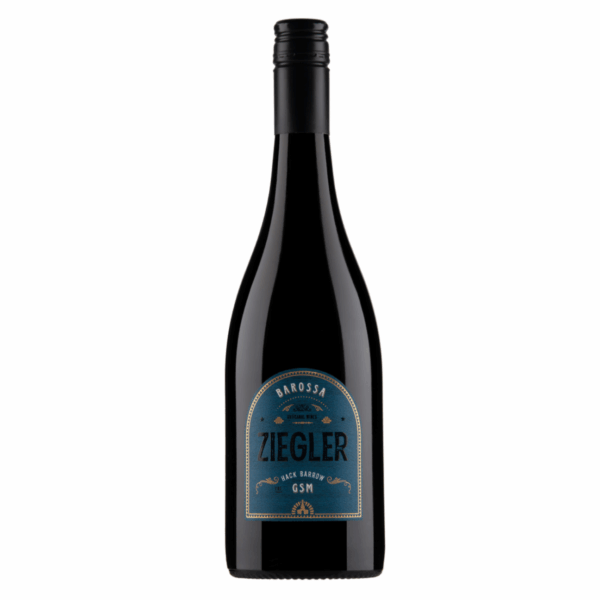
Ziegler Hack Barrow GSM
Shipped by
Oatley Fine Wine Merchants
$22.50
/ bottle
$135.00 for a case of 6
 $28.17
/ bottle
$169.00 for a case of 6
$28.17
/ bottle
$169.00 for a case of 6
Gemtree Cinnabar Grenache Shiraz Mataro
Shipped by
Oatley Fine Wine Merchants
$28.17
/ bottle
$169.00 for a case of 6
 $28.17
/ bottle
$169.00 for a case of 6
$28.17
/ bottle
$169.00 for a case of 6
Geoff Merrill Wines Bush Vine Shiraz Grenache Mourvèdre
Shipped by
Geoff Merrill Wines
$28.17
/ bottle
$169.00 for a case of 6
 167 pts
 Barossa Valley: the original GSM heartland
If one region embodies Australia’s GSM story, it is the Barossa Valley. With its hot summers, low rainfall and deep reserves of old bush‑vine Grenache and Mataro, the Barossa offers exactly the conditions these late‑ripening, drought‑tolerant grapes prefer. Wine Australia notes that the region has more than 500 hectares of Grenache and nearly 6,000 hectares of Shiraz in the Barossa Valley alone, much of it planted decades ago.
Decanter’s panel tastings of Australian GSM consistently show Barossa at the top of the leader board, describing it alongside McLaren Vale as one of the “heartland regions” for the style. Barossa GSMs tend to be full‑bodied and luxuriously textured, with ripe raspberry and cherry from Grenache, blackberry and plum from Shiraz, and earthy, savoury tones from Mataro. Tannins are usually soft and rounded, alcohol levels can be generous, and American or seasoned French oak often adds notes of vanilla, spice and mocha.
For a reader who already loves Barossa Shiraz, GSM is a natural next step. The Grenache component brings a red‑fruited openness and lift, while Mataro adds complexity and a slightly more savoury, food‑friendly finish. It is the sort of blend that works equally well with slow‑cooked lamb and a plate of char‑grilled vegetables, which helps explain its popularity on Australian restaurant lists. When enthusiasts go looking to buy Barossa GSM online, they are usually chasing this combination of richness, old‑vine pedigree and approachable, velvety structure.
McLaren Vale: Mediterranean climate, modern energy
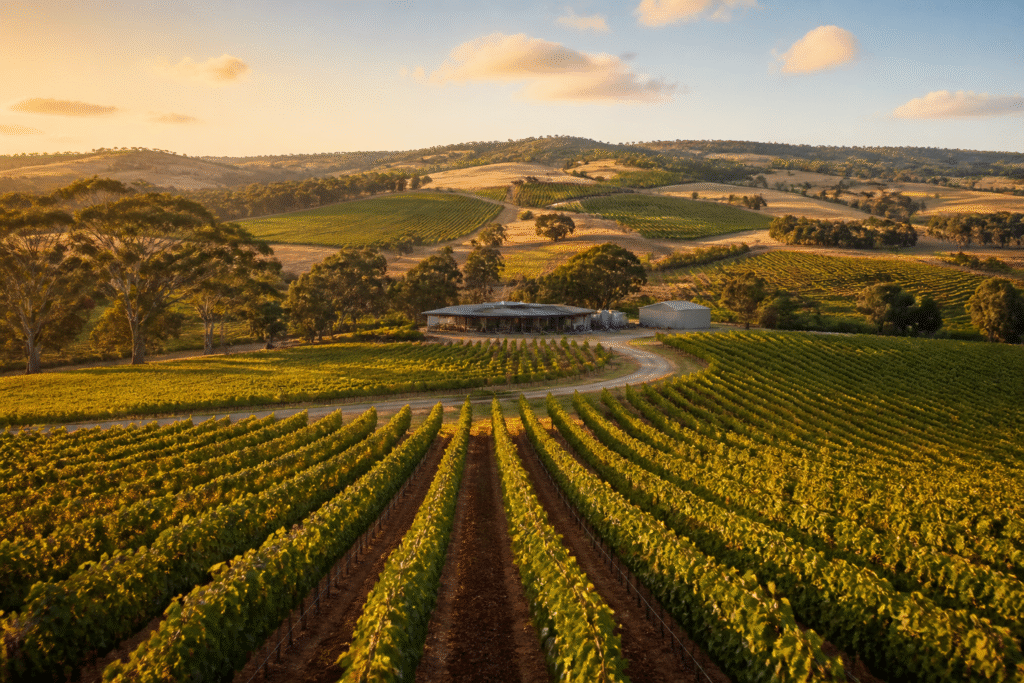
If Barossa is the historic heart of Australian GSM, McLaren Vale is arguably its most dynamic contemporary centre. Sitting on the coast south of Adelaide, McLaren Vale enjoys a Mediterranean climate moderated by cooling sea breezes, with ironstone and ancient sandstone soils that suit Grenache, Shiraz and Mataro extremely well.
Producers in the region have embraced GSM as a signature style. Local commentators and retailers describe McLaren Vale GSMs as combining generosity with a surprising degree of freshness, thanks to that maritime influence and an increasing focus on earlier picking and whole‑bunch fermentation. Where some Barossa examples lean into plushness and power, many McLaren Vale blends chase a slightly more energetic, red‑fruited expression.
Articles profiling McLaren Vale note that when these Rhône varieties met the region’s climate and soils, “the combination flourished”, with GSM wines quickly becoming some of the area’s most beloved reds. Decanter’s panel tasting of Australian GSMs found McLaren Vale and Barossa dominating their top recommendations, praising McLaren Vale in particular for its balance of ripeness and savouriness. For Australian drinkers exploring alternatives to straight Shiraz, the region offers a compelling mix of familiarity and nuance: spice, plum and dark cherry, but wrapped in a more lifted, sometimes slightly herbal frame.
It is no surprise that many retailers now highlight McLaren Vale blends in their Rhône‑style sections; a curated page built around something like best McLaren Vale GSM to buy online makes sense for customers who already associate the region with both quality and drinkability.
Beyond Barossa and McLaren: where else to look
Barossa Valley and McLaren Vale may dominate GSM headlines, but they are not the only Australian regions producing noteworthy blends. Producers in the Riverland, Clare Valley, Heathcote and parts of Western Australia have all experimented with Grenache‑Shiraz‑Mourvèdre combinations, often adapting the formula to local conditions.
Millbrook’s 2022 Regional GSM, sourced from Ferguson Valley in Western Australia’s Geographe region, is a good example of how cooler, higher‑rainfall sites can still deliver compelling blends when handled carefully. Here the style tends to be a little more medium‑bodied, with brighter acidity and slightly lower alcohol, yet it still draws on the same core trio of varieties. In parts of Victoria and the Canberra District, GSM components are sometimes picked earlier and fermented with a higher proportion of whole bunches, resulting in lighter, more aromatic reds that nod toward modern Rhône bottlings rather than the traditional Australian full‑throttle style.
These regional variations underline an important point: GSM is not a single flavour profile but a flexible framework. By adjusting the proportions, ripeness levels, oak regime and extraction, winemakers can move the style from plush and powerful to bright and fragrant, without losing its essential identity as a blend built on Grenache’s charm, Shiraz’s mid‑palate and Mourvèdre’s backbone.
How to approach GSM as a drinker
For many drinkers, GSM offers a useful bridge between familiar Australian Shiraz and more European, Rhône‑inspired reds. The wines usually have enough fruit and weight to feel comforting, but the Grenache and Mourvèdre components introduce extra layers of aroma, spice and savoury complexity. A good starting point is to taste a Barossa example alongside a McLaren Vale bottling from the same vintage. Pay attention to how Barossa’s slightly hotter, inland climate translates into richer, darker fruit and smoother tannins, while McLaren Vale’s coastal breezes often bring more red fruit and lift.
From there, it becomes easier to explore stylistic differences: blends where Grenache leads and Shiraz plays a supporting role tend to feel lighter and more perfumed, whereas Shiraz‑dominant versions can approach classic Barossa fullness with a twist. Wines with a higher proportion of Mourvèdre can show more earthy, spicy and meaty notes, especially with a few years in bottle.
For Australian enthusiasts looking to deepen their understanding of local reds, GSM is an ideal lens. It brings together old vines, warm‑climate viticulture and a distinctly Australian reinterpretation of a French tradition. Whether the bottle on the table comes from Barossa, McLaren Vale or an emerging region, the blend tells a story about how growers and winemakers have learned to harness heat, drought and heritage plantings to craft wines that are both rooted in place and instantly enjoyable in the glass.



 Shiraz
 Cabernet Sauvignon
 Pinot Noir
 Grenache
 Merlot
 Red Wine Blends
 Chardonnay
 Riesling
 Pinot Gris
 Semillon
 Viognier
 Grenache Rosé
 Pinot Noir Rosé
 Shiraz Rosé
 Sangiovese Rosé
 Aglianico Rosé
 Clairette Rose
 Champagne
 Prosecco
 Sparkling Shiraz
 Blanc de Blanc
 Blanc de Noir
 Pet Nat
 Moscato
 Topaque
 Port
Port Sherry (dry & sweet)
 Muscat & Tokay
 Vermouth