 0473 644 098 · Mon–Fri 9am–5pm AESTHelp & FAQ


Pinot Noir – The Grape That Makes Winemakers Weep and Drinkers Obsess

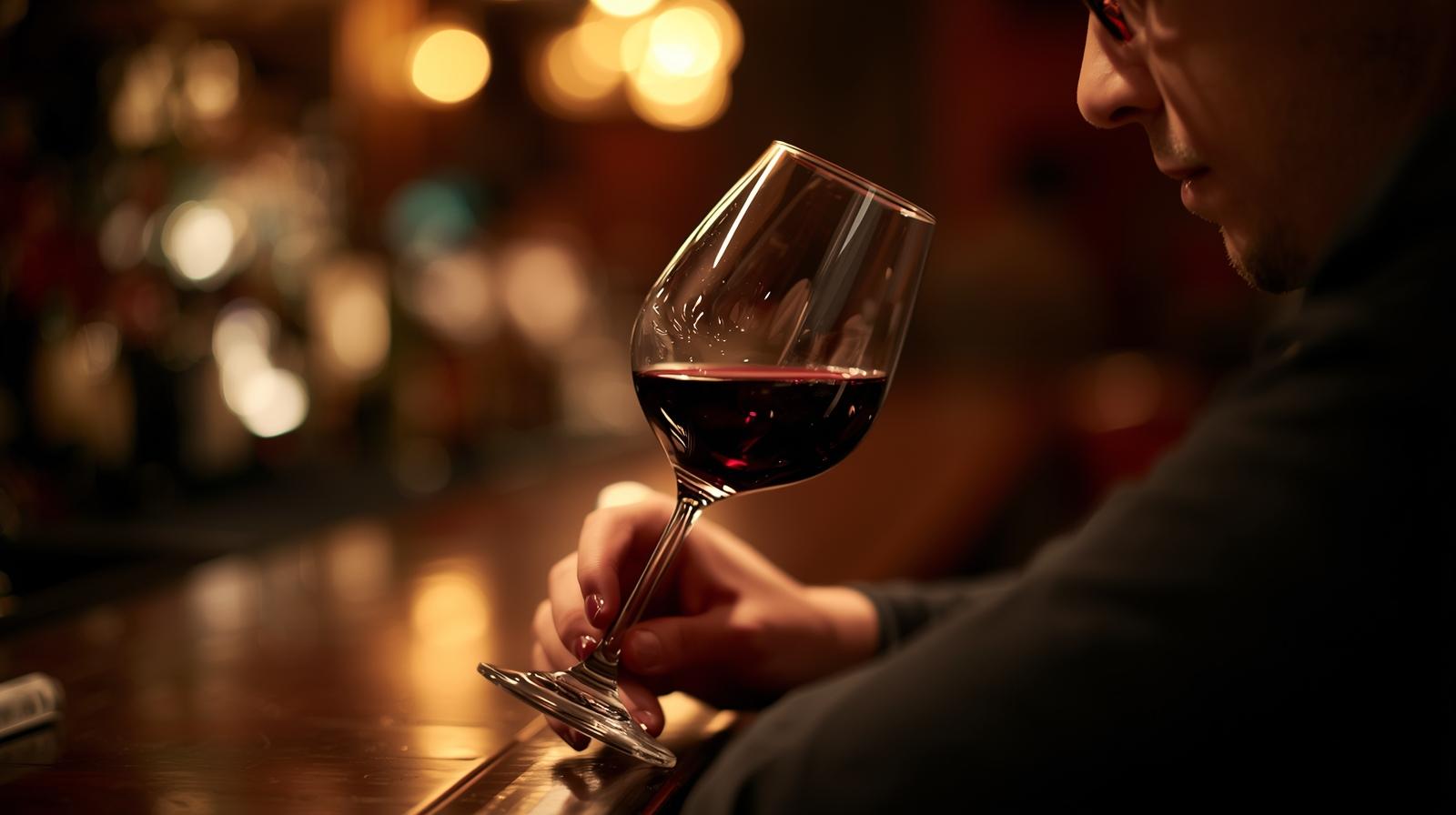
Picture this, a winemaker stands in their vineyard at dawn, frost threatening the precious buds that will determine whether this vintage becomes liquid poetry or expensive vinegar. They’re contemplating a grape that has somehow convinced thousands of growers worldwide to dedicate their lives to its capricious nature. This is Pinot Noir in a nutshell: the most seductive and maddening varietal ever cultivated, a grape that promises everything and delivers heartbreak just as readily as transcendence.
Why does anyone bother? That’s the question wine lovers ask themselves every time they encounter another challenging Pinot Noir or pay a premium price for the privilege of drinking one that actually works. The answer lies somewhere between obsession and masochism, somewhere in that nebulous space where difficulty becomes desire and struggle transforms into meaning.
Jancis Robinson, the legendary critic whose palate has guided serious drinkers for decades through Jancis Robinson Wine Reviews, captured this perfectly with a simple observation: “that minx of a grape.” She could have chosen any descriptor, but she chose seduction and betrayal wrapped into two words. Robinson knows what she’s talking about. She’s tasted thousands of Pinot Noirs across forty years of professional drinking, and she’s watched the same pattern repeat endlessly: growers fall in love with Pinot’s potential, the grape breaks their hearts, and they keep coming back for more.
When a Nunnery Nearly Ruined Everything
Here’s where the story gets weird, and this is why serious wine education matters. Around the year 1,000 AD, Cistercian monks took over the vineyards of Burgundy with what can only be described as religious intensity. These weren’t profit-minded businessmen. These were monks who believed that backbreaking labor in rocky vineyards brought them closer to God. They worked the same vineyard parcels for centuries, accumulated knowledge across generations, and essentially invented the concept of terroir by obsessing over tiny differences between adjacent plots.
This turned out to be exactly what Pinot Noir needed. The monks’ patient, methodical approach gave the grape the environment where its demanding nature could become an asset rather than a liability. When Duke Philippe the Bold banned the supposedly “vile and noxious” Gamay grape from Burgundy’s best sites in 1395, Pinot Noir suddenly owned the territory. Those monks had already spent four centuries figuring out how to grow it properly.
The legend that Pope Urban V refused to return to Rome because he couldn’t bear leaving Burgundy’s Pinot Noir tells you everything about medieval perception. Whether historically accurate or not, the story reveals something crucial: by medieval times, Pinot Noir had already transcended mere wine and become something approaching spiritual significance.
Why Pinot Noir Is Actually Objectively Difficult
This isn’t snobbishness or marketing hyperbole. Pinot Noir is legitimately harder to grow than most other serious varieties, and the reasons are wonderfully specific.
First, the skins are thin. Genuinely thin. This creates a cascade of problems: diseases penetrate more easily, color development becomes inconsistent, and when spring frosts hit (and they always do), Pinot suffers disproportionately compared to thicker-skinned grapes. Early budbreak sounds romantic until you realize it means the tender shoots emerge exactly when late-season freezes arrive to destroy them.
The fruit demands a Goldilocks climate. Not too hot, not too cold, positioned in a narrow window where ripeness and freshness somehow coexist. Mess this up slightly, and you get either thin, green, mean wines or overripe fruit that tastes generic and flat. This is why entire continents can’t grow serious Pinot Noir. The grape simply refuses to cooperate outside very specific latitudes and conditions.
André Tchelistcheff, the legendary Napa Valley winemaker who essentially invented modern California viticulture, summed it up with the kind of dark humor only someone who’s suffered through decades of Pinot could muster: “God made Cabernet Sauvignon, whereas the Devil made Pinot Noir.” He wasn’t exaggerating. Tchelistcheff spent his career making world-class wines, and Pinot Noir was his particular torment.
The thin skins create another paradox: low tannin content combined with the need for structure. A winemaker must extract color and flavor from something fundamentally delicate without heavy-handedness. This is technical precision at its most demanding. Add in the fact that Pinot mutates constantly, producing numerous clones that each respond uniquely to different terroirs, and you understand why growers lose sleep over these vines.
The Australian Rebellion: When a Continent Said “We’ll Give It a Go”
For roughly 150 years after European colonization, Australia largely ignored Pinot Noir. When James Halliday founded Coldstream Hills in the Yarra Valley in 1985, most of the Australian wine industry thought he’d lost his mind. He was planting a notoriously difficult European grape in a region most people had dismissed as marginal at best.
What nobody expected was that he’d be proven staggeringly correct.
The Yarra Valley turned out to possess exactly what Pinot Noir had been waiting for: volcanic soils mixed with sedimentary substrates, alluvial influences from the river itself, microclimates that shifted dramatically across short distances, mountains, forests, and maritime exposure. It was geological complexity that could only be described as showing off. Suddenly, Pinot Noir wasn’t an experiment. It was destiny.
Coldstream Hills’ 2023 Pinot Noir demonstrates what three decades of focused work actually produces: gorgeous aromatics redolent of picked red cherries and wild strawberry, balanced perfectly with a palate that’s simultaneously vibrant and energetic while maintaining such equilibrium that the wine drinks beautifully now yet promises continued improvement through 2031. This is Pinot Noir that achieves structure and transparency simultaneously, which is the technical equivalent of solving an equation most winemakers consider impossible.
But Australia didn’t stop there. The Mornington Peninsula, positioned on Victoria’s southern coast with water on three sides, created maritime conditions that slow ripening to dangerous degrees while maintaining acidity that most warm-climate winemakers associate with disaster. Here, Pinot Noir somehow transforms that limitation into elegance. Delicate perfumes of red fruit and violets emerge across the palate with an energy that makes you understand why some wines transcend mere beverages and become experiences.
Then Tasmania arrived. The 42nd parallel south. Australia’s coldest wine region by a significant margin. The Coal River Valley. The Huon Valley. These places shouldn’t be able to produce anything but green, underripe wines. Yet Tasmania produces Pinot Noir with a distinctive intensity that seems to capture maritime influence and cool-climate precision in ways that genuinely rival Burgundy’s benchmark standards.
 $57.00
/ bottle
$342.00 for a case of 6
$57.00
/ bottle
$342.00 for a case of 6
 $22.33
/ bottle
$268.00 for a case of 12
$22.33
/ bottle
$268.00 for a case of 12
 $55.33
/ bottle
$332.00 for a case of 6
$55.33
/ bottle
$332.00 for a case of 6
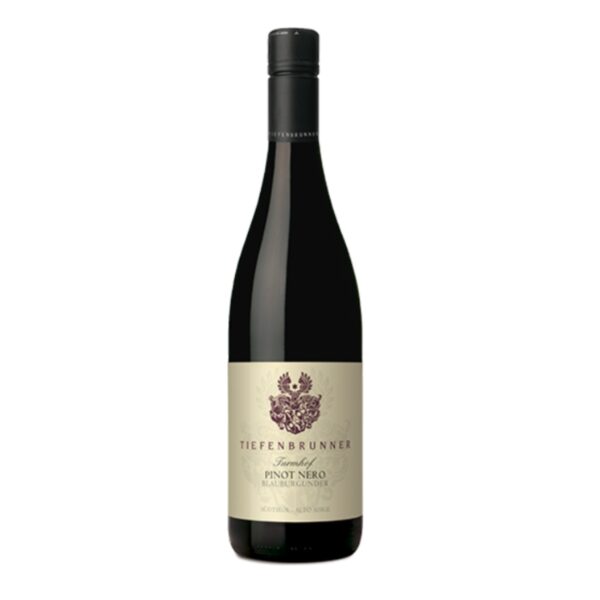
Tiefenbrunner Turmhof Pinot Nero /23
Shipped by
Wines Australia
$55.33
/ bottle
$332.00 for a case of 6
 $36.00
/ bottle
$432.00 for a case of 12
$36.00
/ bottle
$432.00 for a case of 12
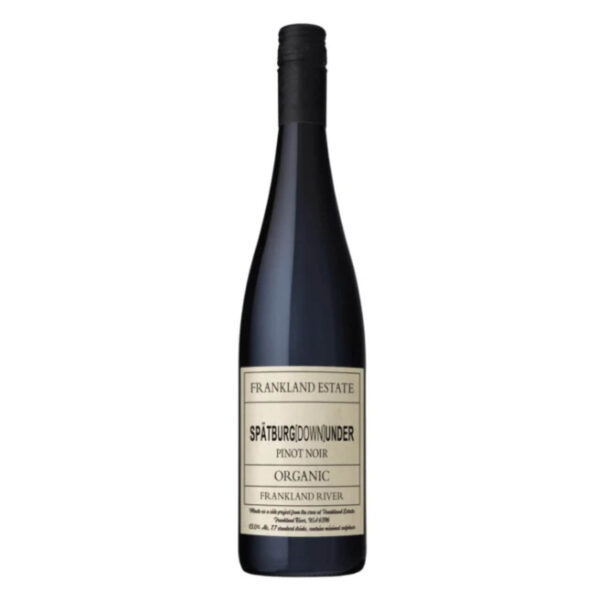
Frankland Estate Spatburg Down Under Pinot
Shipped by
A Good Bunch
$36.00
/ bottle
$432.00 for a case of 12
 $39.50
/ bottle
$474.00 for a case of 12
$39.50
/ bottle
$474.00 for a case of 12
 $44.00
/ bottle
$264.00 for a case of 6
$44.00
/ bottle
$264.00 for a case of 6
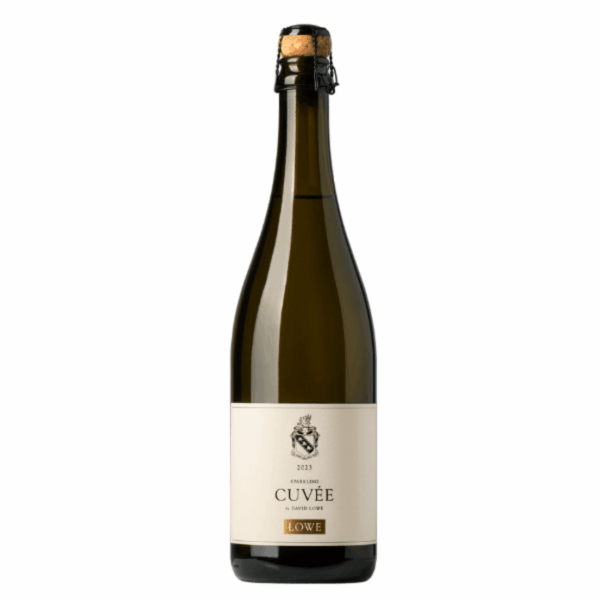
Lowe Wines Sparkling Pinot Cuvee
Shipped by
Lowe Family Wine Co
$44.00
/ bottle
$264.00 for a case of 6

 $90.00
/ bottle
$540.00 for a case of 6
$90.00
/ bottle
$540.00 for a case of 6
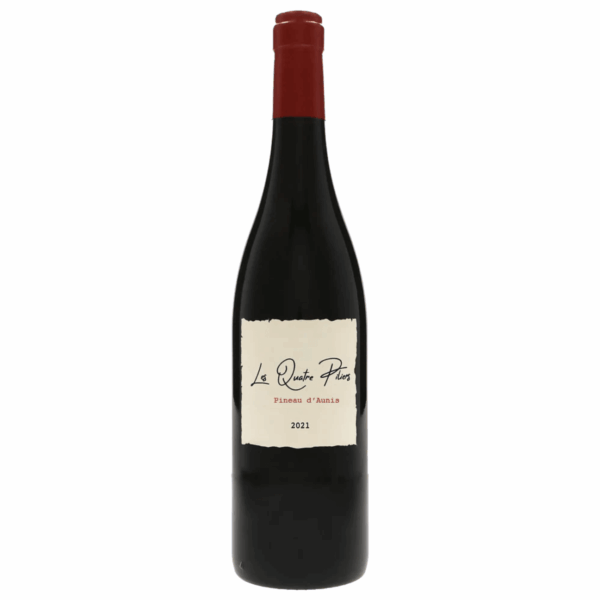
Les Quatre Piliers Touraine Première Cuvée Pineau d’Aunis
Shipped by
Fine Wine Cellars
$90.00
/ bottle
$540.00 for a case of 6
 $32.17
/ bottle
$193.00 for a case of 6
$32.17
/ bottle
$193.00 for a case of 6
 $35.67
/ bottle
$428.00 for a case of 12
$35.67
/ bottle
$428.00 for a case of 12
 342 pts
 When Experts Agree on Something Genuinely Meaningful
Allen Meadows, the Burgundy specialist who founded Burghound and has spent more than thirty years studying Pinot Noir across the world’s greatest vineyards, identifies something he calls the “power without weight” that distinguishes truly fine Pinot. This concept matters more than technical jargon suggests. It’s concentrated flavor delivered with ethereal lightness, complexity achieved through delicacy rather than force. It’s what separates Pinot Noir’s philosophical approach to winemaking from virtually every other serious red wine category.
Jane Eyre works as both a micro-negociant in Burgundy and an Australian winemaker, meaning she exists in both worlds. Her approach to Mornington Peninsula Pinot Noir uses whole-bunch fermentation in open-topped wooden vessels, aging in used French oak for ten months. The resulting wines from her “Thousand Candles” vineyard project achieve fragrance and delicacy over artifact and ripeness, producing wines defined by beautiful perfumes of red fruit and violets. This is Burgundian philosophy translated into Australian terroir, not imitation but understanding.
Heirloom in the Adelaide Hills represents yet another philosophical approach. Founder Elena Brooks uses whole-bunch fermentation to create what she describes as essential winemaking: “Whole bunch complexes the fruit both on the nose and the palate and it adds to the complexity of tannins as well.” The Adelaide Hills’ geological complexity creates Pinot Noir that’s naturally taut and racy, rich with ripe berry yet crystalline in acidity. Jancis Robinson of Jancis Robinson Wine Reviews has noted that Heirloom delivers significantly better-value Pinot Noir than virtually any other global producer, wines that deliver the full potential of this capricious grape with pinpoint precision and complexity normally associated with bottles many times more expensive.
Anne Krebiehl, Master of Wine and author of the International Wine & Food Society’s monograph on Pinot Noir, articulates what genuinely drives this obsession: “In short, it captivates us, and its best examples transcend mere taste and flavor and let us glimpse something almost divine.” This isn’t marketing language. This is an expert acknowledging that Pinot Noir engenders a kind of obsessiveness in both producers and drinkers that transcends normal wine appreciation. It’s more spiritual than commercial.
The Transparency That Changes Everything
What separates Pinot Noir fundamentally from other serious wine grapes is transparency. A great Cabernet Sauvignon expresses terroir while remaining recognizably Cabernet. Great Pinot Noir genuinely vanishes into its origins, becoming pure expression of limestone or volcanic soils, maritime or continental influence, warm vintages or challenging years. This transparency means that everything gets revealed. Heavy-handedness becomes obvious. Poor site selection becomes screaming obvious. Mediocre technique becomes transparent.
This is why Pinot Noir demands excellence from everyone in the production chain. The viticulturist must make perfect clone and site selections. The grower must manage disease, frost, and water stress with precision that allows absolutely no shortcuts. The winemaker must extract sufficient flavor without overextracting, balance freshness against structure, and understand that any interference will be immediately apparent in the glass.
It’s a high-wire act. Technically demanding, requiring constant courage, occasionally falling flat on its face, but when it works, producing moments of oenological beauty that no other varietal approaches. Australia’s Pinot Noir story, barely four decades into genuine seriousness, demonstrates that the grape has finally found regions where capriciousness becomes not a bug but a feature. The cool-climate territories of Victoria, Tasmania, and South Australia have proven that Pinot’s demand for precision actually produces wines of greater complexity and fascination than more cooperative varieties ever achieve.
This is why serious wine enthusiasts keep coming back to Pinot Noir. It rewards obsession with transcendence. It breaks hearts and rebuilds them. It’s difficult because it’s worth being difficult. And somewhere in some vineyard right now, a winemaker is standing in morning frost, wondering if this year is finally the year when Pinot Noir stops being the Devil’s grape and becomes something approaching divine. That’s the real hook: the chance that next time, everything aligns perfectly, and a bottle emerges that makes all those sleepless nights, all that anxiety, all that obsession suddenly make absolute sense.
 Shiraz
 Cabernet Sauvignon
 Pinot Noir
 Grenache
 Merlot
 Red Wine Blends
 Chardonnay
 Riesling
 Pinot Gris
 Semillon
 Viognier
 Grenache Rosé
 Pinot Noir Rosé
 Shiraz Rosé
 Sangiovese Rosé
 Aglianico Rosé
 Clairette Rose
 Champagne
 Prosecco
 Sparkling Shiraz
 Blanc de Blanc
 Blanc de Noir
 Pet Nat
 Moscato
 Topaque
 Port
Port Sherry (dry & sweet)
 Muscat & Tokay
 Vermouth