 0473 644 098 · Mon–Fri 9am–5pm AESTHelp & FAQ


Prosecco vs Champagne: Taste, Sweetness & When To Choose Each For Your Next Celebration

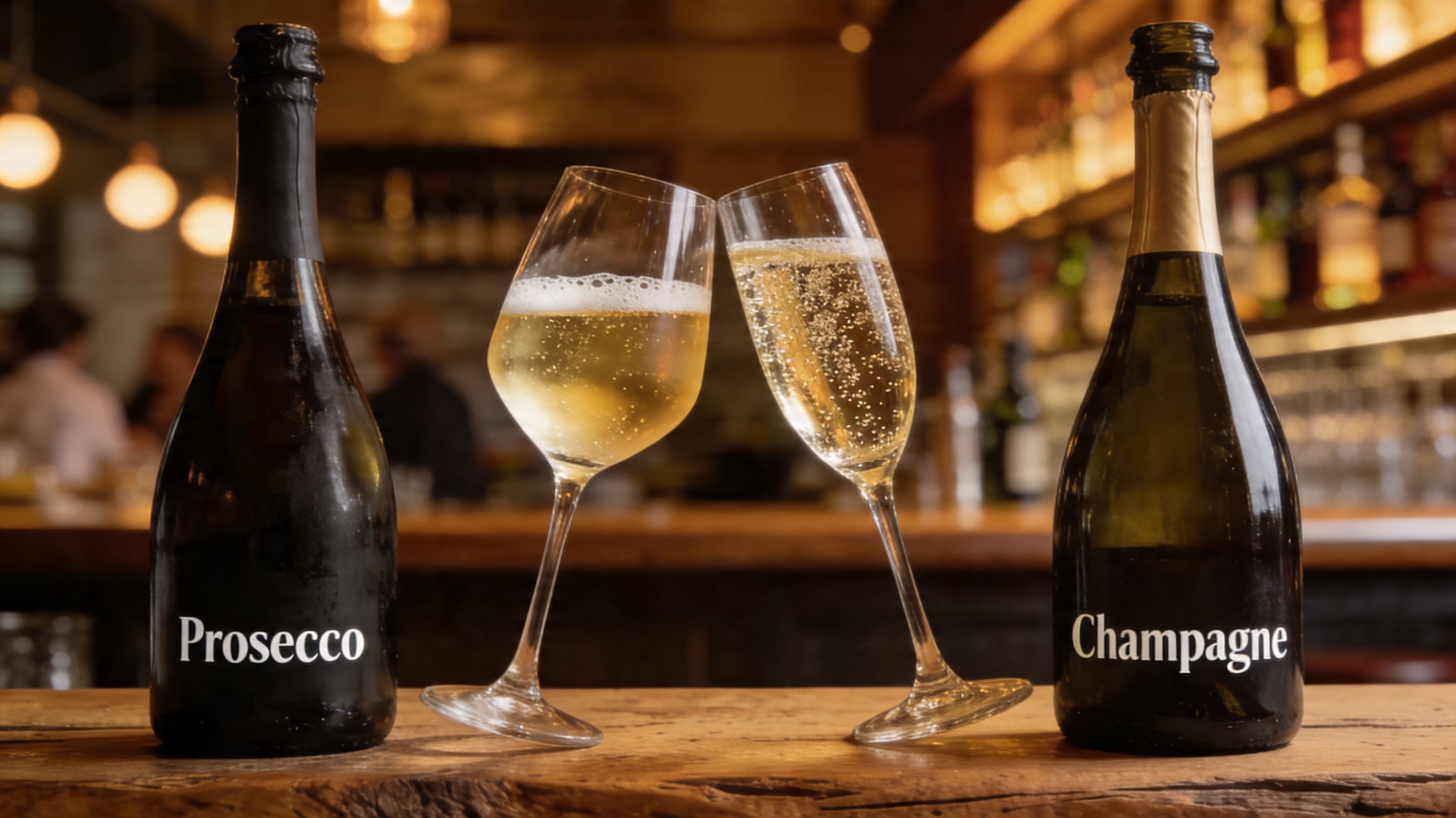
Understanding the difference between Prosecco and Champagne matters far beyond snobbery or label‑watching. It shapes how a bottle tastes, how sweet it feels, what food it suits, and whether it turns up as a casual aperitif or a centrepiece for a celebration.
Why Prosecco vs Champagne matters
At a glance, both are sparkling, both are European, and both arrive with a festive pop. Yet they are made from different grapes, in different regions, using different methods, with very different flavour outcomes. Knowing the basics of Prosecco vs Champagne helps drinkers choose the right bottle for the right moment rather than treating all bubbles as interchangeable.
It also has real implications for value and expectation. Prosecco is typically more affordable and more relaxed in style, whereas Champagne carries a reputation for complexity, age‑worthiness and higher prices. Confusing the two can mean paying for intricacy when all that was needed was an easy, fruity sparkler, or turning up with something too simple when the occasion calls for depth.
Prosecco vs Champagne taste: what’s in the glass
Talking about Prosecco vs Champagne taste starts with grapes and place. Prosecco is centred on the Glera grape grown mainly in Veneto and Friuli in north‑eastern Italy. It tends to give light, crisp wines with flavours of pear, apple, white flowers and sometimes a touch of honeysuckle or melon. The overall impression is easy, fruity and breezy rather than layered and savoury.
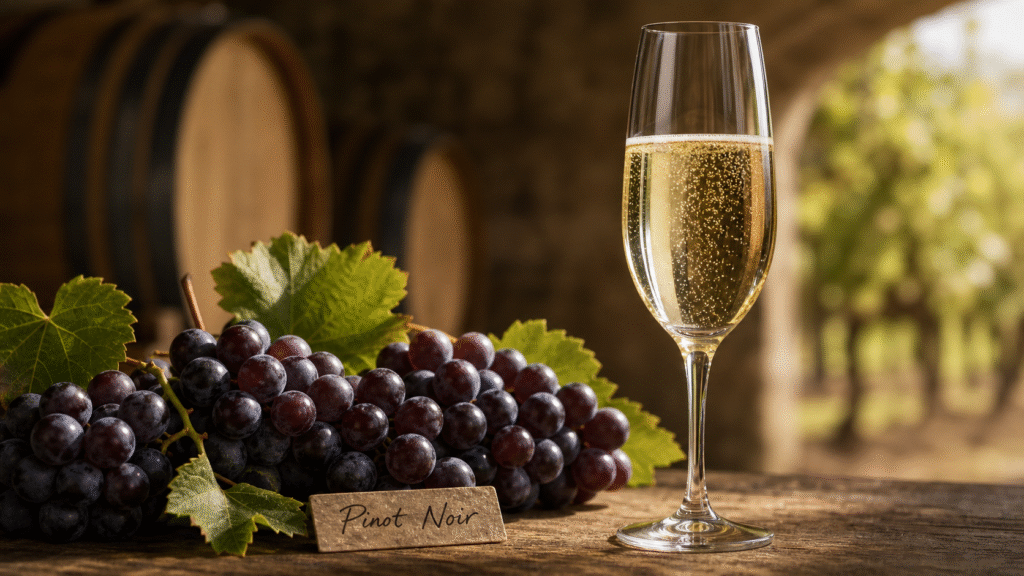
Champagne, by contrast, is made in the Champagne region of north‑eastern France, using Chardonnay, Pinot Noir and Pinot Meunier. The classic flavour markers are lemon, green apple and chalk in younger wines, evolving into brioche, toasted nuts, pastry and sometimes mushroom or truffle with ageing. Champagne usually carries more texture and savoury complexity; it often feels finer and more persistent on the palate, even when the fruit is subtle.
How they are made and why it changes everything
The production method is where the character of each really starts to diverge. Prosecco is usually made by the tank (Charmat) method. The base wine undergoes its second fermentation in a large, pressurised stainless‑steel tank, trapping bubbles quickly and preserving fresh, primary fruit. This keeps costs down and pushes the style towards youthful, aromatic vibrancy.
Champagne is made using the traditional (méthode traditionnelle) method. Here, the second fermentation occurs in each individual bottle, followed by extended ageing on the lees – the spent yeast cells. That process builds smaller, more persistent bubbles, creamy texture and those autolytic flavours of brioche, biscuit and pastry. It is labour‑intensive and time‑consuming, which is part of why Champagne commands higher prices, but also why it can taste so markedly different from a tank‑fermented Prosecco.
Featured Wines
Ad Hoc ‘Carte Blanc’ Prosecco NV (6 Bottles) Pemberton, WA
Add to Cart
$29.17
/ bottle
$175.00 for a case of 6
Becker Wines Prosecco 2025 (6 Bottles) Pokolbin, Hunter Valley, NSW
Add to Cart
$34.83
/ bottle
$209.00 for a case of 6
Champagne Collet Art Deco 1er Cru NV (6 Bottles) Aÿ-Champagne, France
Add to Cart
$118.67
/ bottle
$712.00 for a case of 6
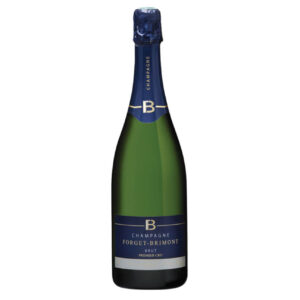
Forget-Brimont Brut Premier Cru NV (6 Bottles) Champagne, France
Add to Cart
$84.67
/ bottle
$508.00 for a case of 6

Terre Forti Novebolle Sparkling NV (6 Bottles) Emilia Romagna, Italy
Add to Cart
$25.50
/ bottle
$153.00 for a case of 6
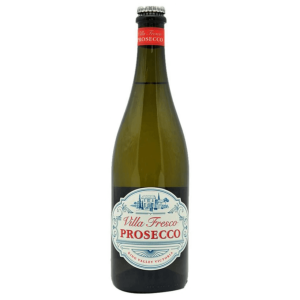
Villa Fresco Prosecco NV (12 Bottles) King Valley, VIC
Add to Cart
$22.25
/ bottle
$267.00 for a case of 12
Prosecco vs Champagne sweetness: reading the label
Many drinkers assume Prosecco is sweet and Champagne is dry, but reality is more nuanced. Both styles can be produced across a range of sweetness levels; understanding the labelling helps avoid surprises.
In both categories, “Brut” typically indicates a dry style, even if there is a small amount of residual sugar to keep the wine balanced. “Extra Brut” and “Brut Nature” are drier still. At the other end of the scale, terms such as “Dry” or “Demi‑Sec” on Champagne, and “Dry” or “Extra Dry” on Prosecco, can actually signal noticeable sweetness. That is why a focused discussion of Prosecco vs Champagne sweetness matters: two bottles both labelled “Extra Dry” might feel quite different, and a drinker expecting bone‑dry fizz could easily be caught out.
When should you reach for Prosecco?
Prosecco excels as an easygoing aperitif and a base for sparkling cocktails. Its flavour profile – pear, apple, light florals – and its softer, frothier mousse make it ideal for casual gatherings, brunches and mixed drinks. Think Bellinis, spritzes and simple glasses of fizz before a meal.
Food‑wise, Prosecco works well with lighter fare: antipasti, prosciutto and melon, simple seafood, sushi, lightly spiced Asian dishes and soft cheeses. For many occasions where the mood is relaxed and the budget matters, it makes perfect sense to buy prosecco wine that delivers freshness, fruit and fun rather than deep complexity.
When does Champagne earn its place?
Champagne comes into its own when complexity, structure and a sense of occasion are front and centre. The smaller bubbles and creamier texture give it an elegance that suits more formal settings, from fine‑dining menus to milestone celebrations. Where Prosecco is about charm, Champagne is about precision and depth.
It is also extraordinarily versatile at the table. Beyond the obvious aperitif role, Champagne pairs with oysters, caviar, fried foods (where the acid and bubbles slice through fat), roast poultry, truffled dishes and even aged cheeses. In that context it makes sense to buy champagne wine when the food and the moment will actually benefit from its extra layers of savoury, autolytic complexity and finer structure.
Price, ageing and expectations
Another key difference lies in ageing potential. Most Prosecco is designed to be drunk young; the charm lies in its fresh, primary fruit. Ageing a bottle for years rarely brings rewards and can actually strip it of vibrancy. Champagne, especially from good producers and vintages, can age beautifully. Over time it gains richer brioche notes, nuttiness and a broader palate while still holding its spine of acidity.
Price reflects these trajectories. Prosecco sits comfortably in the everyday or party‑wine bracket, allowing generous pours without too much concern. Champagne often occupies a more premium space, where the cost is justified by production time, ageing, brand reputation and the sensory experience. Matching expectation to style – and budget – is part of making these two categories work for you rather than against you.
Prosecco vs Champagne: which should you choose?
The real value in understanding Prosecco vs Champagne is not deciding which is “better” in some abstract sense. It is about choosing the right tool for the right job. If the occasion calls for relaxed, fruit‑driven bubbles, Prosecco is usually ideal. It delivers bright, approachable flavours, works well in cocktails, and represents strong value.
If the moment demands nuance, structure and a feeling of ceremony, Champagne is hard to beat. Its intricate production, complex flavour profile and capacity to age make it feel special in ways that go beyond marketing. Once those differences are clear, reaching for Prosecco or Champagne becomes a deliberate decision rather than a guess based solely on price or reputation, and the bottle in your glass is far more likely to match the mood you wanted to create.





 Shiraz
 Cabernet Sauvignon
 Pinot Noir
 Grenache
 Merlot
 Red Wine Blends
 Chardonnay
 Riesling
 Pinot Gris
 Semillon
 Viognier
 Grenache Rosé
 Pinot Noir Rosé
 Shiraz Rosé
 Sangiovese Rosé
 Aglianico Rosé
 Clairette Rose
 Champagne
 Prosecco
 Sparkling Shiraz
 Blanc de Blanc
 Blanc de Noir
 Pet Nat
 Moscato
 Topaque
 Port
Port Sherry (dry & sweet)
 Muscat & Tokay
 Vermouth