 0473 644 098 · Mon–Fri 9am–5pm AESTHelp & FAQ


Tasmanian Sparkling Wine Guide: Why Tasmania Makes Australia’s Best Bubbles

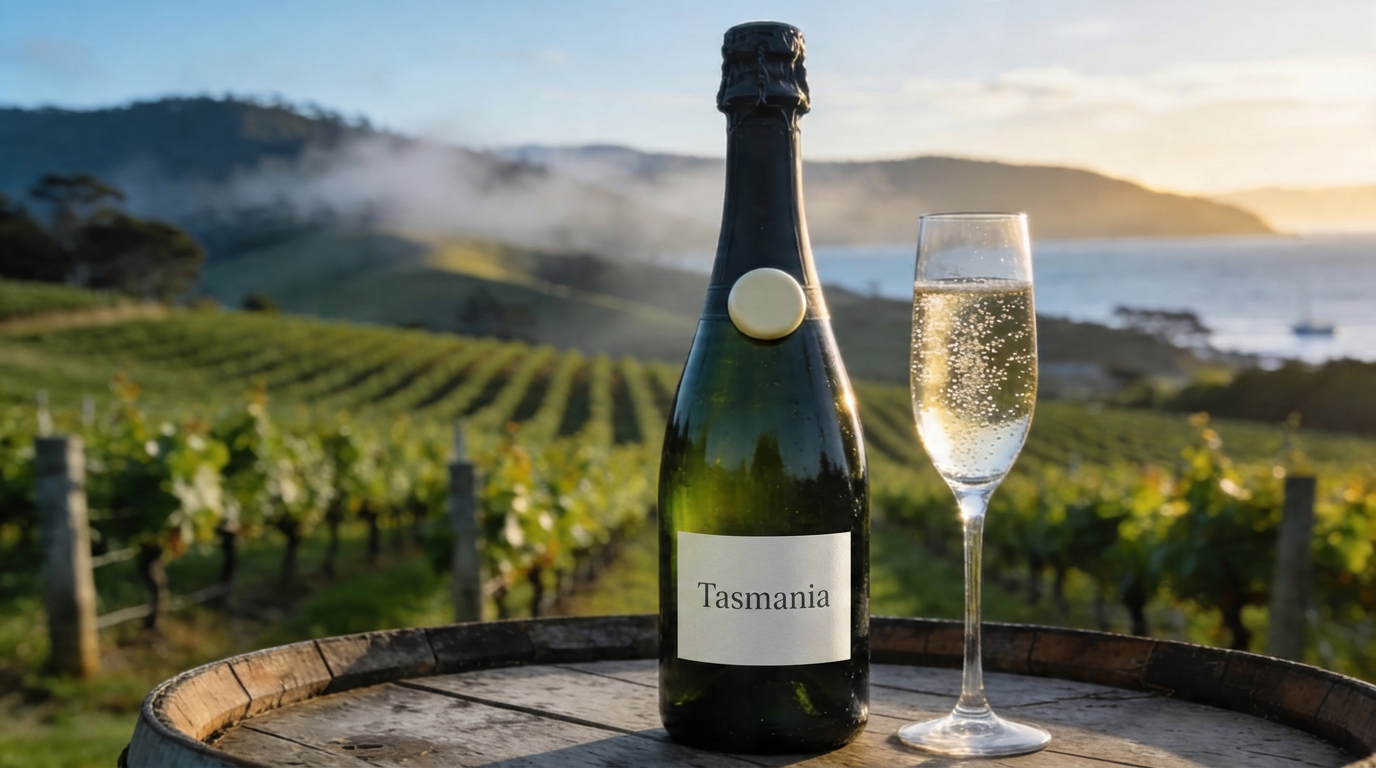
Tasmanian sparkling wine has quietly moved from insider secret to one of the most talked‑about categories in Australian wine, with critics increasingly placing it just behind Champagne in global terms. For anyone wondering where to buy sparkling wine that offers real finesse without the Champagne price tag, Tasmania is now one of the most compelling places to look.
Why Tasmania is perfect for sparkling wine
Tasmania sits far south of mainland Australia, with a cool maritime climate, long growing season and relatively low summer and autumn rainfall, conditions that are unusually close to Champagne and ideal for high‑acid base wines. Grapes ripen slowly here, building flavour at modest sugar levels so sparkling wine producers can pick Chardonnay and Pinot Noir with the low potential alcohol and racy acidity needed for serious traditional‑method fizz.
Wine Tasmania notes that sparkling styles made largely from these two varieties now account for roughly a third of the island’s wine production, which is an extraordinary proportion for a region of this size. Jancis Robinson has pointed out that most of the rest of Australia is simply too warm to grow base wine with this kind of natural acidity, which is why mainland producers often look to Tasmania when they want to add real tension and line to their sparkling programmes.
The Tasmanian sparkling wine regions everyone is watching
Tasmania might look compact on a map, yet it contains several distinct regions that each bring something slightly different to sparkling wine. Enthusiasts who want to do more than just buy sparkling wine on brand alone increasingly talk about which valley or river a wine comes from, because the nuances are now that clear.
Tamar Valley in the north is the largest and oldest region, responsible for a significant slice of the state’s production and home to producers like Pirie that focus strongly on Chardonnay‑ and Pinot‑based fizz. Pipers River, just to the east, has become the spiritual heartland of Tasmanian sparkling, with names such as Jansz, Clover Hill, Kreglinger, Bay of Fires, Delamere and Apogee clustered in a cool, frost‑prone band of vineyards up to around 270 metres above sea level.
Farther south, Coal River Valley and Derwent Valley supply many of the grapes for estate and cross‑regional blends, with growers and producers such as Stefano Lubiana in the Derwent building reputations on biodynamically farmed Pinot Noir and Chardonnay that translate beautifully into refined sparkling wines. Even the younger North West and Huon Valley zones are starting to see plantings geared toward delicate, high‑acid base wines, expanding the state’s sparkling map beyond the original northern heartlands.
Producers putting Tasmanian sparkling on the world stage
House of Arras is the name that appears in almost every serious discussion of Tasmanian sparkling wine, and for good reason. Founded in 1995 by Ed Carr, one of Australia’s most decorated sparkling winemakers, House of Arras has built a suite of long‑aged traditional‑method wines that focus on complexity, lees ageing and a distinctly Tasmanian line of acidity rather than simple fruitiness. The flagship E.J. Carr Late Disgorged 2004 was named the world’s best sparkling wine by Decanter in a blind tasting, beating Champagnes and signalling globally that something special was happening on this southern island.
Jansz Tasmania, originally founded by Graham Wiltshire and later acquired by the Hill‑Smith family, has also become a key reference point, combining estate vineyards in Pipers River with fruit from other cool sites to produce a range that runs from non‑vintage Brut to single‑vintage and single‑vineyard releases. Pirie, linked to Dr Andrew Pirie who was instrumental in establishing both Pipers Brook Vineyard and later his own eponymous label, remains another benchmark producer, continually cited in Australian press as one of the clearest expressions of how finely structured Tasmanian sparkling can be.
Smaller estates are part of the story too. Delamere in Pipers River, for example, has earned a strong following for intensely detailed, long‑lees wines, while a range of boutique producers across Tamar Valley, Coal River and Derwent Valley show just how versatile the island’s fruit can be when handled by different hands. Articles from outlets such as Vintage Cellars’ Cellar Press and Vintec Club now routinely describe Tasmania as one of Australia’s finest sparkling producers, noting both the overall quality and the diversity of interpretations.
 $31.00
/ bottle
$186.00 for a case of 6
$31.00
/ bottle
$186.00 for a case of 6
Lowe Wines Jodie Wilbetree Sparkling Rosé
Shipped by
Lowe Family Wine Co
$31.00
/ bottle
$186.00 for a case of 6
 $29.17
/ bottle
$175.00 for a case of 6
$29.17
/ bottle
$175.00 for a case of 6
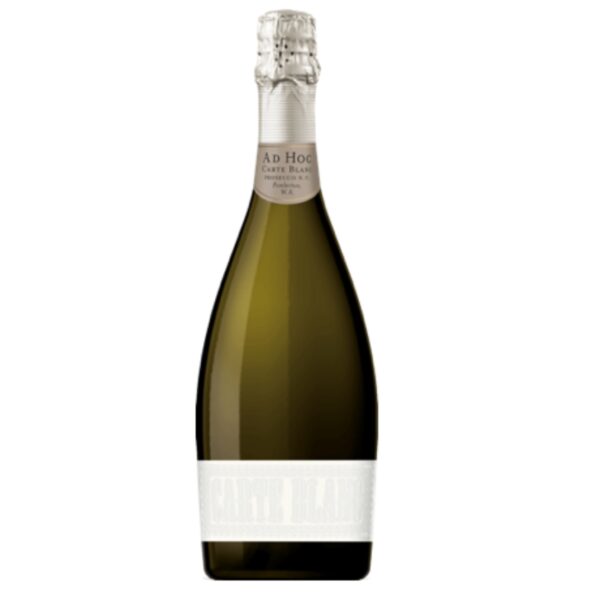
Ad Hoc ‘Carte Blanc’ Prosecco NV
Shipped by
Oatley Fine Wine Merchants
$29.17
/ bottle
$175.00 for a case of 6
 $44.17
/ bottle
$265.00 for a case of 6
$44.17
/ bottle
$265.00 for a case of 6
Hungerford Hill Cardinal Sparkling Shiraz NV
Shipped by
Hungerford Hill
$44.17
/ bottle
$265.00 for a case of 6

 $22.25
/ bottle
$267.00 for a case of 12
$22.25
/ bottle
$267.00 for a case of 12
 $21.67
/ bottle
$130.00 for a case of 6
$21.67
/ bottle
$130.00 for a case of 6
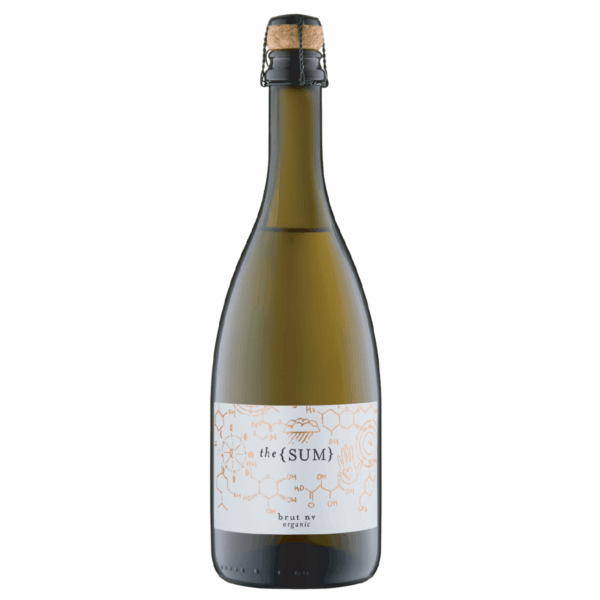
Castelli Estate The Sum Prosecco NV
Shipped by
Oatley Fine Wine Merchants
$21.67
/ bottle
$130.00 for a case of 6
 $7.63
/ bottle
$183.00 for a case of 24
$7.63
/ bottle
$183.00 for a case of 24
Aurelia Prosecco NV 200ml
Shipped by
Oatley Fine Wine Merchants
$7.63
/ bottle
$183.00 for a case of 24
 186 pts
 What Tasmanian sparkling wine is getting right in the glass
The core of Tasmanian sparkling’s appeal lies in freshness and balance rather than raw power. Chardonnay from cooler sites brings citrus, green apple, grapefruit and sometimes a saline, chalky edge, while Pinot Noir adds red apple, strawberry and structure, all carried on naturally high acidity that gives the wines a long, precise finish rather than a broad, simple froth.
Thanks to long lees ageing in many top cuvées, there is also plenty of autolytic complexity: brioche, pastry, toasted nuts and subtle creaminess that sit over that bright fruit core. Producers such as House of Arras deliberately keep wines on lees for many years to build these layers, arguing that the combination of concentrated Tasmanian base wines and extended time in bottle is what allows their sparkling to step into the same conversation as serious Champagne.
Importantly, alcohol levels often remain modest, which helps the wines feel tensile and gastronomic rather than heavy. For Australian drinkers used to richer mainland styles, this means Tasmanian sparkling can feel almost European in its restraint, making it an attractive option for those who like to buy sparkling wine that can work right through a meal, from oysters and sashimi to roast poultry and hard cheeses.
Why the wine world is paying attention to Tasmania
The attention is not only about what is already in bottle; it is also about future potential. Global warming is nudging many traditional cool‑climate regions toward higher ripeness levels, yet Tasmania still enjoys naturally cool seasons that give it a long runway for making high‑acid base wines in a warming world.
Tyson Stelzer has famously described Tasmanian sparkling as some of the best fizz outside Champagne, and international coverage now frequently frames the island alongside the south of England as one of the few New World regions truly competing at the top end of traditional‑method sparkling. Jancis Robinson has highlighted that average yields in Tasmania are often less than half those in Champagne, suggesting more concentrated base wines that, when handled carefully, can offer real depth at relatively modest alcohol levels.
Tourism and cellar‑door culture play a role as well. Articles such as “Tassie Sparkling Cellar Doors” have encouraged visitors to map trips around key sparkling producers, reinforcing the idea of Tasmania as “the sparkling state” rather than merely another cool‑climate region. This combination of critical praise, on‑the‑ground experiences and a strong narrative about climate and terroir is what keeps Tasmania at the centre of discussions whenever serious Australian sparkling is on the agenda.
Different grapes, same island: styles beyond Chardonnay and Pinot Noir
Although most attention focuses on classic Chardonnay‑Pinot blends, Tasmania is also producing intriguing alternative styles that show how flexible the island’s conditions can be. One example is Moorilla Estate Praxis Sparkling Riesling 2024, a méthode traditionnelle wine described by its distributor as fresh and fun, with crisp orchard fruit, sweet citrus, honeysuckle florals and a soft, extremely effervescent mousse supported by taut, lingering acidity and tart, apple‑like fruit.
This kind of wine sits alongside more classical cuvées as a reminder that Tasmania’s cool climate can handle aromatic varieties like Riesling for sparkling just as happily as it handles Chardonnay and Pinot Noir. For drinkers who already know the main players and want to explore something slightly different, Moorilla Estate Praxis Sparkling Riesling 2024 offers a neat snapshot of how Riesling’s lime‑and‑apple profile can translate into a brisk, modern Tassie fizz.
How to think about Tasmanian sparkling when you are buying
For someone in Australia looking to buy sparkling wine with a bit more intent, the key is to pay attention to both region and producer. Pipers River and Tamar Valley names on a label often signal particularly fine‑boned, delicate wines, while broader “Tasmania” bottlings may blend fruit from regions like Coal River Valley and Derwent to balance structure and generosity.
Producer names then add another layer. House of Arras and Jansz Tasmania are obvious starting points for long‑aged, Champagne‑style wines, while Pirie, Clover Hill, Delamere and a growing cohort of smaller estates each offer their own take on the island’s acidity and fruit profile. For those who already cellar Champagne, these are the labels that can sit confidently alongside grower and big‑house bottles; for those just beginning, they are a clear step up from basic sparkling in both complexity and ageing potential.
Tasmanian sparkling wine has reached the point where it is no longer a curiosity but a serious category, grounded in terroir and supported by producers who have spent decades learning how to handle their fruit. For anyone curious enough to treat fizz as more than just a celebratory afterthought, this southern island offers a compelling invitation: look beyond the mainland, look beyond Champagne, and discover just how far Australian sparkling has come when climate, craft and intent all line up in the glass.

 Shiraz
 Cabernet Sauvignon
 Pinot Noir
 Grenache
 Merlot
 Red Wine Blends
 Chardonnay
 Riesling
 Pinot Gris
 Semillon
 Viognier
 Grenache Rosé
 Pinot Noir Rosé
 Shiraz Rosé
 Sangiovese Rosé
 Aglianico Rosé
 Clairette Rose
 Champagne
 Prosecco
 Sparkling Shiraz
 Blanc de Blanc
 Blanc de Noir
 Pet Nat
 Moscato
 Topaque
 Port
Port Sherry (dry & sweet)
 Muscat & Tokay
 Vermouth