 0473 644 098 · Mon–Fri 9am–5pm AESTHelp & FAQ


Syrah vs Shiraz: How One Grape Learned to Speak Two Different Languages

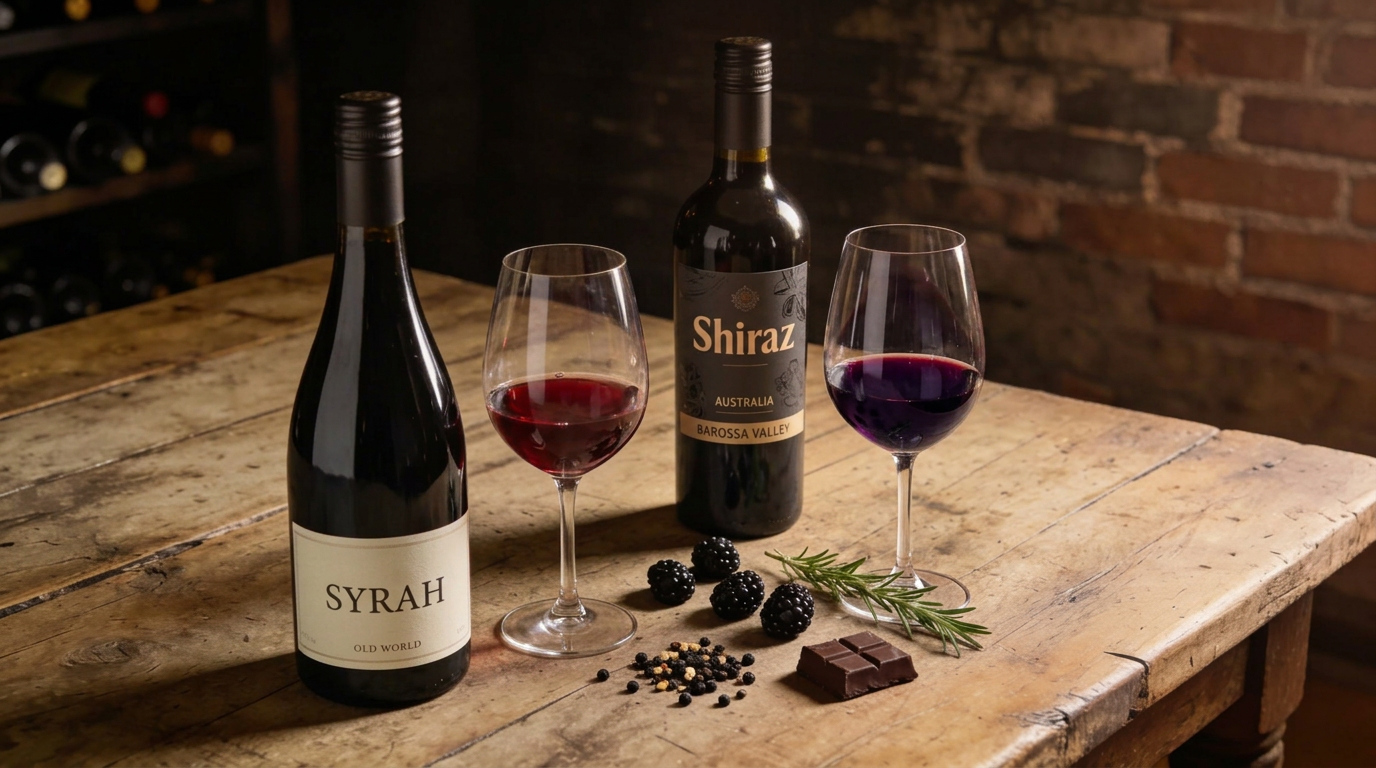
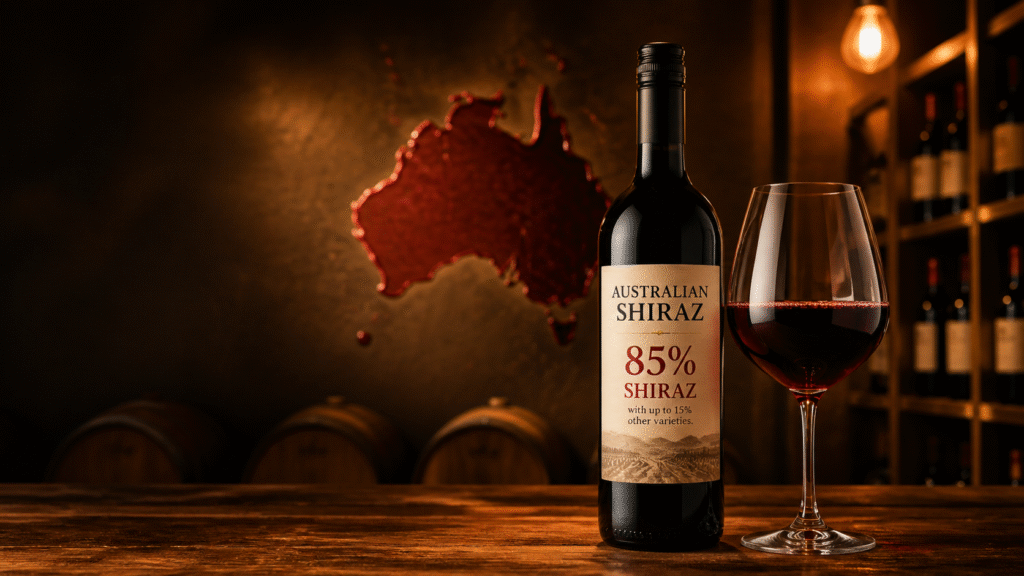
Syrah and Shiraz are the same grape, yet for serious drinkers in Australia they signal two quite different philosophies of wine: one leaning toward savoury Syrah restraint, the other toward plush Shiraz generosity. Understanding how those two names evolved, and what they now imply in the glass, is one of the most revealing ways to think about modern red wine style.
One grape, two stories in the glass
Here is the basic reality that often surprises newer drinkers. Syrah and Shiraz are genetically identical, a single dark‑skinned variety whose spiritual home is the Rhône Valley in France and whose adopted kingdom is Australia. In 1998, DNA work at UC Davis showed Syrah to be the offspring of two obscure French grapes, Dureza and Mondeuse Blanche, ending centuries of speculation about exotic Middle Eastern origins.
Yet in practice, the two names on a label now act as shorthand for style. Syrah has come to suggest a more Old World frame (cooler sites, pepper, structure, mineral tension), whilst Shiraz tends to signal a riper, more fruit‑forward New World expression, especially from warm Australian regions. Australian producers themselves increasingly use both terms, choosing Syrah or Shiraz quite deliberately to tell the drinker what to expect.
How the styles usually diverge
Although there are always exceptions, the stylistic split can be sketched like this.
These are broad strokes, yet they explain why a drinker who loves the iron‑fisted structure of Hermitage might not recognise their beloved grape in a lush Barossa Valley Shiraz, and why Australian “Syrah” from cooler sites has become such a talking point amongst enthusiasts.
How Syrah travelled and became Shiraz
The story begins in France, where Syrah seems to have been grown in the northern Rhône for centuries, potentially since Roman times. The variety’s home terrain is steep, terraced slopes along the river, producing the muscular but often hauntingly perfumed reds of Côte‑Rôtie, Hermitage, Cornas and Saint‑Joseph. Here, Syrah can be almost paradoxical: dense and tannic, yet lifted by violet aromatics, pepper and smoked meat.
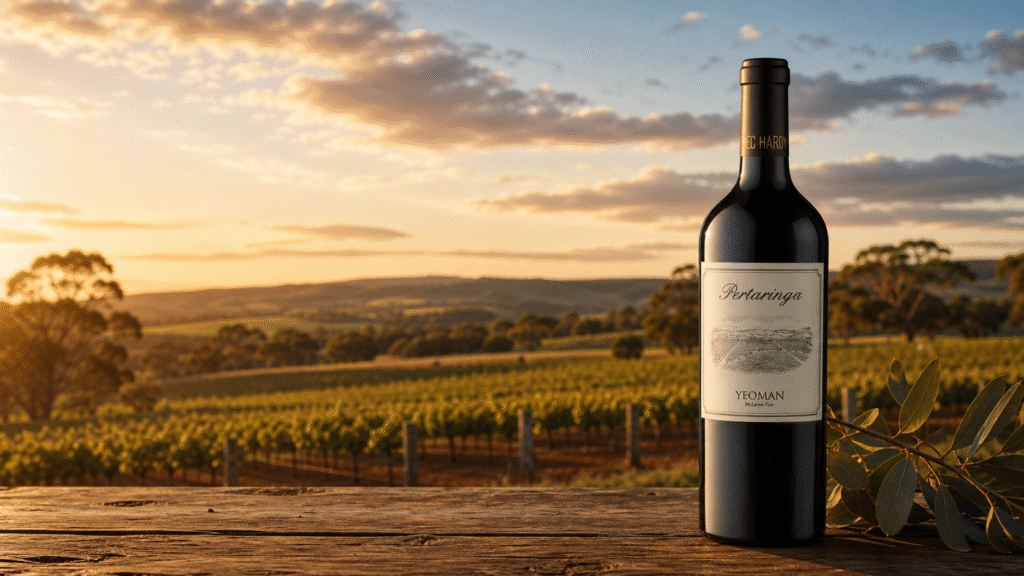
The Australian chapter opens in the early nineteenth century, when James Busby, widely described as the father of Australian viticulture, imported vine cuttings from France and Spain and planted them in New South Wales and South Australia. Among those cuttings were Syrah vines that would eventually become the backbone of regions such as Barossa Valley and McLaren Vale, and in time the variety was widely known locally as Shiraz. Australian Shiraz eventually overtook Grenache as the country’s most widely planted red grape during the mid‑twentieth century, underpinning both fortified wines early on and, later, the dry table wines that built Australia’s global reputation.
Where “Shiraz” as a name really came from
There is no shortage of romantic stories about the name. One persistent myth traces the variety back to the city of Shiraz in Iran, claiming that cuttings travelled from Persia to France in classical times. Modern genetic and documentary evidence does not support that narrative, and Syrah’s French parentage is now firmly established.
A more prosaic explanation feels far more plausible. Several sources point to Shiraz evolving as an anglicised or mis‑read form of French synonyms such as Scyras or Ciras, adopted by English‑speaking settlers and never corrected. Some Australian wineries and commentators also refer to the possibility that “Shiraz” arose simply from a spelling or pronunciation error when Syrah cuttings were catalogued and discussed in the nineteenth century, which then became entrenched as Australian usage. Whatever the exact pathway, “Shiraz” became the Australian name for the grape, and in time a global marker for that country’s distinctive, ripe style.


 $42.00
/ bottle
$252.00 for a case of 6
$42.00
/ bottle
$252.00 for a case of 6
 $31.17
/ bottle
$187.00 for a case of 6
$31.17
/ bottle
$187.00 for a case of 6
 $46.75
/ bottle
$561.00 for a case of 12
$46.75
/ bottle
$561.00 for a case of 12
Smallwater Estate Shiraz
Shipped by
Smallwater Estate, Geographe Wine Region
$46.75
/ bottle
$561.00 for a case of 12
 $17.42
/ bottle
$209.00 for a case of 12
$17.42
/ bottle
$209.00 for a case of 12
Killibinbin Sneaky Shiraz
Shipped by
Oatley Fine Wine Merchants
$17.42
/ bottle
$209.00 for a case of 12
 Hot
Hot
 $150.00
/ bottle
$900.00 for a case of 6
$150.00
/ bottle
$900.00 for a case of 6
 $17.00
/ bottle
$102.00 for a case of 6
$17.00
/ bottle
$102.00 for a case of 6
 252 pts
 What makes Syrah so compelling when it is called Syrah
When producers choose the word Syrah on an Australian label today, they are usually signalling an allegiance to Rhône sensibilities: cooler sites, whole‑bunch fermentation, less new oak, more savoury expression. The appeal here lies in tension and complexity rather than sheer weight. Classic Syrah can deliver layers of blackcurrant, dark berries and plum woven through with pepper, smoked meat, olives and dried herbs, all carried on a frame of fresh acidity and firm yet fine tannins.
For serious drinkers, that combination of aromatic lift and structural discipline offers enormous pleasure at the table. Syrah’s higher natural acidity makes it especially sympathetic to food, cutting through richer dishes whilst its savoury elements lock in with game, lamb, mushrooms and grilled vegetables. The best examples from the northern Rhône have long ageing trajectories, developing notes of leather, tapenade, cured meat and forest floor over ten to twenty years, which is one reason these wines still anchor fine wine cellars around the world.
Jancis Robinson, writing about Barossa Valley Shiraz but implicitly contrasting it with more classical Syrah, notes that some wines are positively unctuous, to the point that producers may add tannin for backbone. That remark neatly hints at what Syrah devotees cherish in a cooler, more restrained version: structure built into the grape rather than added, and fruit that never quite tips into sweetness.
Why Shiraz captured Australian hearts and export shelves
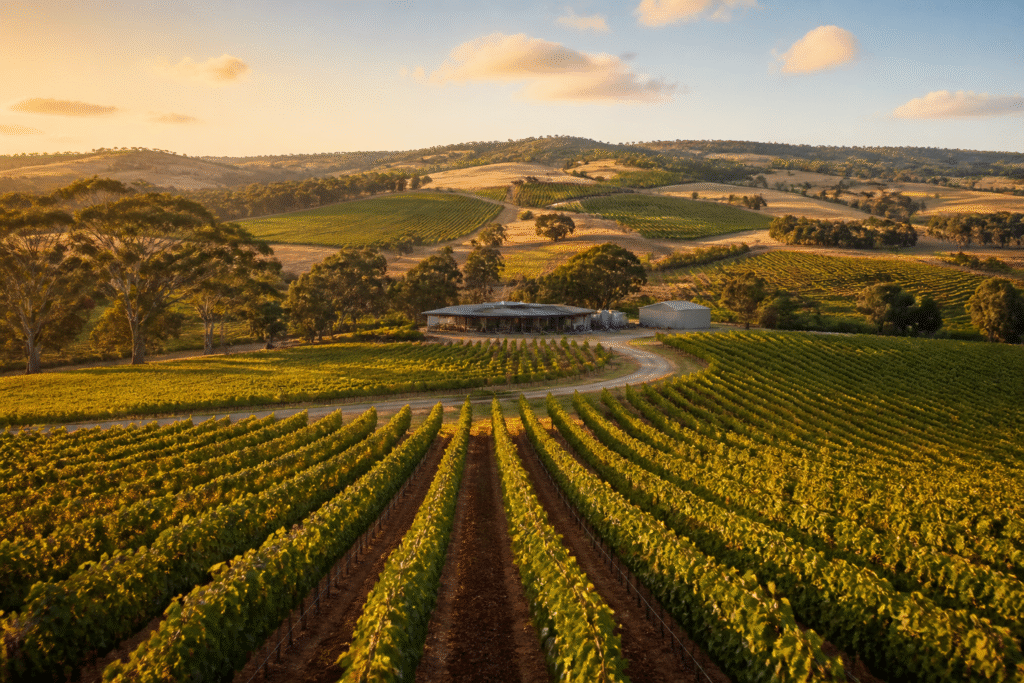
Shiraz, on the other hand, built its reputation on generosity. Warm Australian regions such as Barossa Valley and McLaren Vale allow the grape to ripen fully, even abundantly, producing deeply coloured wines that can feel almost creamy in their richness. Typical flavours include ripe blackberry, black plum and black cherry, framed by chocolate, liquorice and sweet spice; American or heavily toasted oak can add notes of vanilla, mocha or coconut.
Here is something genuinely fascinating about Shiraz in the Australian context. Not only did it become the country’s flagship red, but it also reshaped global expectations of what this grape could be. At the top end, icons such as Penfolds Grange (built largely from South Australian Shiraz) showed that a ripe, blended style could age as nobly as many European classics, whilst everyday bottlings proved extraordinarily approachable, even for new wine drinkers. Many modern Australian producers now sit somewhere between extremes, dialling back excessive ripeness and oak in search of brightness and regional expression, yet the essential pleasure of Shiraz remains that sense of plush fruit, spice and warmth in the glass.
From an enjoyment perspective, Shiraz tends to be more forgiving in its youth. Where serious Syrah may demand time in bottle and, at table, careful pairing, many Australian Shiraz wines are delicious within a few years of vintage, offering immediate fruit, soft tannins and a sense of richness that can feel almost decadent on a casual Tuesday night. This is not party wine in the frivolous sense, but it is certainly wine that can carry the mood of a gathering without asking too many questions.
 $38.83
/ bottle
$233.00 for a case of 6
$38.83
/ bottle
$233.00 for a case of 6
 $24.17
/ bottle
$145.00 for a case of 6
$24.17
/ bottle
$145.00 for a case of 6
 $52.17
/ bottle
$313.00 for a case of 6
$52.17
/ bottle
$313.00 for a case of 6
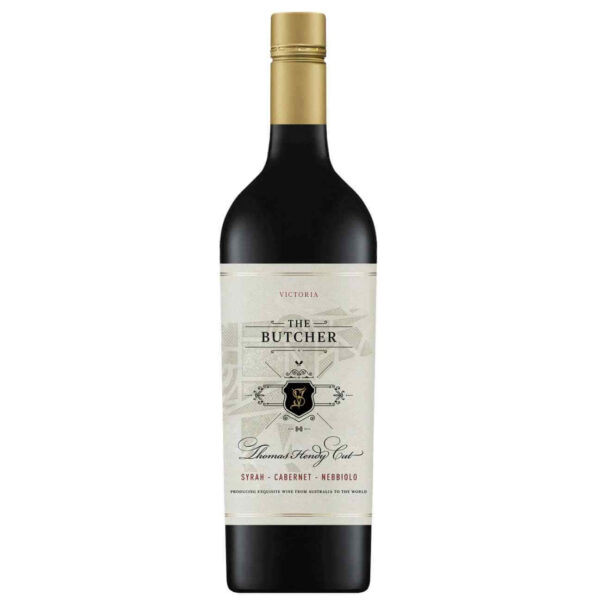
Soumah The Butcher Thomas Hendy Cut Syrah Cabernet Nebbiolo
Shipped by
Oatley Fine Wine Merchants
$52.17
/ bottle
$313.00 for a case of 6
 $25.75
/ bottle
$309.00 for a case of 12
$25.75
/ bottle
$309.00 for a case of 12

 $41.33
/ bottle
$248.00 for a case of 6
$41.33
/ bottle
$248.00 for a case of 6
Domaine de l'Agramante Cuvée Ciaülà Rouge
Shipped by
Fine Wine Cellars
$41.33
/ bottle
$248.00 for a case of 6
 $125.67
/ bottle
$754.00 for a case of 6
$125.67
/ bottle
$754.00 for a case of 6
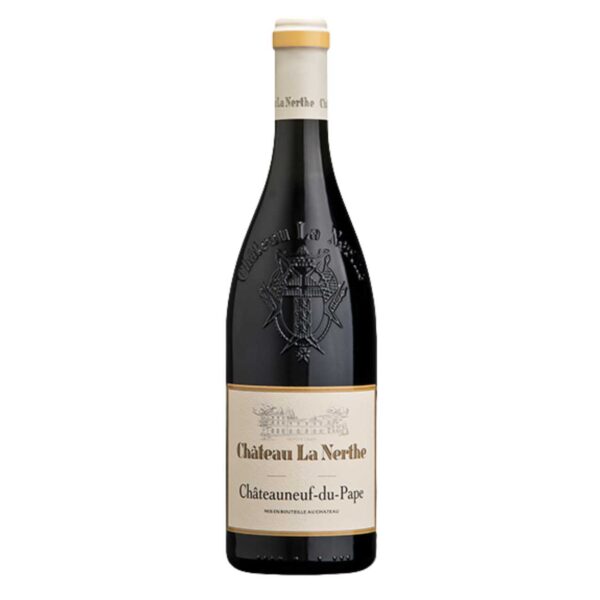
Chateau La Nerthe Châteauneuf-du-Pape Rouge
Shipped by
Pure Wine Co.
$125.67
/ bottle
$754.00 for a case of 6
How Australian producers use both names today
In Australia now, the naming choice has become a quiet code understood by enthusiasts and increasingly by the trade. Wineries in regions such as Margaret River, the Yarra Valley, the Adelaide Hills and even cooler parts of McLaren Vale and the Barossa often reserve “Syrah” for wines from cooler, wind‑exposed or elevated blocks, often picked a little earlier and handled more delicately in the cellar. “Shiraz” tends to remain for the richer, more traditional expressions, often from warmer sites or made with riper fruit and plusher oak regimes.
Globally, the commercial power of the Shiraz name should not be underestimated. Jancis Robinson has written about British supermarket buyers discovering that big bold Shiraz sold dramatically better than “wimpy little French Syrah,” regardless of what was actually in the bottle. That kind of market response naturally reinforces producers’ choices, especially for export‑driven brands aiming squarely at accessible, full‑bodied red drinkers. Yet amongst smaller Australian wineries, the dual naming now provides a useful and quite honest vocabulary for style differentiation.
For an Australian drinker standing in a local bottle shop, this split offers a handy navigation tool. A label reading Syrah from a respected producer in, say, the Adelaide Hills is likely to offer lifted aromatics, fresher acidity and a more European sensibility; a Shiraz from Barossa Valley or McLaren Vale will generally lean into ripeness, richness and more overt power. Of course, tasting is the ultimate test, but the typography already hints at the winemaker’s intent.
Two names, one grape, and a choice every enthusiast can enjoy
In the end, the pleasure of this grape under either name lies in its rare ability to speak several dialects of deliciousness without ever losing its core identity. Syrah gives the drinker edge, tension and savoury complexity, the kind of wine that rewards time in the cellar and contemplation at the table. Shiraz offers generosity, spice and fruit‑driven warmth, the kind of wine that turns up on Australian tables when the barbecue is lit and friends arrive unannounced.
Yet the most interesting developments in Australia now sit between those poles, as producers experiment with cooler sites, whole bunches, larger old oak and gentler extraction, creating wines that borrow the grace of Syrah and the charm of Shiraz. For an enthusiast in Australia, that makes “Syrah vs Shiraz” less a question of right or wrong and more an ongoing conversation in the glass.



 Shiraz
 Cabernet Sauvignon
 Pinot Noir
 Grenache
 Merlot
 Red Wine Blends
 Chardonnay
 Riesling
 Pinot Gris
 Semillon
 Viognier
 Grenache Rosé
 Pinot Noir Rosé
 Shiraz Rosé
 Sangiovese Rosé
 Aglianico Rosé
 Clairette Rose
 Champagne
 Prosecco
 Sparkling Shiraz
 Blanc de Blanc
 Blanc de Noir
 Pet Nat
 Moscato
 Topaque
 Port
Port Sherry (dry & sweet)
 Muscat & Tokay
 Vermouth