 0473 644 098 · Mon–Fri 9am–5pm AESTHelp & FAQ


Acidity in Wine Explained: How Crisp Whites and Bold Reds Get Their Bite

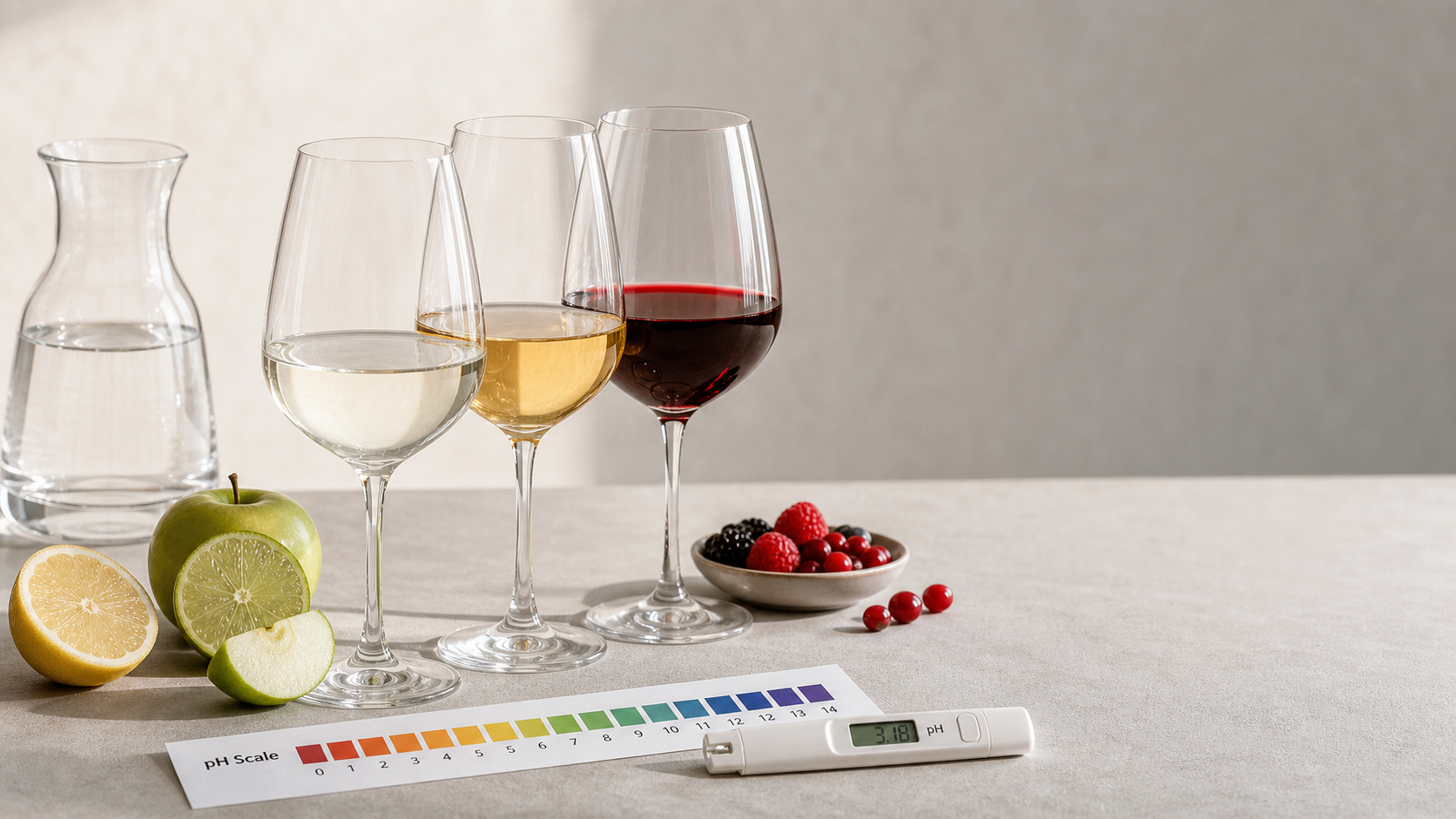
Acidity is one of the quiet forces that makes wine taste alive. It shapes freshness, balance and age‑worthiness, yet it is also one of the least understood parts of wine structure.
What acidity in wine actually is
When people say a wine is “crisp”, “zesty” or “sharp”, they are really talking about acidity. Technically, wine contains several natural acids, mainly tartaric, malic and lactic, dissolved in the liquid. These acids contribute to the wine’s titratable acidity (often abbreviated to TA), which is a lab measure of how much acid is present, usually expressed in grams per litre.
The other key number is pH, which tells us how strong or intense those acids feel on the palate. pH works on an inverse, logarithmic scale: the lower the pH, the higher and more intense the perceived acidity. In practical terms, most wines sit somewhere between pH 2.9 and 3.9; a wine at pH 3.1 will usually taste much tarter than one at pH 3.8, even if the actual grams of acid are similar. For readers less comfortable with the numbers, it can help to imagine wine acidity as sitting between orange juice and black coffee: sharper than most juices, softer than straight lemon juice.
Acidity is not just about taste. It influences colour stability, microbial health and how well sulphur dioxide works as a preservative, which is why winemakers pay close attention to TA and pH from harvest through to bottling. Without enough acid, wines can taste flat and feel heavy; with too much, they can seem sour, harsh or thin.
Why white wines usually taste more acidic
In broad terms, white wines are more acidic than reds. Typical pH ranges for white wines are around 3.0 to 3.4, whereas reds often sit closer to 3.5 to 3.8. That means whites generally deliver a brighter, more “mouth‑watering” sensation.
There are a few reasons for this. White wines are normally fermented without skins and at cooler temperatures, which helps preserve the grapes’ natural tartness. Many white varieties are also naturally high in acid. Riesling and Sauvignon Blanc, for example, commonly sit in the most acidic part of the spectrum, often between about pH 2.9 and 3.3, which gives them their famous razor‑sharp freshness.
By contrast, Chardonnay tends to produce slightly lower‑acid wines, especially when grown in warmer climates or put through full malolactic fermentation (where sharper malic acid is converted to softer lactic acid). This is why many fuller‑bodied Chardonnays feel richer and creamier rather than tangy. From a consumer perspective, this makes Chardonnay a useful option for those who enjoy white wine but prefer something with gentler acidity. For readers browsing to buy Chardonnay wine online, it is worth noting that cooler‑climate or unoaked examples will still show a fresh line of acidity, whereas heavily oaked, warm‑climate versions will feel softer and rounder.
Red wine and acidity: not as low as you think
Red wine is absolutely acidic; it simply feels less sharp than many whites because the numbers are a little higher and the tannins add another textural element. Average pH values for reds often sit around 3.5 to 3.8, and titratable acidity tends to be slightly lower than in comparable whites.
Cool‑climate reds, such as Pinot Noir from high‑altitude or southerly regions, usually show higher acidity than warm‑climate Shiraz or Grenache. A bright Pinot Noir or cool‑climate Syrah may have a fairly low pH (say 3.3–3.5) and will taste tangy and energetic, even though it is still comfortably within the red wine range. Warmer sites, by contrast, ripen fruit more fully and metabolise more of the natural malic acid, leading to softer, rounder reds with less obvious bite.
This is why some people who are sensitive to acid find big, ripe reds easier on the palate, while others actively seek out high‑acid reds for their food‑friendliness. High acidity in red wine can make flavours of cherry, cranberry and redcurrant feel more vivid, and it helps wines cut through richer dishes such as fatty meats or creamy sauces.
 $31.25
/ bottle
$375.00 for a case of 12
$31.25
/ bottle
$375.00 for a case of 12
 $38.83
/ bottle
$233.00 for a case of 6
$38.83
/ bottle
$233.00 for a case of 6
 $31.25
/ bottle
$375.00 for a case of 12
$31.25
/ bottle
$375.00 for a case of 12
 $28.67
/ bottle
$172.00 for a case of 6
$28.67
/ bottle
$172.00 for a case of 6
 $26.83
/ bottle
$322.00 for a case of 12
$26.83
/ bottle
$322.00 for a case of 12
 $40.50
/ bottle
$243.00 for a case of 6
$40.50
/ bottle
$243.00 for a case of 6
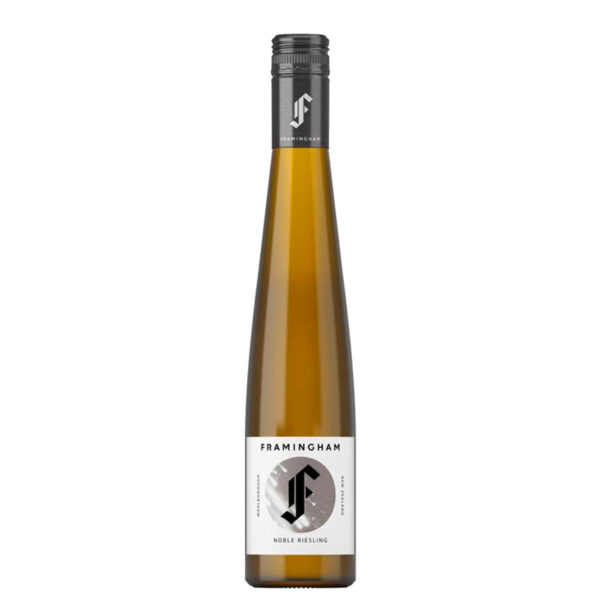
Framingham Noble Riesling 375ml
Shipped by
Oatley Fine Wine Merchants
$40.50
/ bottle
$243.00 for a case of 6
 375 pts
 Which wines are the most acidic?
If you rank mainstream wines by acidity, a pattern emerges. At the top of the white spectrum sit varieties like Riesling, Sauvignon Blanc, Chenin Blanc and certain cool‑climate styles of Chablis and Muscadet. These often show pH values between about 2.9 and 3.3 and total acidity high enough to taste very crisp, sometimes even tart in youth.
Riesling is a classic example. Whether dry or off‑dry, it carries a spine of acid that can feel almost like biting into a green apple; in technical terms, it is one of the most acidic commonly produced white wines. Sauvignon Blanc is not far behind, especially from cool regions, showing piercing citrus and passionfruit notes that many drinkers immediately recognise as “zesty” or “racy”.
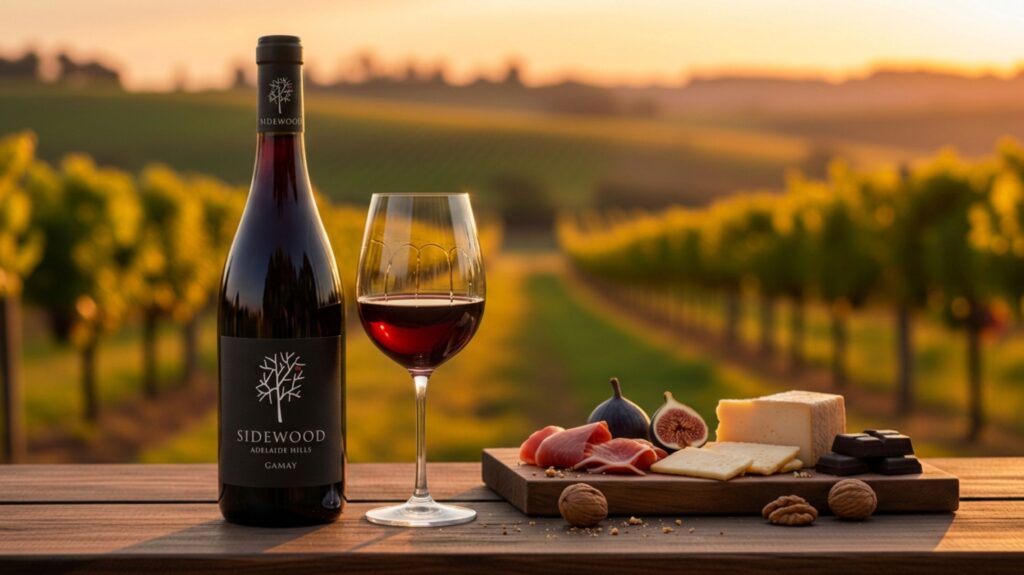
On the red side, Pinot Noir is typically among the higher‑acid varieties, particularly from cooler zones. Gamay (the grape of Beaujolais) and certain cool‑climate Syrah can also be notably bright, while warmer‑climate Shiraz and many New World Cabernet Sauvignon wines occupy the lower‑acid, plusher end of the spectrum.
Understanding this spectrum helps when choosing wines for different situations. If you want something refreshing with oysters or goat’s cheese, a high‑acid white like Sauvignon Blanc or Riesling makes sense. If you want a softer, more relaxed glass by itself, a lower‑acid style such as many Chardonnays or warm‑climate reds may be more comfortable. For those browsing to browse Sauvignon Blanc online, it is helpful to know you are firmly in the high‑acid camp and should expect that clean, mouth‑watering snap on the finish.
Why acidity matters so much for food pairing and ageing
Acidity is crucial for food pairing because it acts a bit like a squeeze of lemon over a dish: it brightens flavours, cuts through richness and refreshes the palate. High‑acid wines can handle fatty, salty or creamy foods better than low‑acid wines, which can feel cloying when faced with similar dishes. This is why sommeliers often reach for Riesling with pork belly, or Sauvignon Blanc with goat’s cheese and herb‑driven dishes; the acid keeps everything in balance.
It is also a key factor in ageing potential. Wines with good acidity tend to age more gracefully because the acid helps protect them from oxidation and keeps flavours from collapsing into dullness. Many of the world’s longest‑lived whites and reds, from Mosel Riesling to Barolo, share a common thread of firm acidity underpinning their structure. Lower‑acid wines can still be beautiful, but they usually evolve faster and are best consumed on the earlier side.
For collectors, this means that understanding acidity helps decide what to drink now and what to tuck away. A taut young Riesling with searing acid might be almost too intense in its first years but can soften and develop honeyed, complex notes with a decade in the cellar. A plush, low‑acid red, by contrast, may offer more immediate pleasure but less long‑term reward.
Making sense of acidity as a drinker
For all the technical talk, the practical question is simple: how should a drinker think about acidity when choosing a bottle? One helpful approach is to connect style preferences with known acid levels. If you enjoy that bright, lemon‑sherbet snap and wines that feel incredibly refreshing, lean toward high‑acid varieties from cooler climates: Riesling, Sauvignon Blanc, certain cool‑climate Chardonnays, and reds like Pinot Noir and Gamay.
If your tastes run to softer, rounder textures, look for warmer‑climate expressions, fuller‑bodied whites with some oak or malolactic influence, and reds from regions known for plush fruit and moderate acidity. Reading technical sheets can help: a lower pH (around 3.1–3.3) signals a sharper style, while higher pH (3.5–3.8) usually indicates a gentler, more mellow wine. For readers who regularly buy Chardonnay wine online, keeping an eye on region and style clues (cool vs warm climate, oak vs unoaked) can quickly reveal where a given wine will sit on the acidity spectrum.
Ultimately, acidity is best understood by paying attention as you drink. Notice where on your tongue the wine tingles, how much your mouth waters, and whether the finish feels clean and refreshing or broad and creamy. Over time, those sensations become a personal map that makes the technical numbers less intimidating and the choice of bottle far more enjoyable.




 Shiraz
 Cabernet Sauvignon
 Pinot Noir
 Grenache
 Merlot
 Red Wine Blends
 Chardonnay
 Riesling
 Pinot Gris
 Semillon
 Viognier
 Grenache Rosé
 Pinot Noir Rosé
 Shiraz Rosé
 Sangiovese Rosé
 Aglianico Rosé
 Clairette Rose
 Champagne
 Prosecco
 Sparkling Shiraz
 Blanc de Blanc
 Blanc de Noir
 Pet Nat
 Moscato
 Topaque
 Port
Port Sherry (dry & sweet)
 Muscat & Tokay
 Vermouth