 0473 644 098 · Mon–Fri 9am–5pm AESTHelp & FAQ


Barossa Valley, Clare Valley, Langhorne Creek, Limestone Coast, McLaren Vale, Red Wine, The Riverland, White Wine, Winery
Weekends in Wine Country: How South Australia Packs So Much into One State

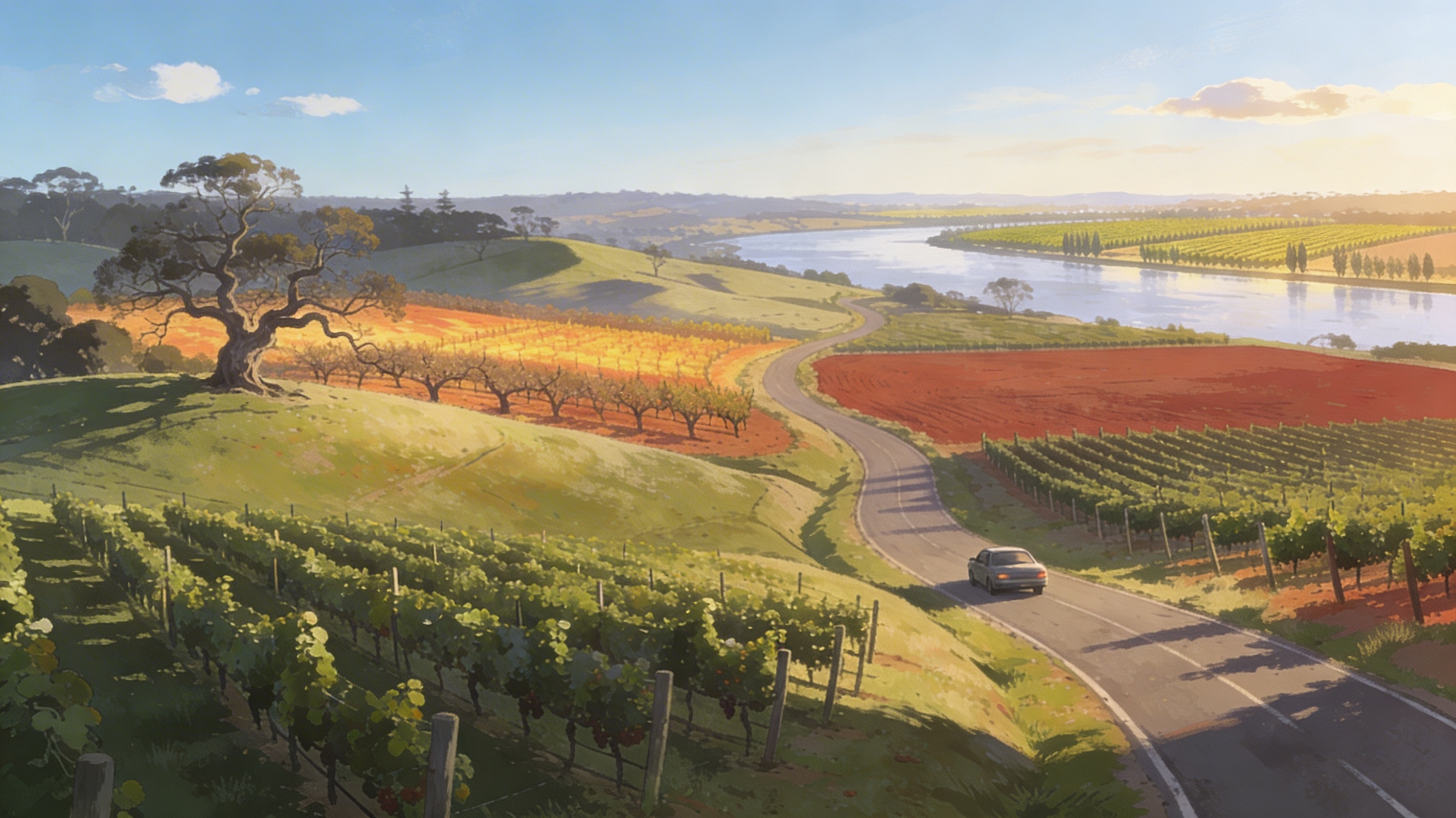
Starting close to home: the Adelaide Hills that changed everything
Drive barely half an hour into the hills behind Adelaide and the temperature drops, the light sharpens and suddenly cool‑climate chardonnay and pinot noir make perfect sense. The Adelaide Hills stretch across the Mount Lofty Ranges, with altitude and aspect doing most of the heavy lifting for elegance and freshness. Chardonnay is now the region’s most important variety by tonnage, accounting for about 27% of the harvest, with sauvignon blanc and pinot noir close behind.
The best Adelaide Hills chardonnay walks a line between ripe stone fruit and taut, almost Chablis‑like structure; it is the region to visit for Australians who normally claim not to like chardonnay at all. Pinot noir has also grown into real seriousness here, particularly in cooler sub‑pockets such as Piccadilly, where early plantings triggered the modern fascination with this landscape. For visitors, cellar doors tend to feel more European village than industrial estate: rolling slopes, forested ridgelines and a food culture that leans into farm‑to‑table rather than tasting‑bench‑to‑tour‑bus.
A day in the Adelaide Hills suits those who enjoy nuance over sheer power, tasting wines where acidity is the spine and spice, citrus and florals do most of the talking. It is often the region that quietly recalibrates what first‑time visitors think Australian wine tastes like.
Heading north: Riesling country in the Clare Valley
Push further north and the landscape dries out, the skies widen and the road eventually folds into the Clare Valley, home to some of Australia’s most respected riesling. Here elevation meets warm days and cool nights, producing whites that are piercingly aromatic yet bone‑dry, with lime, talc and a sense of stony precision. The valley has codified this heritage around the aptly named Riesling Trail, a 33‑kilometre walking and cycling path that stitches together vineyards, cellar doors and townships along an old railway line.
The Riesling Trail invites a different rhythm of wine tourism: tasting flights broken up by stretches of pedalling or walking, long lunches in small town pubs, and the slow accumulation of how soil and aspect shift along the route. While riesling is the regional calling card, visitors quickly realise how convincing Clare Valley shiraz can be, often more medium‑bodied and peppery than the dense styles further south. This dual identity, crisp white and savoury red, makes the Clare Valley an exceptionally rewarding region to explore over two or three days rather than a fly‑by afternoon.
The Barossa: where old vines carry the story
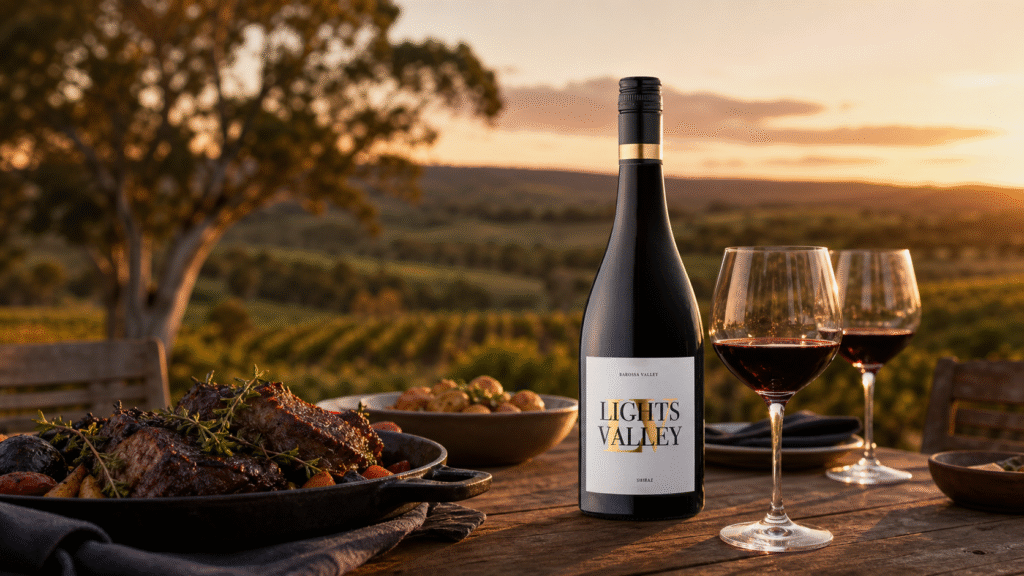
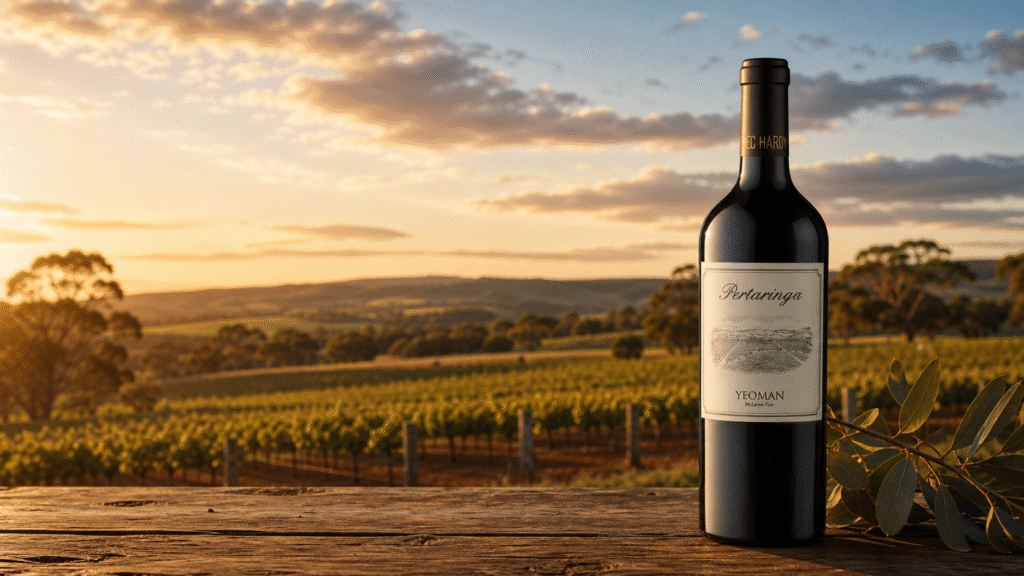
Ask most international drinkers to name a South Australian wine region and the answer will almost certainly be the Barossa Valley. This is a landscape of historic plantings, multi‑generation growers and a red‑wine tradition that has shaped how the world views Australian shiraz. Barossa Shiraz is celebrated for being rich and full‑bodied, often inky in colour, layered with dark chocolate, liquorice and ripe plum, and capable of ageing gracefully when handled with respect.
What makes a visit to the Barossa compelling is not just the power of the wines but the density of experience; over 80 cellar doors sit within an easy hour of Adelaide, many offering museum releases and single‑vineyard bottlings that tell a very localised story. Old vine resources are extraordinary, with some of the oldest producing shiraz, grenache and mataro anywhere in the world, giving wines a depth and textural authority that simply cannot be faked. Yet there is more than one note to this region. Producers increasingly focus on sub‑regionality, lighter stylistic interpretations and blends that link Barossa fruit heft with surprising freshness.
For visitors, the Barossa combines cellar door intensity with a thriving food scene, working farms, artisan producers and the sense of entering a community that has been living with vines for generations. It is the obvious stop for those who want to understand why South Australian wine became globally famous, and how that fame is being reshaped by a new generation.
 $27.00
/ bottle
$162.00 for a case of 6
$27.00
/ bottle
$162.00 for a case of 6
Santi Sortesele Pinot Grigio UV
Shipped by
Oatley Fine Wine Merchants
$27.00
/ bottle
$162.00 for a case of 6
 $24.58
/ bottle
$295.00 for a case of 12
$24.58
/ bottle
$295.00 for a case of 12
 $30.17
/ bottle
$181.00 for a case of 6
$30.17
/ bottle
$181.00 for a case of 6
 $19.17
/ bottle
$115.00 for a case of 6
$19.17
/ bottle
$115.00 for a case of 6
Dunes & Greene Split Pick Moscato NV
Shipped by
Wines Australia
$19.17
/ bottle
$115.00 for a case of 6
 $34.00
/ bottle
$204.00 for a case of 6
$34.00
/ bottle
$204.00 for a case of 6
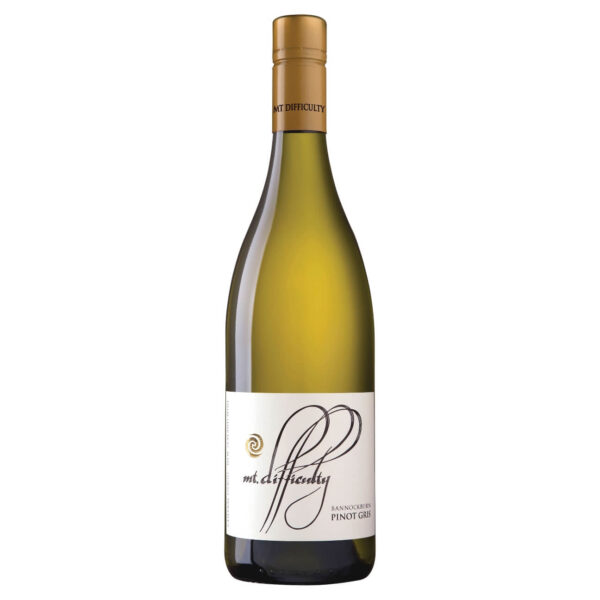
Mt Difficulty Bannockburn Pinot Gris /25
Shipped by
Wines Australia
$34.00
/ bottle
$204.00 for a case of 6

 $37.33
/ bottle
$224.00 for a case of 6
$37.33
/ bottle
$224.00 for a case of 6
 162 pts
 Turning south: McLaren Vale and its quietly thrilling Grenache
If the Barossa is the obvious answer, McLaren Vale is often the insider’s choice. Close to the beaches south of Adelaide and framed by rolling hills, McLaren Vale offers a patchwork of soil types and microclimates that make its shiraz enigmatic and varied rather than monolithic. Shiraz remains the leading grape by volume, but ask winemakers what defines the region and many will point to grenache instead.
Grenache from McLaren Vale, particularly from older bush‑vine sites, captures a lovely contradiction: wines that can be fragrant and lifted, with red fruits and spice, yet absolutely grounded in savoury tannin and mineral drive. This is where visitors often encounter Australian grenache as a serious, terroir‑expressive proposition rather than a blending component. Alongside grenache and shiraz, cabernet sauvignon performs strongly, and the region has become a kind of living laboratory for Mediterranean varieties that suit the warming climate.
From a tourism perspective, McLaren Vale excels at weaving wine, food and landscape into one continuous experience; cellar doors spill into olive groves, restaurants lean heavily on local producers, and the proximity of the Fleurieu coastline offers an easy escape to the sea between tastings. For those who want to understand how South Australia is adapting to climate and stylistic change, this is a region that rewards close attention.
Terra rossa and precision: Coonawarra on the Limestone Coast
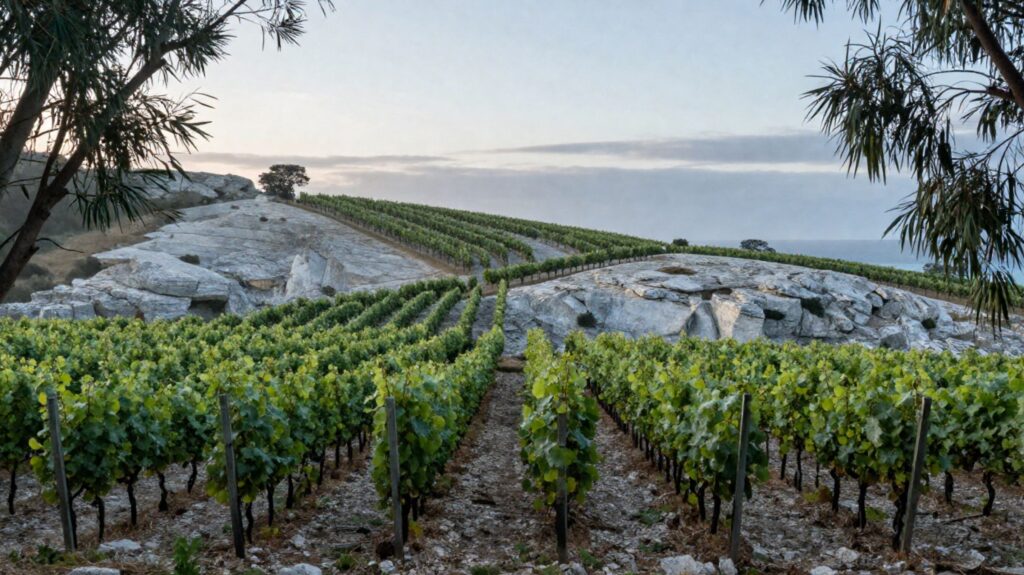
Further south again, the long, narrow strip of crimson soil that is Coonawarra offers a study in focus. Here, the famed terra rossa over limestone has become shorthand for some of Australia’s most precise and ageworthy cabernet sauvignon. Visitors quickly learn that the red soil is not just visually striking; its drainage and depth, over cool limestone, underpin wines that combine cassis fruit with herbal detail and fine, firm tannins.
Coonawarra’s compactness works in the visitor’s favour. Over 25 cellar doors line a relatively short stretch of road, making it possible to compare styles, sub‑sites and vintages with almost academic clarity. Producers such as Parker Coonawarra Estate explicitly reference their terra rossa sites, noting that extended ripening on these soils tightens tannin structure and increases fruit density in cabernet sauvignon. For Australian drinkers used to broader, more generous cabernet expressions, the region’s combination of intensity and restraint can be quietly astonishing.
Tourism here feels more rural and less polished than some other regions, which for many is exactly the appeal; fewer crowds, more time at the tasting bench and a sense of being close to the agricultural heart of the Limestone Coast. It is a place to visit for those who find satisfaction in comparing subtle differences and thinking about how soil and climate put their fingerprints on a single grape variety.
Langhorne Creek and the art of quiet excellence
On the map, Langhorne Creek can look like a simple detour between Adelaide and the Coorong, but for those who make the turn it becomes an object lesson in understated quality. This is a relatively large growing region influenced strongly by southerly winds that blow off the Southern Ocean across Lake Alexandrina, moderating temperatures during the growing season. The result is fruit that achieves ripeness without tipping into over‑ripeness, a valuable trait in a warming climate.
Shiraz and cabernet sauvignon dominate plantings, with merlot and chardonnay also significant. Historically, Langhorne Creek supplied grapes for blends that quietly fortified famous South Australian labels, but more producers now champion single‑region bottlings that showcase generous, approachable reds with gentle tannins and ample dark‑fruit character. The best examples can be surprisingly complex, with a kind of effortless drinkability that makes them particularly well suited to Australian tables.
For visitors, Langhorne Creek is less about architectural icon cellar doors and more about a sense of discovery, meeting growers and seeing how a region moves from bulk supplier to confident voice in its own right. It makes a natural pairing with a coastal escape or a trip towards the Lower Murray, fitting neatly into a broader South Australian road itinerary.
The Riverland: industry, innovation and river light
Any honest portrait of South Australian wine must eventually reckon with the Riverland, even if many tourists overlook it. Stretching along the Murray River about 200 kilometres north‑east of Adelaide, this is Australia’s largest winegrape region by tonnage, with more than 22,000 hectares of vineyard under a continental climate of hot days and noticeably cooler nights. The region’s main plantings are shiraz, chardonnay and cabernet sauvignon, which historically fed large brands and value‑driven bottlings across the country.
Yet here is where the narrative gets interesting. In amongst the large‑scale vineyards and irrigation infrastructure, a new generation of smaller producers works with alternative varieties, low‑intervention techniques and a strong focus on sustainability, using the Riverland’s abundant sunshine and manageable disease pressure as advantages. For travellers drawn to stories of innovation and the future of Australian wine rather than just its postcard moments, visits to cellar doors such as 919 Wines or Angove Family Winemakers reveal experiments with lesser‑known grapes and styles suited to the region’s reality.
Beyond the glass, the Riverland offers riverfront stays, houseboats and a slower, water‑centred pace that contrasts sharply with the hill country around Adelaide. It is not the obvious starting point for a first South Australian wine trip, yet for repeat visitors it can become one of the most thought‑provoking stops.
Pulling it together: planning a South Australian wine journey
The striking thing about these regions is how much diversity they pack into manageable distances. Within a few hours’ drive of Adelaide there are cool‑climate chardonnay and pinot in the Adelaide Hills, benchmark riesling in the Clare Valley, historic shiraz in the Barossa, thrilling grenache and Mediterranean reds in McLaren Vale, precise cabernet in Coonawarra, quietly impressive blends in Langhorne Creek, and large‑scale yet innovative winegrowing in the Riverland. For serious enthusiasts, the most rewarding trips tend to pick two or three regions that complement one another, building a narrative around climate, grape variety or style.
Someone fascinated by white wines and acidity might focus on the Adelaide Hills and Clare Valley, perhaps with a detour into sparkling wine producers tucked into the Hills. A traveller who loves structured reds could track a line from Barossa Shiraz through McLaren Vale Grenache to Coonawarra Cabernet, watching tannin profile and fruit expression shift with soil and latitude. Those interested in the economic and environmental realities of wine might deliberately contrast boutique Hills or Vale producers with large‑scale Riverland operations experimenting with new varieties and technologies.
What makes South Australia compelling is not simply that it produces large volumes of wine, but that within its borders one can see almost every major thread of contemporary Australian wine culture playing out in real time. For visitors willing to ask questions at the tasting bench, to walk or cycle between vineyards, and to look twice at a soil pit or a vineyard map, the state becomes less a destination and more an ongoing conversation between land, grape and maker.

 Shiraz
 Cabernet Sauvignon
 Pinot Noir
 Grenache
 Merlot
 Red Wine Blends
 Chardonnay
 Riesling
 Pinot Gris
 Semillon
 Viognier
 Grenache Rosé
 Pinot Noir Rosé
 Shiraz Rosé
 Sangiovese Rosé
 Aglianico Rosé
 Clairette Rose
 Champagne
 Prosecco
 Sparkling Shiraz
 Blanc de Blanc
 Blanc de Noir
 Pet Nat
 Moscato
 Topaque
 Port
Port Sherry (dry & sweet)
 Muscat & Tokay
 Vermouth