 0473 644 098 · Mon–Fri 9am–5pm AESTHelp & FAQ


Vegan Friendly, Organic, Biodynamic: Why These Wines Now Lead Serious Conversations

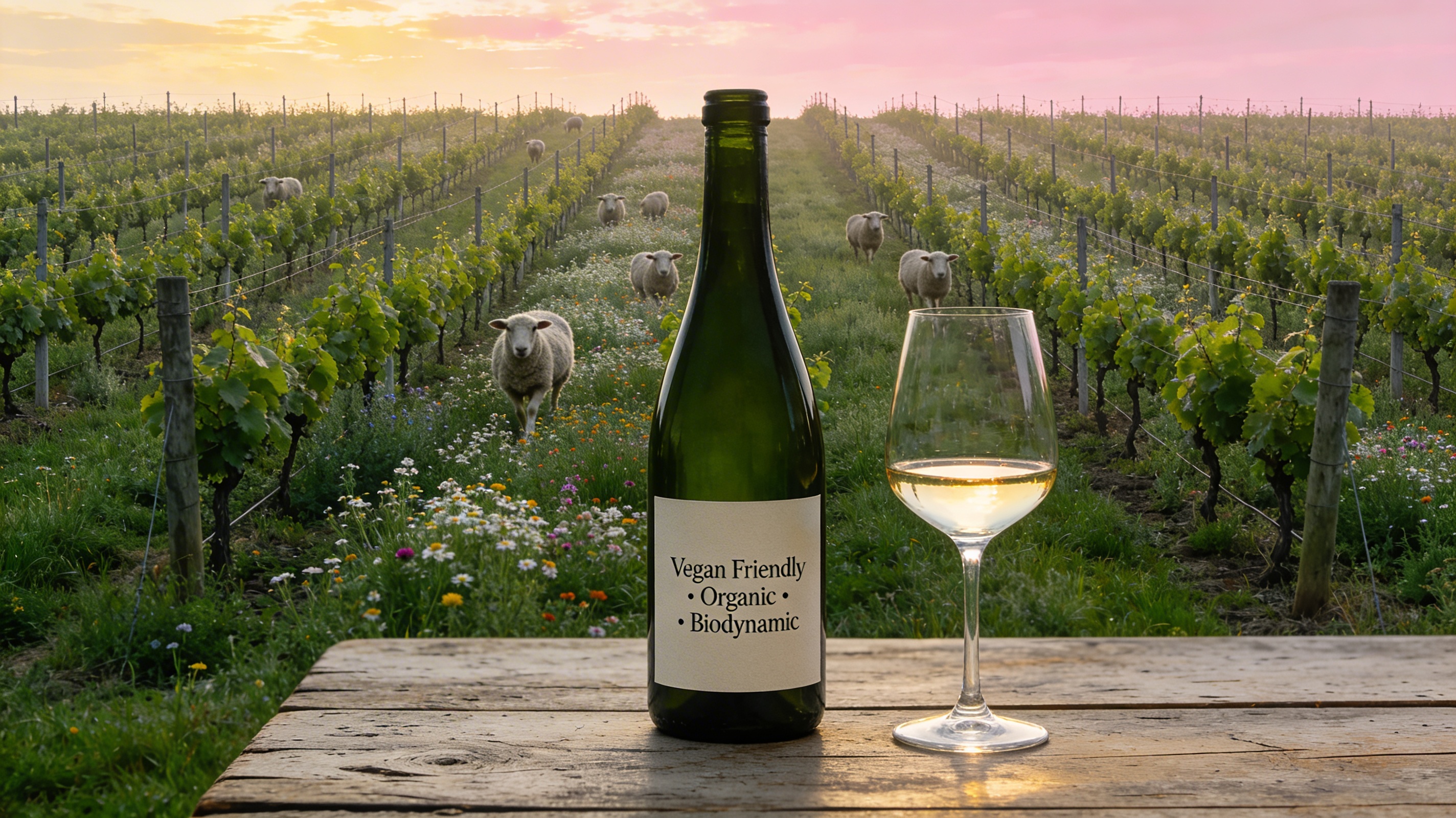
Vegan‑friendly, organic and biodynamic wine did not begin as a marketing trend. It grew out of a century‑long argument about what it means for wine to be an agricultural product rather than an industrial one, and that debate is finally sitting at the centre of serious Australian wine conversation.
When organics stepped in after the chemical age
Modern organic farming really emerges as a response to the post‑war boom in synthetic fertilisers and pesticides. After the Second World War, the same chemistry that had transformed industrial agriculture also swept across vineyards, promising higher yields, cleaner canopies and fewer vineyard workers.
Organic agriculture was the counter‑move. It rejected synthetic fertilisers, systemic herbicides and most manufactured pesticides, instead returning to crop rotation, cover crops, composts and beneficial insects to maintain soil health and control pests. In wine terms, this meant vineyards managed without glyphosate under the vines, without soluble nitrogen to push big crops, and with a renewed focus on soil life as the foundation of quality rather than an afterthought. Certification frameworks then followed, setting rules around chemical use, GMOs and inputs so that “organic” could mean something precise on a label rather than a casual aspiration.
Biodynamics and the idea of the vineyard as a living organism
Biodynamics pushes the same conversation further. It originates with Rudolf Steiner in the early twentieth century, whose lectures proposed treating the farm as a closed, self‑sustaining organism and using specific composts, teas and preparations to enliven the soil. In the vineyard, biodynamics layers these preparations, the use of farm‑derived manures and composts, and attention to lunar and planetary calendars on top of organic rules, aiming to deepen the connection between vine, soil and broader ecosystem.
Certification bodies such as Demeter then codified this into standards that reach from vineyard to cellar. In practice, biodynamic producers restrict outside inputs, encourage biodiversity through mixed plantings and livestock, and frame the vineyard as something more like a garden than a factory block, even at scale. Interestingly, some of the world’s most prestigious estates, including Domaine de la Romanée‑Conti, have adopted biodynamics, which has given the movement a certain cachet within fine‑wine circles that simple “green” branding never quite achieved.
How vegan wine quietly forced the cellar to change
Vegan‑friendly wine is a much more recent conversation, and it happens largely in the cellar rather than the vineyard. Historically, most clarification (or “fining”) used animal‑derived proteins such as egg white, milk casein, gelatin from meat by‑products, and isinglass from fish bladders to soften tannin and remove haze. There is even a recorded history of ox blood being used, a detail that tends to unsettle drinkers who imagine wine as nothing but fermented grape juice.
For vegetarian and vegan drinkers, these agents are not acceptable, even though they are usually removed from the finished wine. Regulators in Australia and the EU have compounded the issue by requiring labelling where allergenic proteins such as egg and milk have been used, which has pushed winemakers to think harder about their fining choices. The response has been a shift toward mineral and plant‑based fining agents such as bentonite clay, activated carbon, and more recently pea and potato proteins that can mimic the technical role of traditional finings without leaving an animal footprint.
Specialist producers have now developed vegan fining products specifically targeted at organic and biodynamic winemakers, with solutions designed to replace synthetic polymers like PVPP as well as animal proteins. This is the crucial detail: vegan‑friendly practice has not simply been about “doing less”; it has required serious R&D to ensure clarity, stability and tannin management can be achieved without jeopardising quality.
Featured Wines

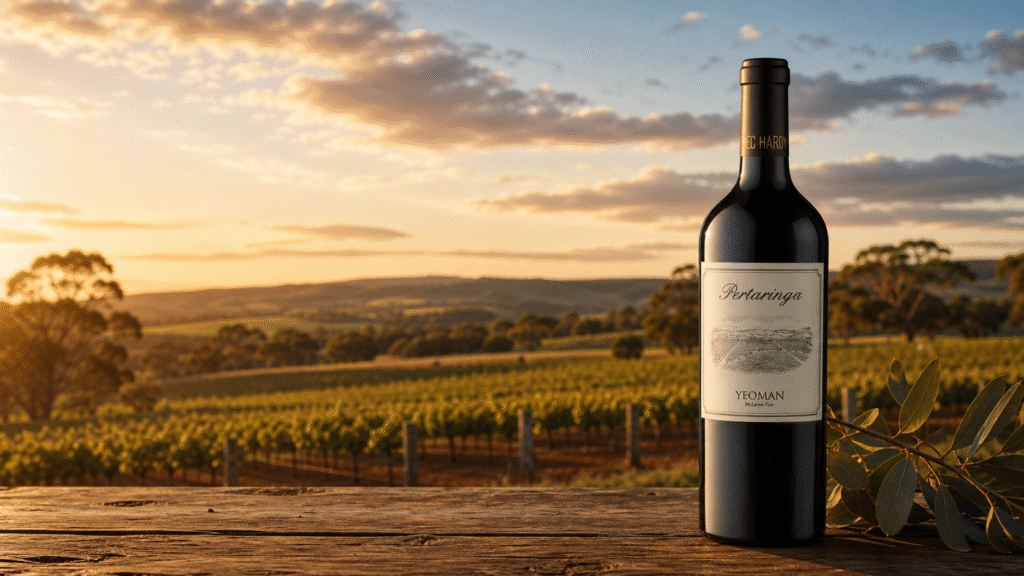
Bec Hardy Shiraz 2024 (6 Bottles) McLaren Vale, SA
Add to Cart
$27.00
/ bottle
$162.00 for a case of 6
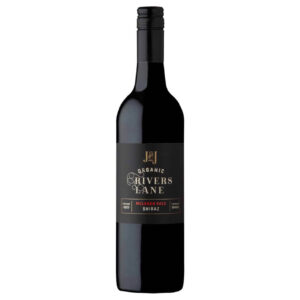
J and J Wines Rivers Lane Organic Shiraz 2022 (6 Bottles) McLaren Vale, SA
Add to Cart
$24.00
/ bottle
$144.00 for a case of 6
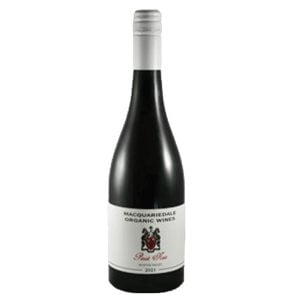
Macquariedale Organic Wines Pinot Noir 2025 (6 Bottles) Orange, NSW
Add to Cart
$40.50
/ bottle
$243.00 for a case of 6
Why these wines became so admired rather than marginal
The current enthusiasm for organic, biodynamic and vegan‑friendly wine is not solely a question of ethics. It is also about flavour and identity. Producers adopting these practices consistently report healthier soils, more resilient vines and grapes that achieve physiological ripeness at lower sugar levels, which naturally feeds into balance and freshness in the glass. Many consumers then perceive these wines as more expressive of terroir, less marked by aggressive oak or high alcohol, and more nuanced aromatically.
At the same time, consumer awareness of sustainability and ingredient transparency has grown. Studies and market research now show that younger drinkers in particular seek environmentally conscious products and look for guarantees around chemical use and animal inputs. Vegan labels and organic or biodynamic certifications have become a kind of shorthand on the shelf for “this producer takes things seriously”, signalling a philosophy that often correlates with lower intervention in general. When elite estates adopt these methods and critics reward them with high scores, the category inevitably shifts from curious niche to respected mainstream.
What actually changes in the vineyard and the winery
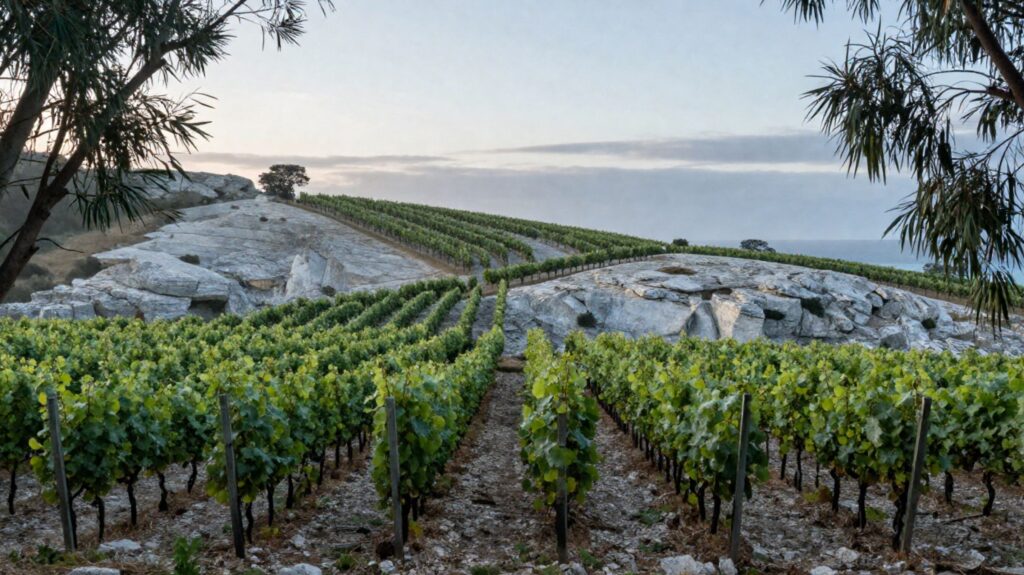
In viticulture, the shift to organic and biodynamic practice involves giving up synthetic fertilisers and herbicides, managing weeds with under‑vine cultivation or mulches, and relying on copper, sulphur and biological controls instead of systemic fungicides and insecticides. Cover crops are seeded to fix nitrogen, prevent erosion and provide a habitat for beneficial insects, whilst compost and animal manures are used to build soil organic matter and microbial life.
Biodynamics adds compost preparations, horn manure and silica applications, and careful timing of vineyard work to lunar and cosmic rhythms. It also encourages integration of livestock within the vineyard, which can graze between rows, control weeds and contribute manure, all of which reinforces the idea of the property as a closed loop. The net result is often lower yields and higher labour input, but also fruit that is more concentrated, more evenly ripened and better able to withstand climatic stress.
In the cellar, organic and biodynamic philosophy tends to favour native yeast fermentation, lower new oak usage, reduced additions and minimal filtration, although sulphur is still employed by many serious producers, particularly for stability and ageworthiness. Vegan adjustments then layer on top of this: animal‑derived finings are replaced by bentonite, pea or potato protein or eliminated altogether if the wine is left unfined and unfiltered. Some producers also pay attention to microplastics and petrochemical inputs, moving away from certain synthetic polymers and favouring naturally derived clarification aids.
Australian producers showing how the shift can work
The Australian scene offers several instructive examples of how this transition can look when it is taken seriously rather than simply used as label decoration. Burnside Organic Farm in Margaret River operates both vineyard and winery under Demeter biodynamic certification, farming dry‑grown vines, hand‑managing the blocks and using natural winemaking with no added yeasts or chemicals beyond modest sulphur additions in most wines. The wines, including styles such as Petillant Naturel, are framed explicitly as expressions of site and farming method, rather than as technical exercises in low intervention.
Blind Corner in northern Margaret River presents another angle, combining certified organic and biodynamic viticulture with a blend of old‑world inspiration and new‑world experimentation. Here the focus is on wild ferments, minimal manipulation and “lo‑fi” techniques that still deliver clarity and balance, using biodynamics as a foundation rather than a slogan. In Margaret River again, Si Vintners, Marri Wood Park and Windance Estate all work with biodynamic (and in some cases organic) certifications, applying mixed farming, cover crops, composts and low‑intervention winemaking to produce wines that have attracted attention precisely because they taste vivid and alive rather than simply “correct”.
Across these producers, certain patterns emerge: firm but fine tannins in reds, bright natural acidity, slightly wild aromatics in some cuvées, and a sense of energy on the palate that enthusiasts often describe, somewhat imprecisely, as “vitality”. For many serious drinkers, this is what justifies the shift. Organic or biodynamic farming and vegan‑friendly winemaking are not pursued as ends in themselves; they are tools for achieving wines with stronger personality and deeper connection to place.
Where the conversation seems to be heading next
Looking ahead, the interplay between these movements is likely to become even tighter. As vegan‑focused regulation expands and more markets require disclosure of even trace animal inputs, plant‑based finings and unfined wines will move from fringe to norm. At the same time, ongoing concerns about climate change, water use and soil degradation will keep organic and biodynamic viticulture in the centre of serious discussions about long‑term vineyard viability, particularly in warm, dry regions such as much of Australia.
For thoughtful producers, the real opportunity lies in integrating these practices coherently rather than ticking boxes: vineyards farmed as living systems, cellars that intervene lightly and transparently, and labels that explain clearly what has been done and why. For equally thoughtful drinkers, vegan‑friendly, organic and biodynamic wines have become less a niche and more a lens through which to ask the deeper question that has always mattered: does this wine feel like an authentic translation of a place, or just a well‑polished product?



 Shiraz
 Cabernet Sauvignon
 Pinot Noir
 Grenache
 Merlot
 Red Wine Blends
 Chardonnay
 Riesling
 Pinot Gris
 Semillon
 Viognier
 Grenache Rosé
 Pinot Noir Rosé
 Shiraz Rosé
 Sangiovese Rosé
 Aglianico Rosé
 Clairette Rose
 Champagne
 Prosecco
 Sparkling Shiraz
 Blanc de Blanc
 Blanc de Noir
 Pet Nat
 Moscato
 Topaque
 Port
Port Sherry (dry & sweet)
 Muscat & Tokay
 Vermouth