 0473 644 098 · Mon–Fri 9am–5pm AESTHelp & FAQ


Why the Right Glass Makes Your Wine Taste Smarter Than You Think

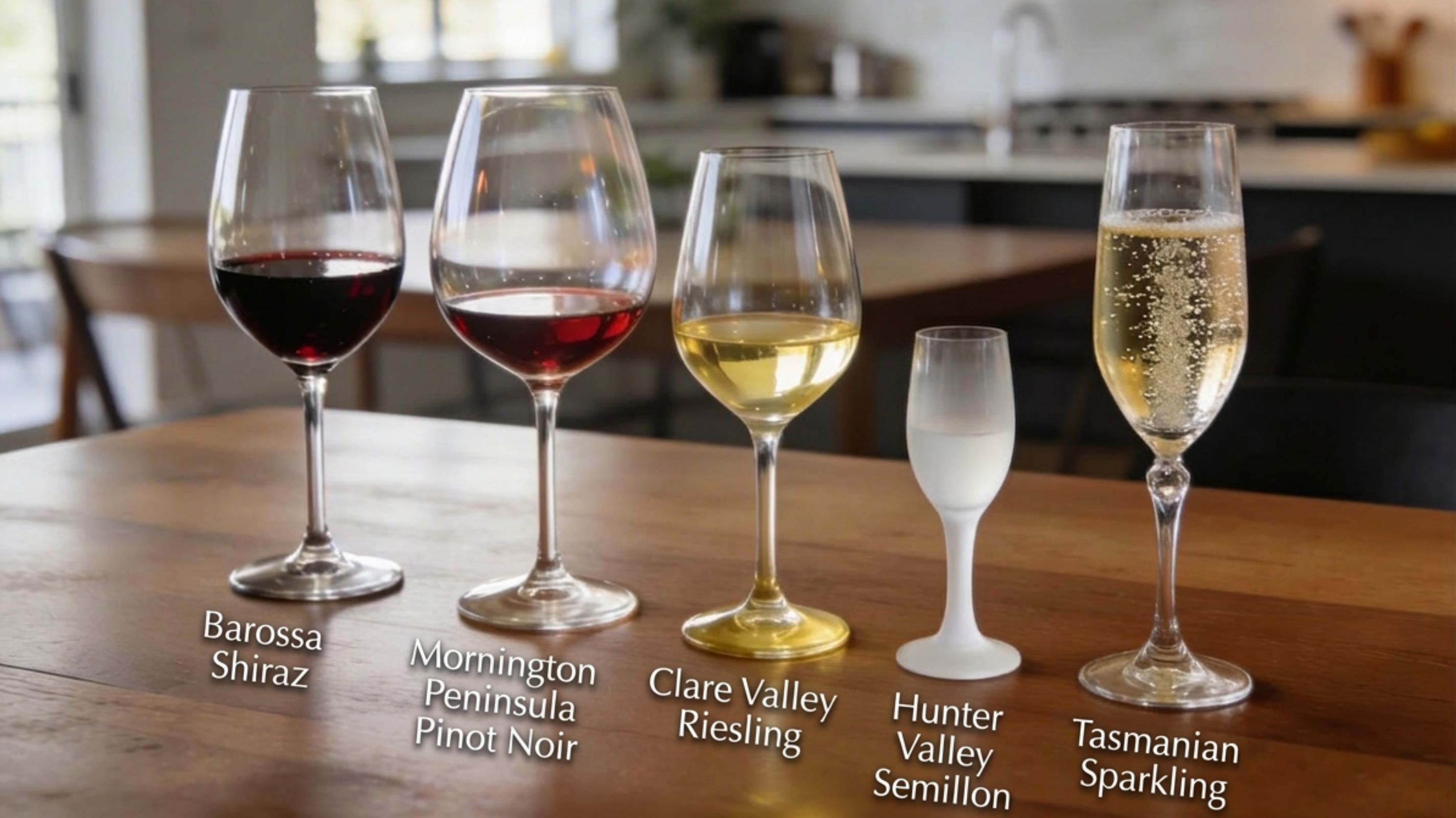
The right glass can make the same wine feel like three different bottles, especially for Australian drinkers now surrounded by serious stemware rather than chunky pub goblets. Glass is no longer a neutral container; its shape actively edits aroma, texture and even how quickly a wine warms in the hand.
How a piece of glass rewrites flavour
Here is where things become genuinely fascinating for anyone who has ever wondered why a lean Clare Riesling sings from one glass and feels muted in another. Three basic design elements dictate the experience: bowl, rim and stem. A wider bowl increases surface area and oxygen contact, softening tannins and allowing complex red aromatics to expand. A narrower bowl and tighter opening concentrate delicate aromas and slow oxygen uptake, which is critical for acid‑driven whites and sparkling wines.
Rim diameter and curvature act almost like a flavour funnel. Smaller, inward‑tapered rims concentrate volatiles and send them straight to the nose, whilst also controlling how fast the wine hits the palate and where it lands on the tongue. The stem, which emerged in Europe around the 15th century, keeps warm fingers away from the bowl, preserving serving temperature and thus the balance of freshness and alcohol. Modern sensory research backs up what good sommeliers have intuited for decades, with studies from Kyoto University and Oxford suggesting that glass shape measurably changes how people perceive aroma intensity and identify flavours.
From Roman cups to varietal‑specific obsessions
Dedicated vessels for wine are not remotely new. Roman glassworkers were already blowing colourless cups for elite banquets, but most everyday drinkers in Europe relied on wood or pewter well into the Middle Ages. The real turning point came in Renaissance Venice, where Murano artisans refined clear, delicate cristallo and created the now‑familiar trio of bowl, stem and foot that still defines the wine glass today.
In 17th‑century England, George Ravenscroft’s addition of lead oxide to glass produced clearer, stronger crystal that made wine appear deeper in colour and sparkle in candlelight, tying glassware directly to luxury and theatre. Fast‑forward to the 20th century and the idea of one “good” glass fractured. Austrian producer Riedel pushed the concept that each grape variety needed its own optimised shape, with Claus Riedel’s work later popularised by Georg Riedel through more accessible machine‑made collections. Whether one subscribes fully to the cult or not, this movement radically changed restaurant culture in Australia and elsewhere; suddenly the stemware on the table became a visible marker of seriousness rather than an afterthought.
Why glass culture matters in 2026, not just in Michelin dining rooms
In the current era of detailed tasting notes, climate‑sensitive viticulture and regionally expressive winemaking from places like the Yarra Valley and Great Southern, the glass has become part of the terroir conversation rather than a neutral prop. Australian drinkers are now far more likely to debate Zalto versus Riedel than to accept generic pub goblets, because they can taste that line between blackcurrant purity and alcoholic heat in a Barossa Shiraz shift simply with a change of bowl.
The science quietly supports the culture. Larger bowls and carefully tapered rims change how ethanol evaporates and where aroma compounds concentrate above the wine; tests have shown that some shapes let tasters identify flavours more accurately and more quickly than others. This is why serious producers invest in branded stemware partnerships, and why better Australian restaurants now pour sparkling into tulips rather than flat flutes; the glass is treated as an instrument, not merely a container.
 $38.83
/ bottle
$233.00 for a case of 6
$38.83
/ bottle
$233.00 for a case of 6
 $32.83
/ bottle
$197.00 for a case of 6
$32.83
/ bottle
$197.00 for a case of 6
 $58.67
/ bottle
$352.00 for a case of 6
$58.67
/ bottle
$352.00 for a case of 6
Cape Mentelle Zinfandel
Shipped by
Oatley Fine Wine Merchants
$58.67
/ bottle
$352.00 for a case of 6
 $25.17
/ bottle
$151.00 for a case of 6
$25.17
/ bottle
$151.00 for a case of 6

 $42.00
/ bottle
$252.00 for a case of 6
$42.00
/ bottle
$252.00 for a case of 6
 $31.17
/ bottle
$187.00 for a case of 6
$31.17
/ bottle
$187.00 for a case of 6
 233 pts
 Five wines, five glasses, and why they belong together
To see how this plays out in the real world, it helps to look at concrete, everyday pairings that would feel entirely natural in an Adelaide dining room or at a carefully set home table.
1. Barossa Shiraz and a generous Bordeaux‑style bowl
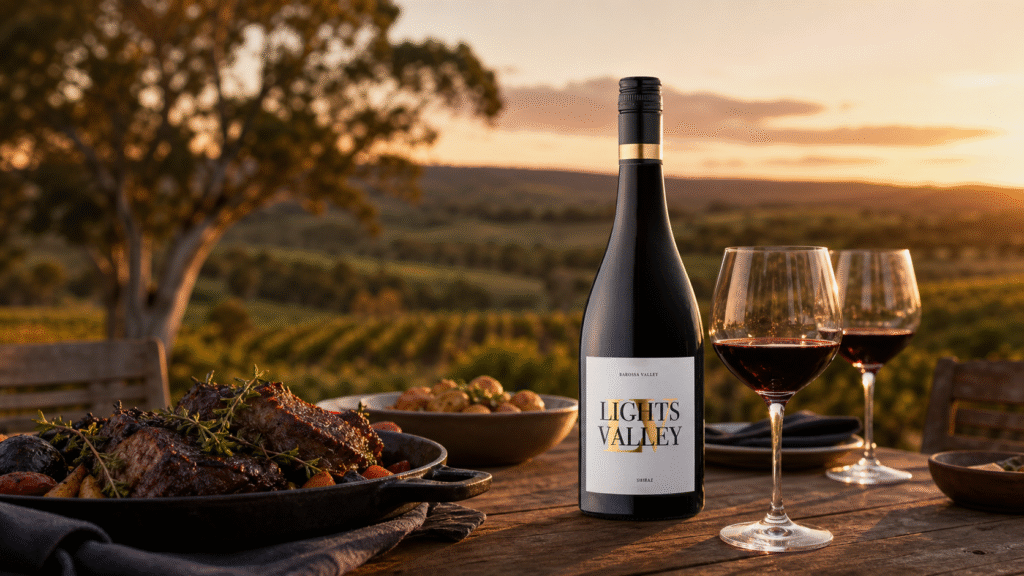
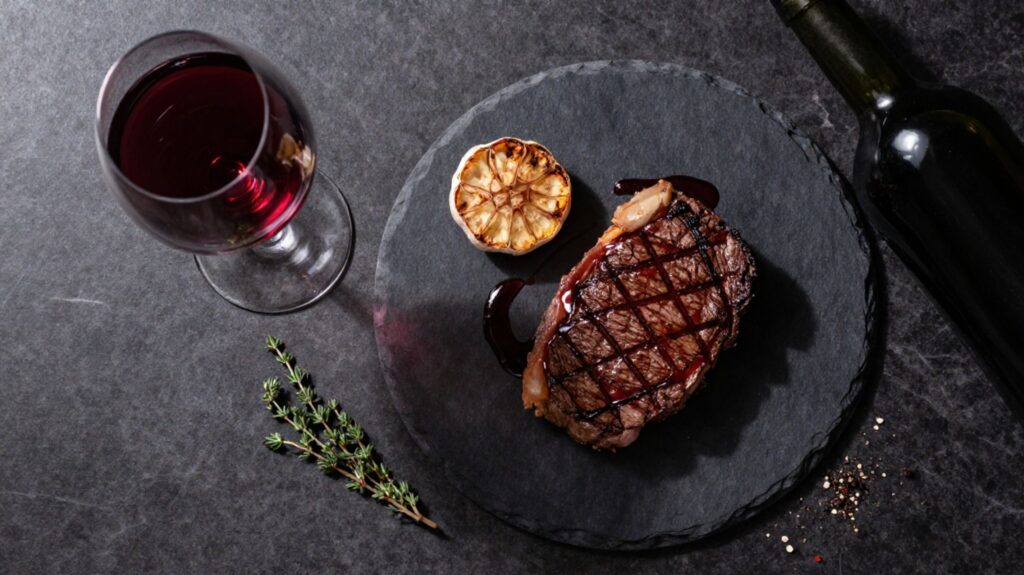
For a structured, full‑bodied Barossa Shiraz, the archetypal choice is a large Bordeaux‑style red glass: tall, with a broad but not extreme bowl and a relatively narrower opening. The height lifts aromas away from the surface of the wine, which helps tame raw alcohol, whilst the generous bowl allows plenty of air contact so those firm tannins and dense dark‑fruit notes can relax and integrate.
The slightly tapered rim focuses blackberry, plum and spice aromatics towards the nose rather than letting them dissipate, and it channels the wine onto the mid‑palate, where structure feels broad and complete rather than aggressive. Pour the same Barossa Shiraz into a small, straight‑sided bistro glass and the result will typically seem hotter, simpler and more one‑dimensional because both the aromatics and alcohol are less precisely managed.
2. Mornington Peninsula Pinot Noir and a classic Burgundy balloon
Pinot Noir tells an even clearer story. A Burgundy‑style glass uses a very wide, almost spherical bowl with a noticeably narrower rim, a design that looks theatrical but is rooted in aroma physics. The expanded surface area lets the wine form those slow, aromatic “waves” when swirled, liberating red‑fruit and forest‑floor notes that otherwise sit locked in the liquid.
The inward‑curving rim then traps and concentrates these volatiles, directing them straight into the nose at each sip. Studies on similar shapes have shown that tasters can perceive complex aromas faster and more intensely compared with straight‑sided glasses, which mirrors how a fine Mornington Pinot Noir suddenly seems more layered from the right stem. Practically, this style of glass also feels more forgiving with slightly chilled service, which suits the lighter, more perfumed Australian expressions now common.
3. Clare or Eden Valley Riesling and a focused white wine tulip
High‑acid, aromatic whites such as Clare or Eden Valley Riesling ask for something quite different: a medium‑small tulip‑shaped glass with a narrower bowl and tight rim. The smaller volume reduces surface area, limiting oxygen exposure so that citrus and floral notes remain bright rather than prematurely soft and oxidative.
Temperature stability is critical here. A lean Australian Riesling typically shows its best around 7 to 10 degrees Celsius, and a slightly smaller bowl warmed minimally by the hand preserves that tension for longer across a meal. The tapered shape also directs the wine to the front and sides of the palate, where acidity registers most clearly, sharpening the impression of line and length that defines top examples from Polish Hill River or High Eden.
4. Prosecco, Champagne and the quiet replacement of the flute
Sparkling wine glass culture has shifted dramatically in the last decade. The narrow, tall flute once dominated because it showcased streams of bubbles and preserved carbonation, but research into carbon dioxide and aroma release in sparkling wines has highlighted its limitations. A slightly wider tulip or small white‑wine style glass is now preferred for serious Champagne, Tasmanian sparkling or quality Prosecco because it balances effervescence with aromatic expression.
The increased bowl volume allows a greater aromatic headspace to form above the wine, where brioche, apple and autolytic notes can develop and be appreciated, whilst a gentle inward taper still focuses the mousse and slows CO₂ loss enough for textural precision. Pour the same vintage Champagne into a tall, narrow flute and the bead will look finer, but much of the complex nose remains literally trapped, leaving a more anonymous, acid‑and‑bubble driven impression.
5. Young Hunter Semillon and the case for smaller precision
Young Hunter Valley Semillon is famously light in body, razor‑sharp in acidity and subtle in aroma, making glass choice particularly revealing. A relatively small, narrow white‑wine glass helps protect the low serving temperature and multiplies what might otherwise feel like a very shy nose. Because the wine is low in alcohol and texture, it does not need the oxygenation benefits of a huge bowl; instead it benefits from containment and focus that accentuate lemon, herb and lanolin nuances.
This style of glass also encourages smaller sips, which matters with wines where the pleasure is in detail and length rather than in immediate richness. Used in an Australian context, it quietly signals to guests that this is not simply “dry white” but a wine of precision that deserves attention, even if the label is not yet iconic.
When a single “good” glass is enough, and when it really is not
The question many thoughtful drinkers in Adelaide or Sydney still ask is whether all this is science or just clever marketing. Sensory work does indicate that a single, well‑designed universal glass can perform competently across many styles; it will rarely destroy a wine. Yet the same studies, and decades of sommelier experience, also show that certain combinations of glass and wine consistently unlock more aroma, better balance and finer textural detail than others.
In practice, this means that a household serious about wine does not need fifteen different shapes, but will gain real pleasure from three: a large bowl for structured reds, a medium tulip for aromatic whites and sparkling, and perhaps an even larger Burgundy bowl for Pinot Noir and delicate, complex reds. Australian wine culture has reached the point where the glass can be seen not as fetishism but as part of hospitality: a quiet signal that the host has done everything possible to let the wine speak clearly.



 Shiraz
 Cabernet Sauvignon
 Pinot Noir
 Grenache
 Merlot
 Red Wine Blends
 Chardonnay
 Riesling
 Pinot Gris
 Semillon
 Viognier
 Grenache Rosé
 Pinot Noir Rosé
 Shiraz Rosé
 Sangiovese Rosé
 Aglianico Rosé
 Clairette Rose
 Champagne
 Prosecco
 Sparkling Shiraz
 Blanc de Blanc
 Blanc de Noir
 Pet Nat
 Moscato
 Topaque
 Port
Port Sherry (dry & sweet)
 Muscat & Tokay
 Vermouth