 0473 644 098 · Mon–Fri 9am–5pm AESTHelp & FAQ


What Makes a Good Prosecco – Beyond the Bubbles and Hype


Most people don’t think much about prosecco. They pop a bottle at parties, sip it straight or toss it into a Bellini, rarely tracking down interesting labels. Yet beneath this casual relationship with the wine lies a quiet revolution, one that transforms prosecco from commodity sparkler into something worthy of serious consideration. Understanding what separates genuinely good prosecco from the forgettable majority requires abandoning the assumption that this category exists as one monolithic experience, and instead recognising that prosecco, like any wine, reflects its origin, its maker’s philosophy, and the care taken at every decision point from vineyard to glass.
The foundation of this distinction rests on a simple truth that many drinkers never encounter: prosecco made in the hills tastes fundamentally different from prosecco made on flat land, and how a winemaker approaches the Glera grape, the variety’s sole star, dictates whether that wine refreshes or merely passes through the mouth unremarkably.
When the Glera Grape Becomes More Than Just a Vehicle
The Glera grape, a semi-aromatic white variety originating near Trieste in Italy’s Friuli-Venezia Giulia region, possesses characteristics that seem almost perfectly engineered for sparkling wine production, yet this apparent simplicity masks considerable complexity. High acidity forms the backbone of quality prosecco; it’s what gives the wine structure, freshness, and the ability to carry delicate aromatics without becoming flabby or cloying. This acidity is precisely why Glera, unlike many grape varieties, maintains its acidic backbone even when harvested late in the season, a critical attribute in regions where warmth threatens to flatten acidity.
The grape ripens late, typically in late September or October in Italy and February to March in Australia’s King Valley. This extended ripening window means that in regions with suitable climates, producers can coax full phenolic development and aromatic concentration without sacrificing the acidity essential to sparkling wine quality. Yet this generosity comes with a caveat: the variety produces high yields unless vigour is carefully controlled through canopy management and pruning techniques. A winemaker who fails to limit yields faces a characterless base wine, technically sound, perhaps, but utterly forgettable.
Beyond structure, Glera contributes a distinctive aromatic signature. The grape delivers white flowers, stone fruit, green apple, citrus, and honeyed notes. These aren’t overtly perfumed aromas like those from Muscat or Riesling; rather, Glera’s expressions tend toward subtlety and refinement. Its relatively neutral flavour profile, paradoxically, allows terroir (the vineyard’s soil, climate, and aspect) to express itself more clearly than would occur with a highly aromatic variety. This means that two proseccos made from identical winemaking protocols but grown on different hillsides will taste markedly different, a fact that separates serious prosecco producers from commodity operations.
Geography as the Primary Determinant: Why Slope Matters More Than Most Realise
This is where the quality conversation becomes concrete. Prosecco exists at three official tiers, determined entirely by geography and associated regulations: Prosecco DOC (the broad designation covering around 20,000 hectares across the Veneto and Friuli-Venezia Giulia regions), Prosecco Superiore DOCG (a much smaller, hilly zone between Conegliano and Valdobbiadene in the province of Treviso), and within that hierarchy, specific sub-designations of exceptional vineyard sites.
The flatlands produce Prosecco DOC. These are straightforward, often machine-harvested wines from gentler terrain where mechanisation is feasible and yields can be generous. The price reflects this accessibility, typically ranging between AUD $12–18. These wines serve their purpose admirably: they’re refreshing, uncomplicated, and honest. But they rarely demonstrate the layering, fruit intensity, or aromatic complexity that marks genuinely good prosecco.
The hills, by contrast, present an entirely different proposition. Prosecco Superiore DOCG emerges from Valdobbiadene and Asolo, regions where steep slopes require hand-harvesting and where the topography creates the climatic conditions that yield superior fruit. The slope angle itself becomes a quality factor: south-facing hillsides receive precisely calibrated sunlight exposure, while elevation ensures that grapes maintain acidity even as daytime temperatures climb. The drainage on slopes means grapes don’t sit in waterlogged soil; rain travels down the valley rather than pooling. These geophysical realities cannot be replicated on flatland, which explains why Superiore DOCG commands a price premium, typically AUD $18–28, despite using identical winemaking methods.
Within Superiore DOCG sits Cartizze, a site of such cachet that its wines need not carry the word “prosecco” on the label. This 265-hectare (some sources cite 107 hectares) zone represents the pinnacle of prosecco production, with vineyard prices among the highest of any Italian appellation. The soils here are thin, composed of marl and sandstone laid down by ancient glacial activity, offering excellent drainage and mineral expression. The Cartizze designation carries such prestige that some producers, particularly those from other regions, have sought to use the name, a regulatory battle reflecting the site’s genuine cachet.
Beyond Cartizze, the 43 villages designated as “Rive” (essentially cru sites) represent a second tier of distinction. These are the best vineyards outside Cartizze, selected for their terroir characteristics and historical reputation for producing superior fruit. A wine bearing a Rive designation from a specific commune, say, Col Vetoraz’s Valdobbiadene Prosecco Superiore, signals that careful attention has been paid to terroir.
For Australian drinkers, this hierarchy matters profoundly. Australia’s prosecco heartland is the King Valley in Victoria, where Otto Dal Zotto planted the first Glera vines in 1999. The region’s Mediterranean climate, with warm days and cool nights, proved ideal for the variety’s late ripening, and the altitude, many King Valley vineyards sit between 300–400 metres, provides the temperature differential necessary to maintain acidity. Dal Zotto’s first vintage, released in 2004 and called L’Immigrante (The Immigrant), was made using traditional method champagne techniques, demonstrating that Australian terroir could support more ambitious prosecco expressions. Today, the King Valley hosts producers including Brown Brothers, Chrismont, Pizzini, and Sam Miranda, all working with the same foundational advantage: climate suited to prosecco’s requirements.
 $29.17
/ bottle
$175.00 for a case of 6
$29.17
/ bottle
$175.00 for a case of 6
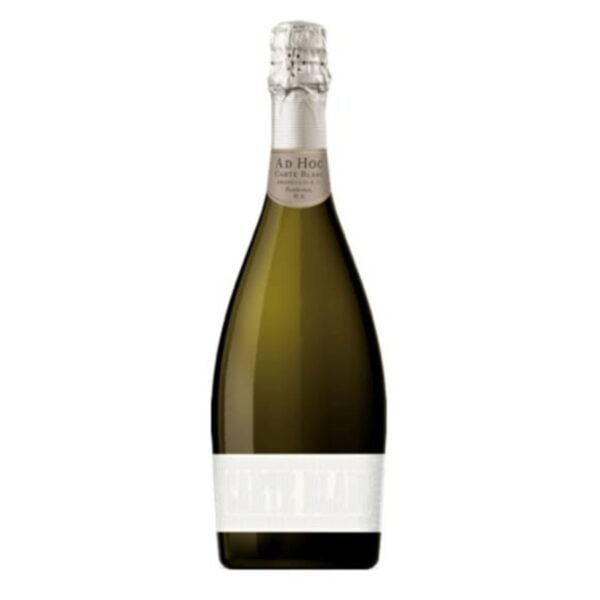
Ad Hoc ‘Carte Blanc’ Prosecco NV
Shipped by
Oatley Fine Wine Merchants
$29.17
/ bottle
$175.00 for a case of 6

 $22.25
/ bottle
$267.00 for a case of 12
$22.25
/ bottle
$267.00 for a case of 12

 $24.58
/ bottle
$295.00 for a case of 12
$24.58
/ bottle
$295.00 for a case of 12
 $19.50
/ bottle
$117.00 for a case of 6
$19.50
/ bottle
$117.00 for a case of 6
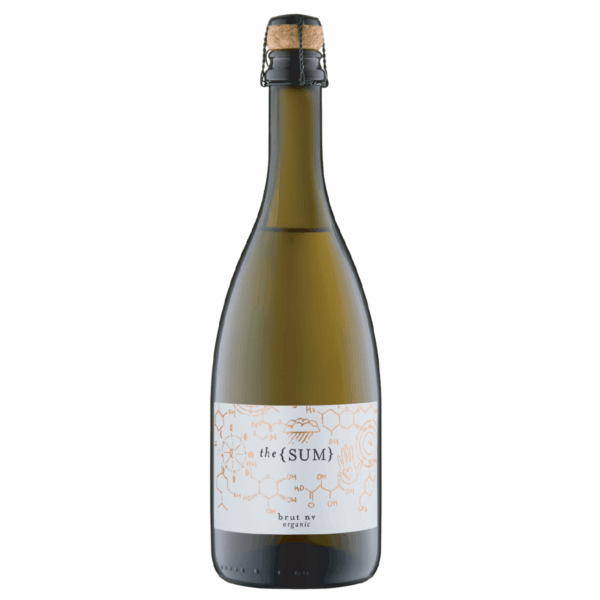 $21.67
/ bottle
$130.00 for a case of 6
$21.67
/ bottle
$130.00 for a case of 6
Castelli Estate The Sum Prosecco NV
Shipped by
Oatley Fine Wine Merchants
$21.67
/ bottle
$130.00 for a case of 6
 $7.63
/ bottle
$183.00 for a case of 24
$7.63
/ bottle
$183.00 for a case of 24
Aurelia Prosecco NV 200ml
Shipped by
Oatley Fine Wine Merchants
$7.63
/ bottle
$183.00 for a case of 24
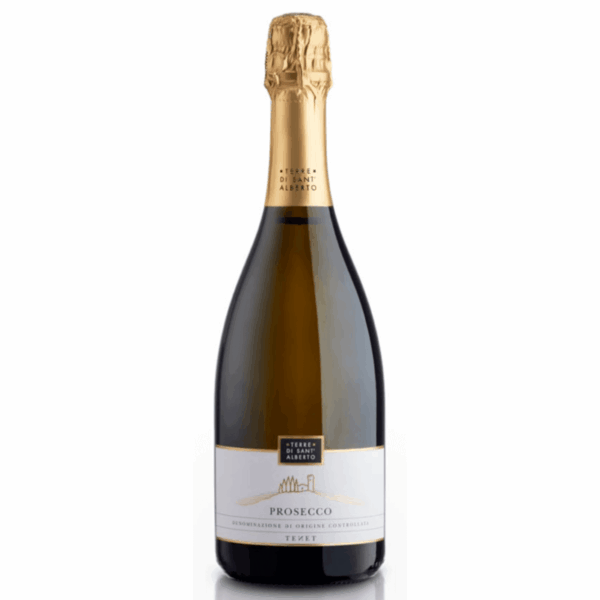 $26.08
/ bottle
$313.00 for a case of 12
$26.08
/ bottle
$313.00 for a case of 12
Terre Di Sant'Alberto Tenet Prosecco Brut D.O.C.
Shipped by
Gathered Wine
$26.08
/ bottle
$313.00 for a case of 12
 $25.33
/ bottle
$152.00 for a case of 6
$25.33
/ bottle
$152.00 for a case of 6
Cat out of the Bag Prosecco NV
Shipped by
Jack Rabbit Vineyard, The Bellarine VIC
$25.33
/ bottle
$152.00 for a case of 6
 $24.00
/ bottle
$144.00 for a case of 6
$24.00
/ bottle
$144.00 for a case of 6
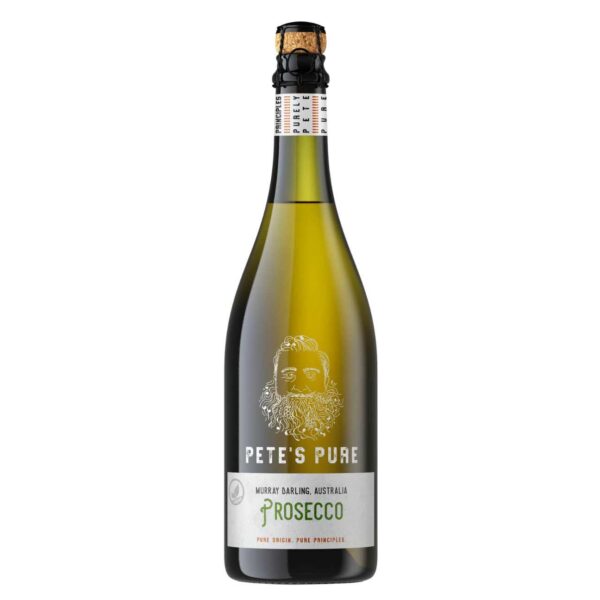 $13.67
/ bottle
$164.00 for a case of 12
$13.67
/ bottle
$164.00 for a case of 12
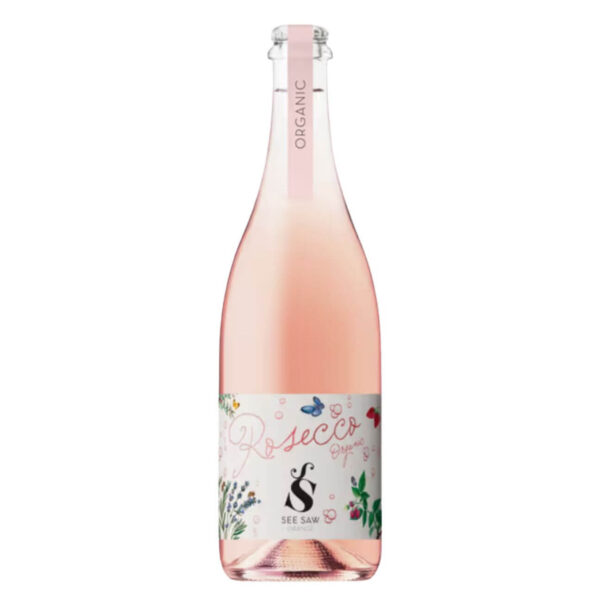 $24.58
/ bottle
$295.00 for a case of 12
$24.58
/ bottle
$295.00 for a case of 12
 $26.33
/ bottle
$158.00 for a case of 6
$26.33
/ bottle
$158.00 for a case of 6
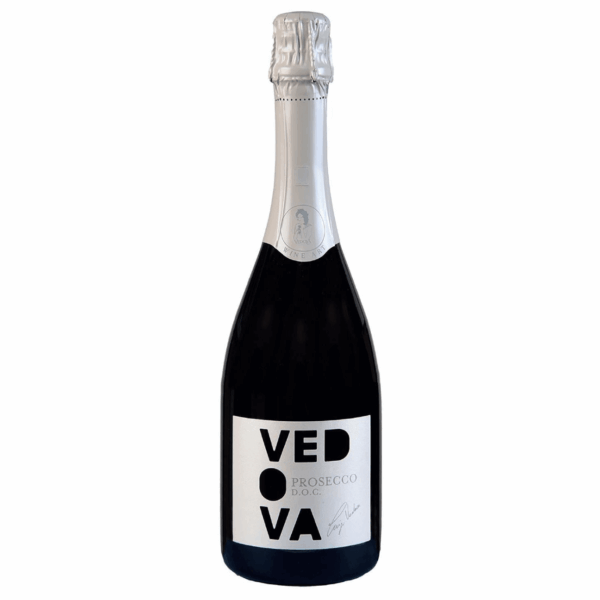
Cantine Vedova Prosecco DOC
Shipped by
Oatley Fine Wine Merchants
$26.33
/ bottle
$158.00 for a case of 6
 175 pts
 The Charmat Philosophy: Why Prosecco Deliberately Rejects Champagne’s Path
Understanding what makes good prosecco requires abandoning the notion that it’s attempting to be Champagne on a budget. Prosecco follows an entirely different production philosophy, one grounded in the Charmat method (also called the Martinotti method or tank method). In this approach, secondary fermentation, the process that creates the wine’s bubbles, occurs not in the bottle, as with Champagne, but in large stainless steel tanks under pressure. The grapes, typically harvested early in September to maintain high acidity, undergo primary fermentation at carefully controlled temperatures (around 18°C) to preserve delicate aromatics. After this primary fermentation completes, the wine is transferred to sealed steel tanks where sugar and yeast trigger secondary fermentation, lasting between 30 days (for frizzante, or semi-sparkling) and 60 days (for spumante, the fully sparkling style).
This method is not a shortcut or cost-cutting measure, though it does offer financial efficiencies compared to bottle fermentation. Rather, it’s a deliberate choice designed to preserve the primary fruit characters and freshness that define prosecco’s identity. Champagne spends years ageing on its lees, dead yeast cells that impart yeasty, bread-like complexity. Prosecco deliberately avoids extended lees contact. The wine is filtered and bottled shortly after secondary fermentation completes, capturing the moment when the Glera grape’s fruit-forwardness and floral aromatics are at their most vivid. This is why prosecco is best consumed young, within one to two years of the vintage date, and why cellaring proseccos, as some enthusiasts attempt, represents a fundamental misunderstanding of the wine’s purpose and composition.
Wine critic Jancis Robinson, writing from her home in the Asolo DOCG zone, articulates this distinction with precision. She notes that prosecco has historically served as a commodity wine, standardised and reliable, but that a new generation of producers has begun to complicate this narrative. Some are experimenting with bottle fermentation (ancestral method), sur lie ageing, extended Charmat fermentation, and even skin maceration, techniques that add structure and complexity without abandoning prosecco’s essential character. Yet Robinson emphasises that the wine’s virtue lies precisely in its freshness and immediate drinkability; these new approaches represent evolution within prosecco’s identity, not an attempt to transform it into Champagne.
This philosophy extends to storage and service. Prosecco should be kept at 6–12°C, away from light and temperature fluctuation. Once opened, it should be consumed within one to three days; the high sugar content accelerates oxidation, and the wine’s delicate structure collapses quickly without proper preservation. This brevity of lifespan reflects the wine’s design: it’s engineered for pleasure in the moment, not contemplation in retrospection.
The Sweetness Paradox: Why “Extra Dry” Doesn’t Mean What You Think
Among the many sources of confusion surrounding prosecco, none proves more persistent than the residual sugar scale. Italian sparkling wine law defines six sweetness categories, and the names, confoundingly, don’t correspond to the sugar levels they denote.
Brut Nature (also called Brut Zero or Dosage Zéro) contains 0–3 grams per litre of residual sugar and represents the absolute driest expression available. Extra Brut allows up to 6 grams per litre, still bone-dry to the palate. Brut, the most common designation, permits up to 12 grams per litre and strikes a balance between acidity and subtle sweetness.
Then comes the confusion. Extra Dry, despite its name, actually contains 12–17 grams per litre of residual sugar, making it noticeably sweeter than Brut. This perversity of nomenclature reflects historical conventions, yet it remains perhaps the most misunderstood designation in wine. The plainly named Dry category contains 17–32 grams per litre, rendering it medium-sweet.
For producers seeking to signal quality, residual sugar level serves as a useful heuristic. Mass-produced prosecco, particularly in the DOC category, typically skews toward Extra Dry; the extra residual sugar compensates for potential greenness or lack of fruit intensity in wines from less-ideal terroir. Better-quality producers, confident in their fruit’s concentration and the wine’s natural balance, often opt for Brut or Brut Nature, allowing acidity and the Glera grape’s inherent flavours to dominate without sugar masking underlying imperfections.
For the Australian drinker, this knowledge proves immediately practical. When scanning a bottle’s label, a Prosecco Superiore DOCG bottled as Brut Nature or Extra Brut signals a producer willing to stake its reputation on fruit quality. An Extra Dry designation from the same region might indicate a sound, enjoyable wine, but one approached with less confidence. Neither is inherently wrong; they reflect different production philosophies and target audiences.
What Genuinely Good Prosecco Actually Tastes Like
If geography determines potential and production philosophy shapes how that potential is expressed, the sensory experience, what actually arrives in the glass, provides the ultimate measure of quality.
A well-made Prosecco DOC presents itself as pale straw in colour, with a vivacious mousse of bubbles that remains persistent throughout the glass’s life. The aromatic profile tends toward simplicity: green apple, honeydew melon, pear, peach, and citrus, sometimes with honeysuckle notes. These aromas should feel fresh, not musky or oxidised. On the palate, the wine should balance acidity with fruit, finishing clean and dry (or, if Extra Dry, with just a whisper of residual sweetness). There’s no complexity expected here, no mineral undertones or secondary notes. This is refreshment, delivered efficiently.
A Prosecco Superiore DOCG elevates the equation substantially. The same pale colour and persistent bubbles appear, but the aromatics deepen. Expect more concentrated fruit (riper peach, stone fruit) alongside floral notes (lilac, acacia, white flowers), mineral hints, and sometimes saline characters. The palate becomes silkier, less aggressive in acidity, with greater textural depth. A wine like Bisol 1542’s Molera Extra Dry, which recently earned the prestigious Tre Bicchieri (Three Glasses) award from Gambero Rosso’s Vini d’Italia guide, demonstrates this elevated profile: the wine exhibits “great balance of fruit, pulp, saltiness, elegance and grace,” deriving its personality from “morainic soils of selected Valdobbiadene vineyards.”
Cartizze proseccos, the apex of the category, demonstrate even greater concentration and complexity. The extended ripening period and unique soil composition yield wines with “highly concentrated and complex aromas with flavours of jasmine, honeysuckle, grapefruit rind, yellow apple, ripe pear and almond.” The mousse becomes creamier, the finish longer, the overall impression of sophistication marked.
Australian proseccos, produced primarily in the King Valley, deliver a characteristically fresh expression shaped by the region’s cool nights and high altitude. Dal Zotto Wines describes their standard Pucino Prosecco as offering “delicate aromatics of jasmine, wisteria and citrus blossom, while on the palate there is crisp apple and citrus flavours and a good balance between acid and residual sugar.” This flavour profile closely parallels classic Veneto proseccos, suggesting that Australian terroir, when properly managed, can capture prosecco’s essential character.
The Architecture of Quality: Reading Beyond the DOCG
For consumers seeking to identify genuinely good prosecco without relying solely on blind tasting, several concrete signals provide reliable guidance:
Designation and geography remain paramount. A Prosecco Superiore DOCG from a recognised producer will, almost invariably, outperform a DOC wine from an anonymous producer. Within Superiore, the sub-zone matters: Cartizze carries prestige; Rive designations signal specific village terroir; specific crus (single vineyard bottlings) indicate producer confidence.
Sweetness level choice reveals a winemaker’s philosophy. Brut Nature and Extra Brut designations, particularly on Superiore wines, signal quality fruit and careful production.
Producer reputation carries weight. Established Venetian houses including Bisol 1542, Bellenda, Bortolomiol, Merotto, and Marchiori invest in quality across their ranges. These producers often list vintage dates and may release vertical tastings, unthinkable a decade ago, when prosecco was treated as a product without vintage variation. In Australia, the Dal Zotto family’s role as prosecco pioneers lends credibility to their expressions.
Major award recognition from respected publications offers external validation. Gambero Rosso’s Tre Bicchieri, the International Wine Challenge’s Gold Medal, and inclusion in curated lists such as Wine Companion’s annual 20 best Australian proseccos indicate wines that have survived rigorous scrutiny.
Hand-harvesting and controlled yields, where mentioned on back labels or producer websites, suggest quality consciousness. Mechanical harvesting characterises DOC production; hand-picking defines Superiore DOCG and premium expressions.
Vintage labelling, historically absent from most proseccos, now appears on quality-focused producers’ bottles. This allows consumers to age wines (where appropriate) and assess vertical consistency.
When Prosecco Grows Up: The New Wave
Prosecco’s recent evolution deserves particular attention for Australian readers, as it demonstrates that the category transcends its reputation for simple, affordable sparkle.
For much of its modern history, prosecco was, as Robinson observes, standardised, all winemakers employing identical Charmat methodology, producing virtually indistinguishable results. The wine functioned as a commodity: recognisable, cheap, fulfilling a clear market need. In the past fifteen years, however, a cohort of younger producers, university-trained and internationally travelled, began experimenting with alternative approaches.
Some have adopted ancestral method (also called Col Fondo in the Italian context) production, where secondary fermentation occurs in the bottle with the lees remaining inside, never disgorged or dosed with sweetening liqueur. The resulting wines appear slightly cloudy, taste notably drier and more mineral-driven than standard Charmat versions, and develop complexity over time as yeast autolysis continues. Producers such as Marchiori have pioneered this approach, vinifying the historical grape varieties (Glera, Verdiso, Bianchetta, Perera, Boschera) separately before secondary fermentation, introducing the palate and structure one associates with more serious sparkling wines.
Others have adopted sur lie (extended lees contact) within the Charmat framework, departing from the traditional immediate post-fermentation bottling. Bellenda and Miotto exemplify this direction, balancing Charmat’s fundamental character (freshness and primary fruit) with additional textural complexity.
Still others employ maceration (skin contact), a technique traditionally reserved for red and orange wines, to extract additional colour, aroma, and tannin structure from white and hybrid grapes. This approach ventures into natural wine territory, attracting producers consciously positioned outside the industrial prosecco mainstream.
Robinson’s observation proves prescient: prosecco is polarising. In the vast DOC flatlands, commodity Charmat production continues, largely unchanged, serving millions of casual drinkers. Simultaneously, in the Superiore DOCG zones, producers are crafting wines of genuine complexity and intent, wines worthy of critical comparison with quality Champagnes and traditional method sparklers from other regions. Both streams have legitimacy; they simply serve different purposes and audiences.
Storage, Service, and the Imperative of Freshness
Because prosecco is engineered for immediate consumption, storage and service protocols differ sharply from those governing still wines or aged sparkling wines.
Unopened bottles should be kept between 6–12°C, in darkness, away from temperature fluctuation and vibration. This range is crucial; temperatures above 15°C accelerate chemical changes and degrade the wine’s delicate aromatics. Light, whether sunlight or shop fluorescent, promotes oxidation and degradation. Stability matters: frequent temperature swings accelerate oxidation and degrade flavour.
Properly stored, an unopened bottle of prosecco remains drinkable for 2–3 years, though the wine’s peak quality window extends only to about one or two years from the vintage date. Once opened, prosecco deteriorates rapidly. The high sugar content and lack of phenolic compounds that might provide oxidative stability in still wines mean that opened prosecco should be consumed within one to three days, ideally within twenty-four hours. A proper Champagne stopper or wine stopper (not the bottle’s original closure) slows this deterioration by limiting air contact.
Service temperature should be 6–8°C, cold enough to highlight freshness but not so cold that aromatics collapse. The glass matters as well: a proper flute with a narrower bowl helps preserve carbonation longer than a shallow coupe, and the bubbles themselves provide crucial sensory information about the wine’s condition.
The Australian Context: A Growing Stake in the Category
Australian prosecco production, now more than two decades old, has matured from novelty to legitimate category player. The King Valley’s climate, warm days coupled with cool nights and high altitude, delivers precisely the conditions Glera requires: gradual ripening that builds flavour concentration while preserving acidity. This explains why the first Australian prosecco, Dal Zotto’s L’Immigrante, was vinified using traditional method champagne techniques, a methodological choice reflecting confidence in the fruit’s quality.
The category has expanded substantially since 1999. Production forecasts for 2015–16 predicted 2250 tonnes of fruit yielding approximately 2.16 million litres. This growth reflects genuine interest from Australian producers and consumers alike. The King Valley’s established identity as a sparkling wine region, Brown Brothers’ longstanding fizz production and other traditional method houses established the foundation, meant that prosecco’s arrival encountered receptive winemakers and an audience already accustomed to valuing local sparkling alternatives to Champagne.
For Australian readers seeking local proseccos, Wine Companion’s annual lists of the twenty best Australian examples provide curated guidance from the nation’s most rigorous tasting panel. These selections represent quality benchmarks, equivalent to the scrutiny applied to any category in that publication’s comprehensive database.
 Shiraz
 Cabernet Sauvignon
 Pinot Noir
 Grenache
 Merlot
 Red Wine Blends
 Chardonnay
 Riesling
 Pinot Gris
 Semillon
 Viognier
 Grenache Rosé
 Pinot Noir Rosé
 Shiraz Rosé
 Sangiovese Rosé
 Aglianico Rosé
 Clairette Rose
 Champagne
 Prosecco
 Sparkling Shiraz
 Blanc de Blanc
 Blanc de Noir
 Pet Nat
 Moscato
 Topaque
 Port
Port Sherry (dry & sweet)
 Muscat & Tokay
 Vermouth