 0473 644 098 · Mon–Fri 9am–5pm AESTHelp & FAQ





Does Good Wine Really Need a 750 mL Bottle?

By Kurt, In-House Wine Tester | Published 23 November 2026 | 9 min read
Some wines in this guide are sold on Cellars.com.au. I recommend them because they work with the dishes below, not because we sell them.
The most useful thing about a little wine bottle isn’t that it looks clever. It’s that you don’t have to open a big one. If dinner calls for less wine than a full bottle holds, that’s a good reason to ignore the standard size.
On 19 November, Australian Vintage’s 187 mL Poco Vino range won the Packaging & Design award at the 2026 Wine Industry Impact Awards in Adelaide. It was an award for the packaging, not a verdict that mini bottles taste better. But it does raise a useful shopping question. When is paying for a smaller pack smarter than buying the cheapest wine per millilitre?
The short answer is when the smaller pack holds what you need and the rest would go unused. Keep the full bottle in the running if you already know the wine, need more of it or have a plan for what’s left.
Buy the wine first and the format second
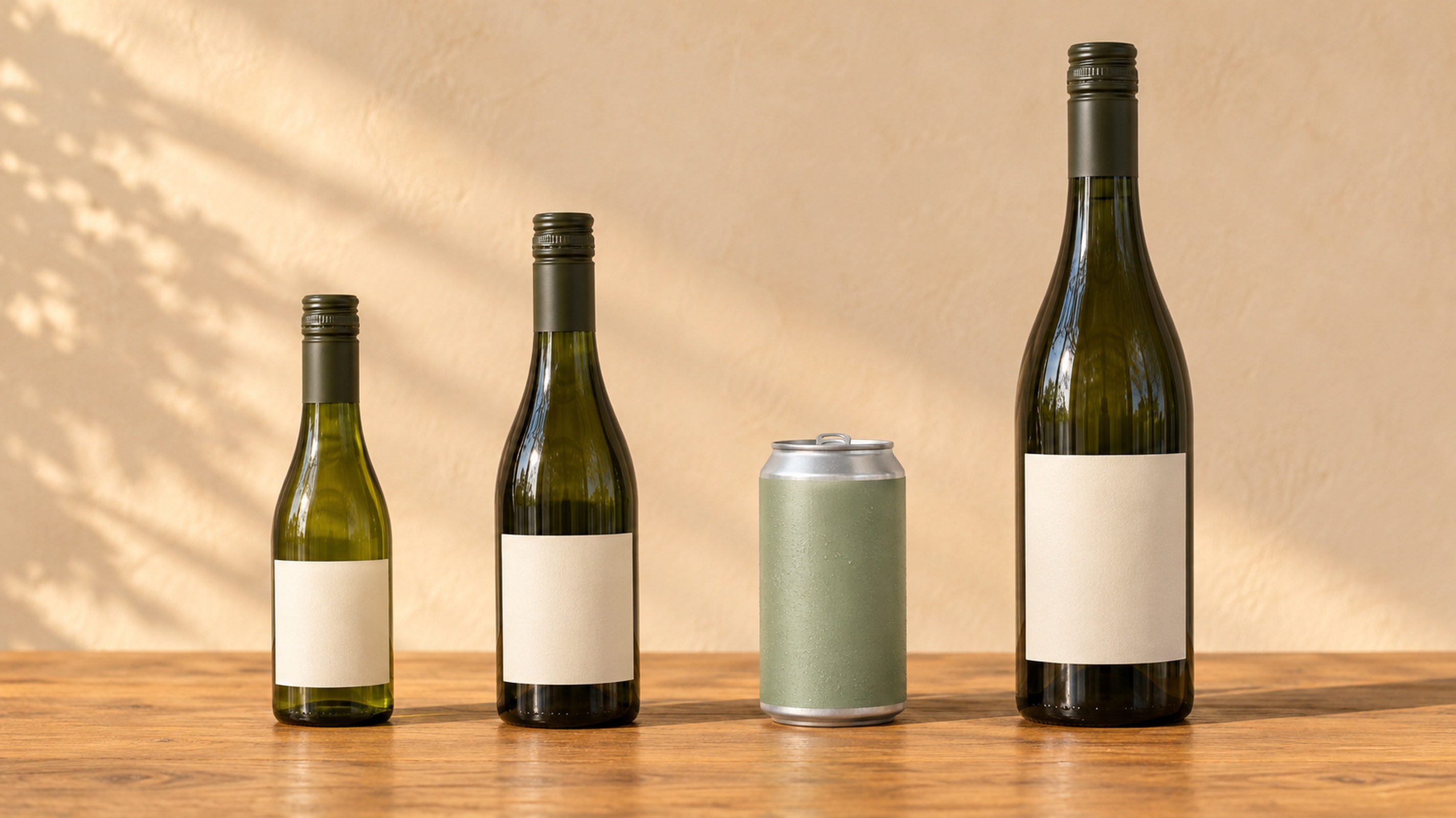
A 187 mL mini holds just under a quarter of a 750 mL bottle. A 375 mL half bottle holds exactly half. A can is a type of container, not a size, so check the volume on the actual pack. A 250 mL can, for instance, holds a third of a full bottle and noticeably more than a 187 mL mini.
Don’t let words like single serve do the arithmetic for you. Pack size is the volume of liquid. An Australian standard drink measures alcohol, not how much the container holds. Check the standard-drinks figure on the label if you’re comparing packs with different strengths. The smaller one isn’t automatically lower in alcohol by percentage.
Start with the dish and the style you want. A crisp white might suit prawns whether it comes in a mini or a full bottle. A half bottle only makes sense if it holds a wine you actually want. Don’t buy the wrong style just to get the right amount.
Where the mini earns its spot
The mini is useful when you want to try an unfamiliar wine without buying 750 mL of it. That only helps if it’s the actual wine you’re curious about. A producer’s mini Chardonnay and its full-size Chardonnay aren’t necessarily the same release. Check the complete name and vintage, where shown, rather than relying on the grape name.
There’s a trade-off. If you already know you’ll want the same wine again, a row of minis can be an expensive way to buy it. Compare the amount you’ll use and the total price before putting the smaller version in your basket.
Where the half bottle is the sensible middle
A half bottle is handy when you want a particular style for one course and a full bottle feels unnecessary. Dessert is the obvious example. A sweet wine can be just the thing with a fruit tart, but that doesn’t mean you want the same volume you bought for the main course.
The half bottle is also worth considering when you’d like to try a more expensive wine at a lower upfront price. That doesn’t make it cheaper by volume. Think of it as a smaller commitment to a bottle you’re curious about, not a discount on the wine itself.
Where a can beats glass
If you’re packing an esky and want to avoid breakable glass, a can makes practical sense. Check what’s inside before you buy. A still rosé and a fizzy wine spritz can sit next to each other in similar cans, but they’re not the same drink.
Wine cans have an internal lining that separates the wine from the metal. The wine, lining and storage conditions all affect how well the package holds up over time. Buy it for an upcoming meal rather than putting it away to mature. Our canned wine guide covers the format in more detail.
If you’ve only ever tried a wine straight from a can, give it a glass before you judge it. Pour a small splash and smell it from the bowl rather than through the narrow opening. That won’t turn a wine you dislike into one you enjoy. It just gives you a better chance to smell what you’re tasting. For a fair comparison with a bottled wine, give both the same type of glass and serve them at about the same temperature. If they’re different wines, you’re comparing the wines as well as the containers.
Where the full bottle still wins
Here’s the case for 750 mL. If everyone who wants wine with dinner is choosing the same style, a full bottle may be less expensive per 100 mL. It’s also a sensible choice when you already have a use for the rest, such as risotto the next day. You don’t have to buy a new format to solve a problem you don’t have.
Do the price maths before you trust the shelf ticket
A smaller price tag tells you what you’ll spend today. It doesn’t tell you how much wine you’re getting for the money. Divide the pack price by its volume in millilitres, then multiply by 100. That gives you a fairer comparison when the sizes don’t line up.
These are made-up prices to show the calculation, not quotes for wines on sale.
| Example format | Volume | Pack price | Price per 100 mL |
|---|---|---|---|
| Mini bottle | 187 mL | $7 | $3.74 |
| Half bottle | 375 mL | $14 | $3.73 |
| Wine can | 250 mL | $8 | $3.20 |
| Full bottle | 750 mL | $22 | $2.93 |
The full bottle wins on price per 100 mL in this example. But if a half bottle is enough and you won’t use the rest, the $14 option still costs you $8 less at the register. The best deal depends on how much you need, not just how much the pack holds.
If you’re shopping online, check whether the price is per bottle or per case. Apply the same calculation to the total wine volume you’re actually buying. If one option has a delivery charge and the other doesn’t, compare the totals before deciding which costs less.
Choose the style that suits the plate
These picks are about what works with dinner, not what happens to be available in a particular container today. The links go to wine styles rather than size filters. Check the product listing for the pack volume and the number of bottles or cans before ordering.
| What you have planned | Pick | Format to look for |
|---|---|---|
| Prawns and lemon without a big seafood spread | Dry Riesling | A mini if you find a dry one, or a half bottle if you need more |
| Roast chicken with lemon and herbs | Chardonnay | A half bottle for a smaller dinner, or a full bottle if you’ll use the rest |
| Cold roast chicken rolls and a tomato salad outdoors | Dry Rosé | A can if glass is impractical, with the volume checked first |
| Berry tart where dessert is the only wine match you’re after | Dessert Wine | A half bottle, looking for a style at least as sweet as the tart |
If the right style only comes in a bigger bottle, ask whether you’ll use the leftover wine. If the answer is no, it may be better to pick a different style in the right format. The point is to get a good match without paying for wine you don’t need.
What to do when there’s wine left
Once a bottle is open, oxygen can gradually dull its fruit aromas and change how it tastes. That’s oxidation. It isn’t a timer that goes off at midnight. How quickly you notice it depends on the wine, its storage and how much air sits above what’s left.
For still wine, seal it and chill it
Put the cap back on and refrigerate the bottle, even if it’s red. Cold slows the changes but doesn’t stop them. If the bottle is nearly empty, a clean small screwcap bottle can help reduce the air space above the wine. Pour it gently, close it promptly and keep it cold.
Check it rather than assuming it’s good for a set number of days. If the fruit has just faded a little but the wine still smells and tastes fine, it might work in a pan sauce. If it smells strongly of vinegar or otherwise seems off, don’t expect cooking to fix it. For more detail on what to look for, see our guide to opened red wine.
For sparkling, save the fizz as well as the wine
A sparkling bottle has another problem once opened. Carbon dioxide leaves the wine and the bubbles fade. A stopper designed to lock onto a sparkling wine bottle is a better bet than a teaspoon in the neck. Keep the stopped bottle in the fridge and don’t expect it to stay exactly as it was when opened.
A can with a pull tab doesn’t have that resealing option. If you regularly want less sparkling wine than one pack holds, changing the pack size is more useful than buying a gadget to rescue the leftovers.
Do a one-shop check before switching sizes
You don’t have to trade every big bottle for a small one. Pick an ordinary meal you make often and use it as your test. Seafood and salad is a good start if you sometimes open a white for the prawns and find the rest still sitting in the fridge.
-
Write down the dish and the style. If you’d normally choose a dry white, compare dry whites. A sweet wine in a convenient pack won’t fix the mismatch.
-
Check how much you usually use. Think about the last time you made the meal, including what actually went into cooking later. Leave the wine you tipped out off the tally.
-
Compare two options on that basis. Note the volume, the total price and whether the pack reseals. A mini that covers the meal may make sense. If you’d otherwise buy two minis, check a half bottle before you order.
-
Check what happened next time. Did the smaller option fit the meal, or did you miss having wine left for tomorrow’s risotto? That’s a better guide to which size you should buy again than the shelf ticket alone.
There’s no prize for picking the smallest bottle. If the larger one gets used and costs you less overall, keep buying it. If the rest routinely goes down the sink, that’s when a smaller pack has earned a spot.
Frequently asked questions
How much wine is in a mini bottle?
A common mini size is 187 mL, just under a quarter of 750 mL. It isn’t a universal size, so check the volume printed on the label.
Is a half bottle of wine always 375 mL?
A 375 mL bottle is half of a standard 750 mL wine bottle. If a listing just says small or mini, look for the stated volume rather than assuming it’s a half bottle.
Are half bottles cheaper than full bottles?
They can cost less upfront without being cheaper per 100 mL. Compare the unit price, then ask whether you’d actually use the extra wine in the larger bottle.
Is a 187 mL bottle one standard drink?
Not necessarily. An Australian standard drink contains 10 grams of pure alcohol, so the count depends on both volume and strength. The figure on the pack is more useful than the words single serve.
Is canned wine worse than bottled wine?
Not just because it comes in a can. Pick a style you want, check the volume and buy it for near-term use rather than cellaring.
Should you refrigerate leftover red wine?
Yes. Reseal it and put it in the fridge to slow changes in flavour. Let it lose some of the chill before serving if that’s how you like it.
 Shiraz
 Cabernet Sauvignon
 Pinot Noir
 Grenache
 Merlot
 Red Wine Blends
 Chardonnay
 Riesling
 Pinot Gris
 Semillon
 Viognier
 Grenache Rosé
 Pinot Noir Rosé
 Shiraz Rosé
 Sangiovese Rosé
 Aglianico Rosé
 Clairette Rose
 Champagne
 Prosecco
 Sparkling Shiraz
 Blanc de Blanc
 Blanc de Noir
 Pet Nat
 Moscato
 Topaque
 Port
 Sherry (dry & sweet)
 Muscat & Tokay
 Vermouth
