 0473 644 098 · Mon–Fri 9am–5pm AESTHelp & FAQ





What Wine Goes With Sushi? A Sommelier’s Roll-by-Roll Guide

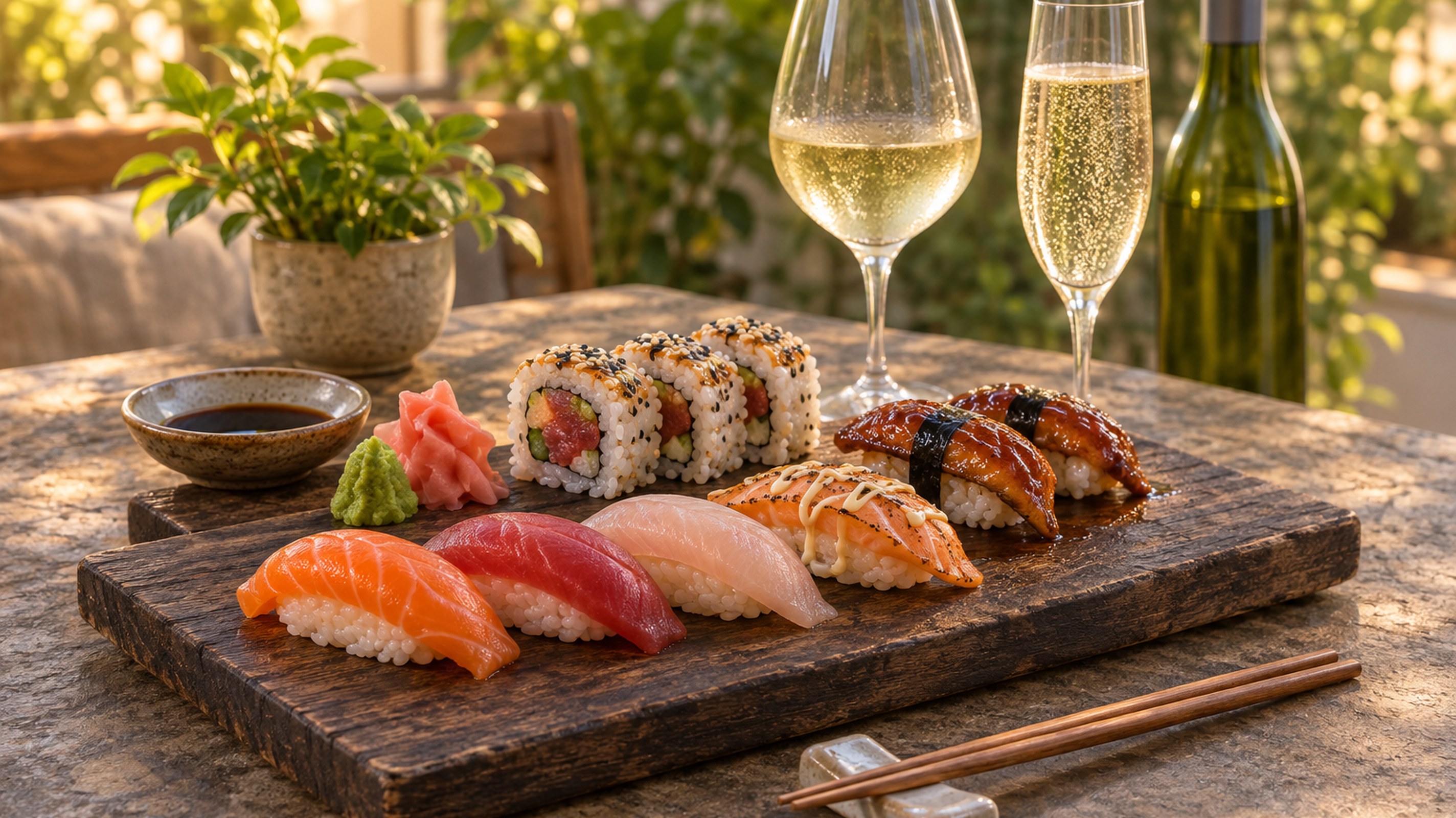
By Luke, Cellars Wine Tester | Published 22 November 2026 | 14 min read
Some wines in this guide are sold on Cellars.com.au. I recommend them because they work with sushi, not because we sell them.
Quick answer
-
The best all-rounder is dry Australian Riesling from the Clare or Eden Valley. Its high acid, low alcohol, lack of oak and lime-zest freshness work with almost everything on the platter.
-
For fatty salmon, aburi and tempura rolls, pour Tasmanian sparkling. The bubbles and acid scrub the fat off your tongue between bites.
-
For spicy tuna and chilli mayo, go for off-dry Riesling under 12% alcohol. A touch of sweetness takes the edge off the heat.
-
For unagi (eel) and teriyaki rolls, try a chilled, light Pinot Noir from Tasmania or the Mornington Peninsula.
-
Avoid big, oaky, tannic reds like young Barossa Shiraz or Coonawarra Cabernet. They can make raw fish taste metallic and fishy.
Picture it. A Friday night, a big platter of sushi on the table and a bottle of Shiraz you were saving for something special. You take a bite of tuna, then a sip, and suddenly your mouth tastes like the inside of a sardine tin. The wine isn’t faulty and neither is the fish. They just don’t get along.
Sushi is one of the trickiest foods on earth to match with wine. It isn’t heavily flavoured. The trouble is that a single piece hits you with five different things at once. Once you understand those five things, you’ll never pour the wrong bottle again.
Why sushi is so tricky with wine
I call it the Sushi Five. These are five forces in every piece that change how your wine tastes. Then there’s one trap.
1. Umami, the savoury hit
Umami is the savoury, mouth-watering taste in soy sauce, seaweed and fish like tuna. Sushi is loaded with it. Nori and soy bring one kind of umami compound and the fish brings another. Together they don’t just add up, they multiply, which is why sushi tastes so moreish.
The catch is that umami makes wine taste harder. Tannin feels grippier, bitterness shows up more and alcohol feels hotter. A smooth red can turn rough and bitter beside a piece of tuna nigiri. You want wines with low or no tannin and moderate alcohol.
2. Salt and the soy factor
Soy sauce is salty, and salt is actually a friend to wine. It softens bitterness and makes wines taste rounder and fruitier. That’s good news for crisp, acidic whites, which taste juicier with a dab of soy. The more soy you use, the more forgiving the match becomes.
3. Sweet and sour, the rice nobody talks about
Everyone talks about the fish, but the rice changes the wine more than you’d think. Sushi rice is seasoned with rice vinegar, sugar and salt, so every piece carries a little sweetness and a little sourness.
Sweetness in food makes a dry wine taste sharper and thinner, and less fruity. Sourness in food makes a low-acid wine taste flat and flabby. So you need a wine with plenty of acid of its own, and ideally a touch of fruit or sweetness so the rice doesn’t strip it bare. This is why so many sommeliers reach for Riesling.
4. Fat from salmon, toro and mayo
Australians love their salmon, and salmon is rich. So are tuna belly (toro), Japanese mayo, avocado and anything tempura. Fat coats your tongue and dulls flavour.
You want acid and bubbles here. Acid cuts through fat the way a squeeze of lemon lifts fish and chips. Bubbles go further and physically scrub the coating off your palate, so the next bite tastes as good as the first.
5. Fire from wasabi and chilli
Sushi brings two kinds of heat, and they behave completely differently.
Wasabi heat goes up your nose. The compound in it is volatile, so it rises into your sinuses, gives you that sharp jolt and fades within seconds. It barely affects wine, as long as you don’t eat a spoonful of it. Fun fact. A lot of the green paste in Aussie takeaway packs is mostly horseradish coloured green. Real grated wasabi is gentler and sweeter.
Chilli (spicy mayo, sriracha, chilli flakes) is a different beast. It lingers on your tongue, and here’s the science that matters. Alcohol and chilli set off the same heat sensor in your mouth. A big 14.5% wine with a spicy tuna roll is fighting fire with petrol. Lower alcohol, a bit of sweetness and a good chill all calm things down.
The trap, iron and the “fishy” taste
This is why “no red with fish” became a rule. Red wines tend to carry more iron than whites, picked up from the soil, the vineyard and the winery. When iron meets the delicate oils in raw seafood, it speeds up their breakdown and releases those off, fishy aromas. That’s the sardine-tin taste from the Friday night Shiraz.
It isn’t about colour. Some whites can do it too, and some reds have very little iron. Iron levels aren’t printed on the label, though, so the safe bet is simple. If you want red with sushi, go light, low in tannin and chilled, and match it with cooked or richer pieces rather than delicate raw white fish.
The sushi cheat sheet
| Sushi | Best Aussie pick | Why it works | Serve at |
|---|---|---|---|
| Salmon nigiri or sashimi | Tasmanian sparkling or dry Clare Riesling | Acid and bubbles cut the rich fat | 6–8°C |
| Tuna (akami) nigiri | Rosé or Adelaide Hills Pinot Gris | A bit of texture for meaty fish, no tannin | 8–10°C |
| Toro (fatty tuna belly) | Vintage Tasmanian sparkling | Toasty depth plus scrubbing bubbles | 8–10°C |
| Kingfish or snapper | Young Hunter Semillon | Delicate, low alcohol, zesty | 7–9°C |
| Scallop (hotate) | Eden Valley Riesling | Lime freshness against sweet scallop | 6–8°C |
| Prawn (ebi) | Margaret River Sauvignon Blanc Semillon | Herbal lift for sweet prawn | 7–9°C |
| Aburi (seared) salmon | Blanc de blancs sparkling or lean modern Chardonnay | Matches the smoky, creamy char | 8–10°C |
| Unagi (eel) | Chilled Tasmanian or Mornington Pinot Noir | Bright fruit for the sweet, sticky glaze | 12–14°C |
| Spicy tuna or chilli mayo | Off-dry Riesling under 12% | Sugar and low alcohol tame the burn | 6–8°C |
| Tempura or crunchy rolls | Prosecco or non-vintage sparkling | Bubbles against fried batter | 6–8°C |
| California or avocado roll | Adelaide Hills Grüner Veltliner | Peppery freshness for creamy avocado | 7–9°C |
| Chicken teriyaki hand roll | Dry rosé or chilled Grenache | Handles cooked meat and sweet glaze | 10–12°C |
| Vegetarian (cucumber, inari, pickles) | Clare Riesling or Fiano | Crisp and clean for subtle flavours | 6–8°C |
| Mixed platter (one bottle) | Dry Riesling or Tasmanian sparkling | The best all-rounders | 6–8°C |
Wine by sushi style
Nigiri, the purist’s pick
Nigiri is a hand-pressed mound of rice with a slice of fish on top. There’s nowhere to hide, so the wine has to respect the fish.
Salmon (sake). The country’s favourite, and rich, buttery and mild. My go-to is Tasmanian sparkling. Tassie’s cool climate gives bubbles with laser acidity, and they cut straight through salmon fat. If you’d rather drink still wine, a dry Clare Valley Riesling does the same job with a hit of lime that suits salmon like a squeeze of citrus.
Tuna (akami, the lean red cut). It’s meatier and more savoury than salmon, with loads of umami. This is where people are tempted by red, and it’s where red is most likely to go tinny. Try a dry Australian rosé made from Grenache or Sangiovese instead. It gives you the red-berry feel without the tannin. An Adelaide Hills Pinot Gris also works, because it has a bit of weight and texture.
Toro (fatty tuna belly). This is the wagyu of the sea. It melts on your tongue and coats it in fat. It deserves a vintage or late-disgorged Tasmanian sparkling. The longer a sparkling wine rests on its yeast, the more toasty, savoury depth it builds, and that savouriness matches the umami of toro nicely. Bubbles still do the cleaning.
Kingfish (hiramasa or hamachi) and snapper (tai). These are delicate, clean white fish, and big wines flatten them. Go for young Hunter Valley Semillon. It’s one of Australia’s great originals, picked early so the alcohol sits around 10 to 11%, with lemon, grass and a crunchy acid line. It’s light enough to let the fish speak.
Scallop (hotate). Raw scallop is naturally sweet. Pair it with Eden Valley Riesling, which has floral lime and slatey freshness. Sweet scallop with zesty Riesling is citrus and seafood, the oldest trick in the book.
Prawn (ebi). Cooked prawn is sweet and firm. A Margaret River Sauvignon Blanc Semillon blend brings herbal, grassy lift and a bit of texture. It’s the West Australian classic for a reason.
Salmon roe (ikura) and sea urchin (uni). These are briny, intense and very umami. You need bubbles, such as a blanc de blancs (100% Chardonnay sparkling) or even a very dry, crisp manzanilla-style fortified if you can find one. The salty tang matches the brine.
Sweet omelette (tamago). It’s sweet, eggy and soft. A young Riesling with a touch of residual sugar handles the sweetness without tasting sour.
Sashimi, no rice and all fish
Sashimi is fish with no rice, so the sweet and sour seasoning drops out of the equation. That makes it a little easier on wine, but the fish is fully exposed and so is any metallic clash.
Stick to unoaked whites with high acid, such as Hunter Semillon, Clare or Eden Riesling, or a Tasmanian Chardonnay made in a lean, mineral, barely-oaked style. If you’re having a big mixed sashimi platter, a non-vintage Tasmanian sparkling is the safest single bottle.
Aburi, flame-seared and smoky
Aburi has become an Aussie favourite. It’s salmon seared with a blowtorch, often with a drizzle of mayo and sauce. Searing caramelises the fish, adds smoky, toasty notes and melts the fat.
That changes everything. Lean, zesty whites can feel too thin, while a wine with a little toasty richness shines. Try a blanc de blancs sparkling with some age, or a modern Yarra Valley or Adelaide Hills Chardonnay that’s lean, cool-climate and gently oaked. The subtle toast in the wine matches the char on the fish. Avoid the old-school buttery oak bombs, though. They’ll smother everything.
Maki and hosomaki, the thin rolls
These are small, simple rolls with seaweed on the outside, filled with cucumber (kappa maki), tuna (tekka maki) or salmon.
The seaweed matters. Nori is packed with umami and has a sea-breeze, slightly iodine flavour. Crisp whites with a mineral feel are best, like Clare Riesling, Hunter Semillon or an Australian Albariño, which is coastal, saline and zesty and grows well in warmer Aussie regions.
Uramaki, the inside-out rolls
These are the big, sauced, Western-style rolls with rice on the outside, like California rolls, rainbow rolls and dragon rolls. They often carry avocado, mayo, crab stick, fish roe and sweet sauces.
-
California roll (crab stick, avocado, cucumber) is creamy and mild. Adelaide Hills Grüner Veltliner brings white pepper and green-apple crunch that freshens the avocado.
-
Rainbow roll (several fish on top) is a platter in one roll, so go for an all-rounder like dry Riesling or sparkling.
-
Dragon roll (often eel and avocado with sweet sauce) has a sweet glaze that calls for a chilled light red or an off-dry rosé.
Spicy rolls with chilli mayo, sriracha and spicy tuna
This is the pairing most people get wrong. Remember, alcohol turns chilli heat up. A 14.5% Shiraz with a spicy tuna roll will feel like a blowtorch.
Reach for off-dry Riesling under 12% alcohol. The gentle sweetness takes the edge off the burn, the high acid keeps it refreshing and the low alcohol stops the heat building. Serve it properly cold, because cold calms chilli too. A sweet sparkling like Moscato or a demi-sec sparkling also works if you like your rolls really hot.
Tempura and crunchy rolls
Tempura prawn rolls, soft-shell crab and anything with crunchy bits all mean deep-fried batter. Bubbles are made for fried food.
Prosecco from the King Valley in Victoria, which has a long Italian winemaking heritage, is a fun, fruity, affordable match. For something finer, non-vintage Tasmanian sparkling cuts the oil with real precision.
Unagi and teriyaki, the sushi that wants red
Here’s where red wine finally gets a turn. Unagi is grilled freshwater eel brushed with a sweet, sticky soy glaze. It’s cooked, rich and caramelised, and nothing like delicate raw fish.
A chilled light Pinot Noir from Tasmania or the Mornington Peninsula is the move. Pinot is naturally low in tannin, its bright red-cherry fruit matches the sweet glaze, and a bit of chill keeps it fresh. A light Grenache from McLaren Vale or the Barossa, served cool, also works a treat.
The same goes for chicken teriyaki and beef rolls. With cooked meat and sweet glaze, a light red or a dry rosé is a great call.
Temaki, hand rolls and Aussie takeaway rolls
Let’s be honest. For a lot of Australians, sushi means a hand roll grabbed at lunch. Chicken teriyaki, tuna mayo, salmon avocado, crispy chicken. These are cooked, mayo-heavy, sauce-forward and filling.
They’re easy with wine. A dry rosé or a chilled Grenache covers the cooked-meat rolls. Sauvignon Blanc handles the salmon avocado, and Prosecco handles anything crispy. These are casual rolls, so drink something cheerful. You don’t need a $60 bottle.
Gunkan, chirashi, inari and oshizushi
-
Gunkan (“battleship” sushi, seaweed wrapped around rice and topped with roe or spicy mixes) is briny and intense, so pour sparkling.
-
Chirashi (a bowl of rice scattered with mixed sashimi) is a mixed platter in a bowl, so go for an all-rounder like dry Riesling.
-
Inari (sweet fried tofu pouches stuffed with rice) is sweet, so you need a wine with a touch of sweetness. Try off-dry Riesling or a fruity rosé.
-
Oshizushi (pressed, boxed sushi, often with cured mackerel) brings cured, oily fish that needs acid, so pour Hunter Semillon or Albariño.
Vegetarian and vegan sushi
Cucumber, avocado, pickled radish, asparagus, tofu and mushroom are gentle flavours that like crisp, clean wines. Riesling, Fiano (an Italian grape that thrives in McLaren Vale and the Riverland) and Vermentino are spot on. If shiitake mushrooms are involved, the umami jumps, so keep away from tannic reds.
The condiments change the wine too
| Condiment | What it does to wine | Fix |
|---|---|---|
| Soy sauce | Salt softens bitterness and boosts fruit | A light dip helps wine. Drowning the rice overwhelms everything |
| Wasabi | Short, sharp nasal heat that barely touches wine | Dab it on the fish, don’t stir it into the soy |
| Pickled ginger (gari) | Sharp, sweet and clears the palate | Eat it between pieces, not with them |
| Spicy mayo | Fat plus chilli | Off-dry, low-alcohol, very cold wine |
| Eel or teriyaki sauce | Sweet and sticky | A touch of fruit or sweetness in the wine, or a light red |
| Ponzu | Citrus acid | Your wine needs high acid to keep up, so go for Riesling |
| Japanese mayo | Rich and tangy | Bubbles or high acid |
Myth vs Science
Myth: “You can never drink red wine with sushi.”
Science: The problem is iron and tannin, not colour. Light, low-tannin, chilled reds can work, especially with cooked pieces like unagi and teriyaki. Big, tannic reds with delicate raw fish are what clash.
Myth: “Any white wine works with fish.”
Science: Big, oaky, high-alcohol whites can bulldoze delicate fish, and sweet rice can make a low-acid white taste flat. You want high acid and little or no oak.
Myth: “Strong wine stands up to spicy food.”
Science: It does the opposite. Alcohol and chilli trigger the same heat sensor, so higher alcohol means more burn. Go low-alcohol and a little sweet.
Myth: “Mixing wasabi into soy sauce is fine for wine.”
Science: It’s not great for the fish either. Wasabi’s kick fades fast in liquid, and a soy-wasabi slurry swamps the delicate flavours your wine is trying to match.
Myth: “Sake is the only thing that really works.”
Science: Sake is a brilliant match. It’s brewed from rice, low in acid and soft, and doesn’t carry the same iron. But the right wine can be just as good, and Australian Riesling is a world-class sushi wine.
Run your own sushi night taste-off
The best way to learn this is to taste it yourself, and it’s a fun night in with friends. Here’s how to set it up.
-
Pick six pieces. Choose salmon nigiri, tuna nigiri, a white fish like kingfish, one aburi piece, one spicy roll and one unagi or teriyaki roll.
-
Open four bottles. Go for a dry Riesling, a sparkling, a chilled light Pinot Noir and one big red, like a Barossa Shiraz, as your “control”.
-
Get the temperatures right. Whites and sparkling go in at 6 to 8°C and the Pinot at 12 to 14°C. Serve the Shiraz as you normally would.
-
Taste in the same order every time. Sip the wine on its own first, then take a bite, then sip again. The second sip is where you notice the change.
-
Score each match out of five. Then compare notes. Most tables find the big red is the first one knocked out, and the Riesling or sparkling ends up the last bottle standing.
-
Keep pours small. A taste of each is all you need, so there’s plenty to go round. Keep water and pickled ginger on the table to reset between rounds.
Serving tips
-
Get it cold. Most sushi wines want to be served at 6 to 10°C. In an Aussie summer, put the bottle on ice in the esky and keep it there between pours.
-
Chill your reds too. Light reds for unagi and teriyaki are best at 12 to 14°C, about 20 minutes in the fridge.
-
Use a white-wine glass for sparkling. A tulip or white-wine glass shows off the aroma better than a narrow flute.
-
Have one bottle per two to four people. Sushi is light, so pace yourself and keep water on the table.
-
For a BYO sushi night, pack one sparkling and one dry Riesling. Between them they’ll cover 90% of the menu.
-
Eat the gari between pieces, not on top of them. It resets your palate for the next sip.
 Shiraz
 Cabernet Sauvignon
 Pinot Noir
 Grenache
 Merlot
 Red Wine Blends
 Chardonnay
 Riesling
 Pinot Gris
 Semillon
 Viognier
 Grenache Rosé
 Pinot Noir Rosé
 Shiraz Rosé
 Sangiovese Rosé
 Aglianico Rosé
 Clairette Rose
 Champagne
 Prosecco
 Sparkling Shiraz
 Blanc de Blanc
 Blanc de Noir
 Pet Nat
 Moscato
 Topaque
 Port
 Sherry (dry & sweet)
 Muscat & Tokay
 Vermouth
