 0473 644 098 · Mon–Fri 9am–5pm AESTHelp & FAQ


Chablis Wine Guide – Why Unoaked Chardonnay From Ancient Seabeds Outperforms Expensive Burgundy

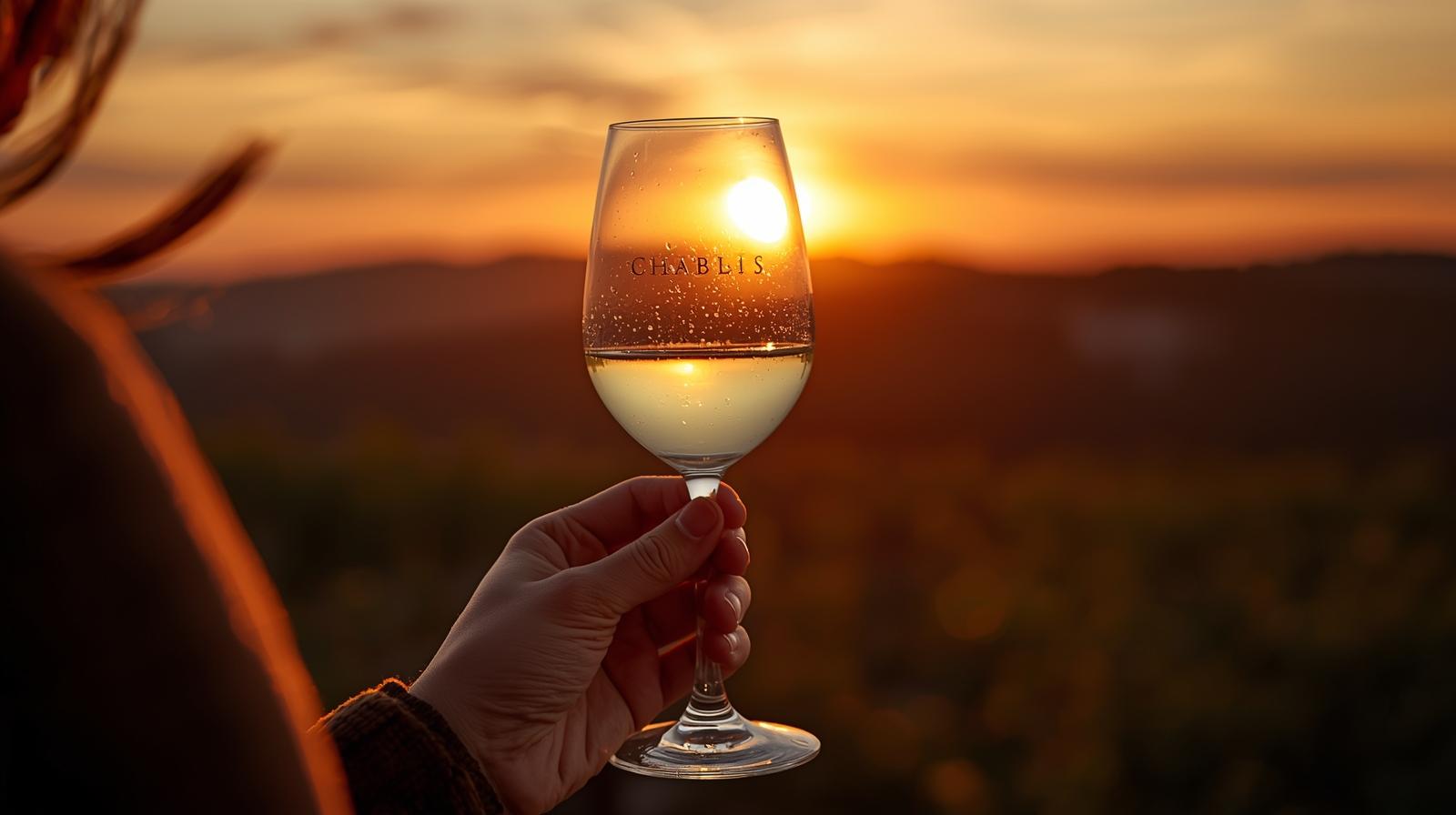
Chablis has a problem that success created and complacency made worse. For decades, this northern Burgundy appellation sold itself as the world’s benchmark for unoaked Chardonnay, the pure expression of minerality wrapped in stainless steel. The reputation worked beautifully until everyone started making unoaked Chardonnay and calling it “Chablis-style,” and until Chablis itself started aging some of its wines in oak barrels, and until Australian drinkers discovered they could buy adequate Chardonnay for fifteen dollars that tasted close enough. Now Chablis sits in an uncomfortable position. It’s too expensive to be everyday drinking, too unfashionable to compete with prestige Burgundy from the Côte d’Or, and too misunderstood for most wine drinkers to appreciate what actually makes it different.
Rajat Parr, James Beard nominated sommelier and winemaker, can point to the exact wine that changed his entire career trajectory. “My epiphany wine was Raveneau Les Clos Chablis 1986. I had it while I worked at the restaurant Rubicon in 1996. That wine changed my perspective!” That single bottle from one of Chablis’ seven Grand Cru vineyards demonstrated something crucial. When Chablis achieves its potential, it doesn’t taste like other Chardonnay. It doesn’t taste like other white Burgundy. It tastes like ancient limestone filtered through cold climate viticulture and translated into liquid precision.
The Oyster Shells Nobody Thinks About Until They Should
Before understanding why Chablis tastes the way it does, you need to understand what sits beneath the vines. This isn’t romantic storytelling. It’s geology that directly shapes chemistry. One hundred and fifty million years ago, during the Upper Jurassic period, shallow warm seas covered what would eventually become northern Burgundy. These ancient oceans teemed with marine life, particularly small comma-shaped oysters called Exogyra virgula. As these organisms died, their calcium-rich shells accumulated on the seabed, layer after layer, mixing with clay sediments eroded from nearby landmasses.
Over millions of years, these deposits compressed into what geologists call Kimmeridgian marl, named after the village of Kimmeridge in Dorset, England, where this same geological formation surfaces. Walk through a Chablis vineyard and you’ll see fragments of fossilized oyster shells scattered across the soil surface, crumbly white limestone that practically disintegrates in your hand. This isn’t decorative. The Kimmeridgian marl is a specific blend of clay, limestone, and marine fossils that drains well enough to prevent waterlogging yet retains sufficient moisture to sustain vines through dry summers. The calcium from ancient oyster shells provides mineral nutrients that Chardonnay vines absorb through their root systems.
Jamie Goode, wine writer and author who extensively researched Chablis‘ soils, observed something essential about how this geology functions. Walking through the region in 2012, he noted the remarkable variations even within Kimmeridgian sites. “Different vineyards, and even different bits of vineyards, have different proportions of rocks and clay or clay loam in them, and generally the more rocky soils make more linear, intense wines, while the deeper soils with more clay make more generous, fleshier wines.” This matters because it explains why Chablis Premier Cru vineyards taste distinctly different from each other despite sharing the same appellation and grape variety.
The region also contains younger Portlandian limestone, deposited during a later geological period when sea levels rose higher and terrestrial erosion decreased. Portlandian soils are harder, contain more limestone and less clay, and lack the concentrated marine fossil content of Kimmeridgian sites. Petit Chablis, the entry-level appellation, grows primarily on Portlandian soils on plateaus and higher slopes. The wines taste lighter, more fruit-forward, less mineral. The difference isn’t subtle.
Four Tiers, Forty Climats, And Why Most People Get Confused
Chablis organizes itself into four appellations that function as a quality hierarchy, though the reality proves more complicated than the regulations suggest. At the base sits Petit Chablis, accounting for roughly 18 percent of production from about 1,030 hectares. These wines come from higher elevations and Portlandian soils, producing fresh, approachable Chardonnay with delicate fruitiness but minimal aging potential. Think of Petit Chablis as what it is: honest, uncomplicated white wine that costs less because the terroir delivers less.
Chablis appellation itself represents the largest category, covering about 3,564 hectares and producing 66 percent of the region’s wine. These vineyards occupy hillsides with Kimmeridgian soil, expressing the mineral character that defines the region’s reputation. The quality range within basic Chablis is enormous, from indifferent bulk production to bottles that punch well above their classification. A skilled producer farming exceptional parcels within the Chablis appellation can produce wine that exceeds mediocre Premier Cru from less committed producers.
Chablis Premier Cru comes from 89 designated lieu-dits, specific named vineyard plots on both sides of the Serein River covering roughly 780 hectares or about 14 percent of production. These sites possess better sun exposure, steeper slopes, and higher concentrations of Kimmeridgian marl. The regulations allow producers to bottle Premier Cru under the specific lieu-dit name or group them under broader designations. Some Premier Cru climats like Montée de Tonnerre, Vaulorent, and Fourchaume produce wines that rival Grand Cru quality in exceptional vintages from talented producers.
Chablis Grand Cru occupies just 103 hectares on the right bank of the Serein with predominantly southwest exposure. Seven climats share this classification: Blanchot, Bougros, Les Clos, Grenouilles, Preuses, Valmur, and Vaudésir. These sites represent Chablis at its most concentrated, complex, and age-worthy. Jancis Robinson, writing in the Jancis Robinson Wine Reviews guide to Chablis, captured the essential character. “This is an archetypally refreshing, long-lived style of white wine which very few wine regions, possibly none other than Chablis, can produce.” She noted that Grand Cru and the best Premier Cru Chablis can improve in bottle for more than a decade, sometimes outlasting Côte d’Or whites due to higher acidity.
The forty Premier Cru climats and seven Grand Cru sites create diversity that most casual Chablis drinkers never encounter. A bottle labeled simply “Chablis Premier Cru” might blend fruit from multiple sites, homogenizing distinction for commercial consistency. A bottle specifying “Chablis Premier Cru Montée de Tonnerre” from a serious producer offers genuine terroir expression, wines that taste fundamentally different from neighboring climats.
The Oak Debate That Never Really Ended
Historically, Chablis aged in old wooden feuillette barrels that were essentially neutral, imparting no oak flavor. The wines expressed fruit, acidity, and mineral character without vanilla, toast, or the textural richness that new oak provides. This style defined Chablis identity for generations. Then in the late twentieth century, some producers began aging wines in new or newer oak barrels, deliberately introducing flavors and textures previously considered antithetical to Chablis character.
The region essentially split into camps that wine writers labeled “traditionalist” and “modernist.” Traditionalists insisted oak use contradicted Chablis terroir, arguing that the whole point of the appellation was unoaked purity. Modernists embraced oak, particularly for Grand Cru wines, contending that oak aging develops complexity and aging potential. Stuart Gundy, Bibendum buying director for Europe, attempted to mediate this division in a 2013 roundtable discussion. “Chablis is probably the best example of unoaked Chardonnay in the world. I don’t think anywhere does unoaked Chardonnay better.” Yet he acknowledged the appellation comprises diverse styles with varying lees contact and oak use.
The truth, as usual, resists binary categorization. Most Chablis and Premier Cru sees minimal oak, fermented and aged in stainless steel or neutral older barrels. Grand Cru wines increasingly see some oak aging, though rarely the heavily toasted new barrels that California or Australian Chardonnay employ. Producers use old oak to allow micro-oxygenation that builds texture and depth without imparting obvious oak flavor. The porous nature of oak permits small oxygen exchange over months of aging, developing flavors and structure that stainless steel cannot achieve.
Climate change has complicated this debate in unexpected ways. Warmer vintages naturally produce riper grapes with lower acidity and richer fruit character. These wines can handle oak aging better than the austere, high-acid Chablis of cooler vintages. Some producers have adjusted their approach vintage by vintage, using more oak in warmer years and less in cooler years. Others maintain consistent methods regardless of vintage character, prioritizing style consistency over vintage transparency.
Minerality: The Word Everyone Uses And Nobody Can Define
No discussion of Chablis escapes the term “minerality,” that vague descriptor wine writers deploy to suggest wet stones, chalk, salinity, flinty gunpowder, metallic sensations, or any number of non-fruit characteristics. The problem is that nobody agrees on what minerality actually means, whether it comes from soil composition, or if it even exists as a objective sensory phenomenon versus learned cultural association.
During a 2012 research visit to Chablis, wine writer Alex Hunt spoke with multiple producers about how they understood minerality. The answers revealed more confusion than clarity. Louis Moreau of Domaine Louis Moreau described minerality as having “edges, it’s natural acidity, and there’s more in Chablis Villages and Premier Cru.” He added that “austerity is linked to minerality. Earthy, wet stone. Austerity is not distracted by too many other aromas, or fruitiness that you find in other wines.”
Eric Szablowski, former cellar master at William Fèvre for 23 years, offered a more technical perspective. “There are different expressions of minerality. It can be the warm expression of flinty gunpowder when you break rock. It can be more a cold minerality, like metallic, as on Petit Chablis, a cold sensation of rocks in your mouth.” He distinguished minerality from acidity, noting “minerality is more iodine, or salt. It gives a straight, vertical line to a wine. Minerality is straight, tension. It’s different from acidity. Acid is very important to minerality. They need each other. Minerality gives a straight, vertical body. Acidity gives taste.”
Szablowski provided specific parameters, suggesting that in Chablis he preferred acidity around 4 grams per litre (sulfuric) or roughly 6 grams per litre (tartaric) to bring out minerality, with pH between 3 and 3.2. He noted that pH below 3 becomes too tart for minerality to express properly. This suggests minerality isn’t purely geological but requires specific chemical balance to manifest sensorily.
Gilles Fèvre of Domaine Nathalie et Gilles Fèvre described minerality more poetically as “the impression of having limestone in your mouth, a chalky texture, salty in the mouth, it reminds you of the seaside. Maybe also a smokiness.” These descriptions share common threads: salinity, stone, chalk, verticality, tension. Yet they also reveal subjectivity. What one person tastes as “flinty gunpowder” another might describe as “metallic” or “chalky.” The sensory reality of minerality remains contested, but the cultural agreement that Chablis possesses it is universal.
The Producers Who Actually Matter
Within Chablis’ several hundred producers, a handful define what the appellation can achieve at its highest level. Domaine Raveneau, widely considered the region’s finest estate, produces wines of extraordinary purity and longevity from holdings in Premier Cru and Grand Cru sites. Allocation is so limited and demand so intense that Raveneau bottles rarely appear on retail shelves, moving directly to restaurants and collectors who have cultivated relationships over decades. Kermit Lynch, the legendary American importer who has represented Raveneau since the 1970s, helped establish the domaine’s reputation outside France, though securing bottles remains nearly impossible for ordinary consumers.
Domaine William Fèvre, now owned by Burgundy négociant Albert Bichot, farms substantial Grand Cru holdings and produces consistently excellent wines across the quality spectrum. The domaine’s approach under winemaker Didier Séguier emphasizes terroir expression and measured oak use. Séguier articulated the distinction between classifications clearly. “With Grand Cru you have more richness, better maturity, better energy, better balance and complexity. Premier Cru is more an expression of a particular area such as Montée de Tonnerre, which is very distinctive. Having said that Vaulorent can be like a Grand Cru in a blind tasting.” This acknowledgment that some Premier Cru sites rival Grand Cru quality depending on vintage and producer skill represents honest assessment rare among winemakers promoting their own classifications.
Domaine Jean-Paul and Benoit Droin produces Chablis with a more overtly oaked style, particularly in Grand Cru bottlings. Benoit Droin favors oak integration, believing it adds complexity and aging structure. His wines polarize critics. Traditionalists dismiss them as counter to Chablis character. Advocates argue they demonstrate the region’s stylistic versatility. Droin himself noted that “it is easier to distinguish the difference between Chablis and Premier Cru, than Premier Cru and Grand Cru when they’re young. With Grand Cru you tend to get more concentration, richness, elegance, finesse, complexity and ageing potential. They also improve with age.”
Smaller producers like Domaine Vincent Dauvissat, Domaine François Raveneau, and Domaine Louis Michel produce wines of exceptional quality from limited holdings, though availability outside France remains severely constrained. These domaines represent what serious Chablis collectors pursue: terroir-driven wines from skilled, thoughtful producers farming exceptional sites with minimal intervention.
Recent Vintages And What They Revealed About Climate Pressure
The 2021 vintage in Chablis proved exceptional despite, or perhaps because of, challenging conditions. Spring frost devastated yields across Burgundy, with some producers losing 80 percent of potential crop. Yet the restricted yields forced vines to concentrate energy into remaining fruit, producing wines of remarkable intensity and balance. Jancis Robinson, tasting William Fèvre’s 2021 Chablis, described it as “aromatic and appetising. Very pure indeed, finely chiselled.” The vintage demonstrated that yield restriction, whether through frost damage or deliberate green harvesting, can elevate quality when winemaking matches ambition to circumstance.
The 2020 vintage challenged producers differently. Warm temperatures and variable weather meant harvest timing became critical. Those who picked early preserved acidity and freshness. Those who waited for phenolic ripeness risked producing wines that tasted too rich, too low in acid, insufficiently Chablis in character. Alistair Cooper MW, reviewing William Fèvre’s 2020 Chablis for Jancis Robinson Wine Reviews, noted it possessed a “weighty, dense and chalky nose, fresh and unfussy. A dry style.” The vintage separated producers who understood Chablis identity from those merely producing Chardonnay that happened to be geographically located in Chablis.
Allen Meadows, founder of Burghound and perhaps the most influential Burgundy critic, evaluated the 2023 vintage alongside 2022, noting both the similarities and differences. He observed that 2022 was better from a pure quality standpoint but “2023 might well have the edge” when it came to terroir transparency. For Meadows, “on the one hand, 2022 is a better vintage from a quality standpoint but 2023 is more interesting from a terroir standpoint.” This distinction matters because it suggests that the highest scoring vintages don’t always produce the most interesting wines. Sometimes challenging conditions force terroir into sharper relief, revealing site characteristics that riper, easier vintages obscure.
Why Australian Drinkers Miss The Point Entirely
Chablis occupies an odd position in the Australian wine market. Everyone recognizes the name. Many restaurants stock a token Chablis, usually an entry-level bottling priced between 45 and 65 Australian dollars. Yet serious Chablis, particularly Premier Cru and Grand Cru bottlings from quality producers, remains surprisingly scarce. Part of this reflects distribution economics. Small domaines like Raveneau or Dauvissat produce limited quantities that never reach Australia in meaningful volume. Part reflects consumer preference. Australian wine drinkers have been trained to expect Chardonnay with obvious oak character, ripe fruit, and immediate approachability. Chablis, especially young Chablis from serious producers, offers none of these things.
The result is a market gap where Chablis gets positioned as overpriced unoaked Chardonnay rather than as terroir-driven fine wine deserving comparison with prestigious white Burgundy from Meursault or Puligny-Montrachet. A Grand Cru Chablis from a top producer might cost 80 to 120 Australian dollars, positioning it alongside village-level Côte d’Or whites. Yet the Chablis receives fraction of the attention, purchased primarily by specialists who understand what makes it distinct rather than by the broader fine wine audience.
This represents both challenge and opportunity. For Australian wine enthusiasts willing to engage with Chablis seriously, the category offers remarkable value relative to Côte d’Or equivalents. A Premier Cru Chablis from a serious producer costs perhaps 60 to 80 dollars, delivering complexity and aging potential that village-level Puligny-Montrachet at similar price cannot match. The catch is that Chablis demands patience. These wines don’t seduce immediately. They reveal themselves gradually, rewarding contemplation rather than casual consumption.
Food, Function, And What Chablis Actually Does Well
Despite all the geological discussion and classification complexity, Chablis exists primarily as functional wine. It pairs with food brilliantly, particularly seafood and dishes where high acidity cuts through richness without overwhelming delicate flavors. Raw oysters and Chablis form one of gastronomy’s perfect marriages, the wine’s salinity and mineral character echoing the briny, oceanic quality of the shellfish. This isn’t accident or marketing invention. It’s chemistry. The acidity cleanses the palate, the minerality complements the sea flavors, and the absence of oak allows the oyster’s subtle sweetness to shine.
Chablis works equally well with more substantial preparations. Roasted chicken, particularly with herbs and butter, finds perfect balance in Premier Cru Chablis. The wine’s acidity cuts the fat, the mineral backbone provides structure, and the complexity matches the dish’s savory depth. White fish in cream sauce, a preparation that would overwhelm lighter wines or clash with heavily oaked Chardonnay, pairs beautifully with Chablis’ combination of richness and freshness.
Yet Chablis’ greatest strength might be its transparency to terroir. Where Oaked Chardonnay tastes primarily of winemaking, Chablis tastes of place. You can distinguish Les Clos from Valmur, Montée de Tonnerre from Fourchaume, not through winemaker manipulation but through geological and geographical distinction. This makes Chablis genuinely educational wine. Tasting across multiple climats from a single producer in a single vintage reveals how hillside exposure, soil composition, and elevation shape flavor in ways oak barrels and malolactic conversion obscure.
Looking Forward Without Rose-Colored Glasses
Chablis faces genuine challenges that nostalgia cannot solve. Climate change continues warming the region, advancing harvest dates and increasing alcohol levels. The stark, austere character that defined classic Chablis risks disappearing as riper fruit and lower acidity become the new normal. Some producers have responded by harvesting earlier, seeking phenolic ripeness before sugar accumulation pushes alcohol too high. Others have purchased higher-elevation parcels or north-facing slopes to maintain cooler growing conditions.
The oak debate will likely continue without resolution. Younger consumers seem less concerned with stylistic orthodoxy than older critics, happy to accept oak-aged Chablis Grand Cru alongside stainless steel examples. The market has room for both approaches, though the risk is that heavily oaked Chablis becomes indistinguishable from generic oaked Chardonnay, losing the regional identity that justifies premium pricing.
Competition from New World Chardonnay producers continues intensifying. Cool-climate regions in Australia, New Zealand, and California now produce excellent unoaked Chardonnay at prices substantially below Chablis. These wines don’t taste identical, lacking the specific mineral character that Kimmeridgian marl provides, but they offer sufficient quality to satisfy casual drinkers. Chablis must justify its premium through demonstrable excellence, not merely through appellation heritage.
For those willing to engage seriously, contemporary Chablis represents one of white wine’s most compelling categories. The geology is real, the terroir distinctions are genuine, and the best producers craft wines of remarkable precision and longevity. The challenge is cutting through the noise of mediocre bottles, confusing classifications, and marketing that emphasizes tradition over actual quality. Chablis doesn’t need defending. It needs understanding. And understanding requires patience, curiosity, and willingness to taste beyond the entry level into the Premier Cru and Grand Cru wines where this appellation finally reveals what ancient seabeds can become when filtered through skilled human hands and cold northern sunlight.
 Shiraz
 Cabernet Sauvignon
 Pinot Noir
 Grenache
 Merlot
 Red Wine Blends
 Chardonnay
 Riesling
 Pinot Gris
 Semillon
 Viognier
 Grenache Rosé
 Pinot Noir Rosé
 Shiraz Rosé
 Sangiovese Rosé
 Aglianico Rosé
 Clairette Rose
 Champagne
 Prosecco
 Sparkling Shiraz
 Blanc de Blanc
 Blanc de Noir
 Pet Nat
 Moscato
 Topaque
 Port
Port Sherry (dry & sweet)
 Muscat & Tokay
 Vermouth