 0473 644 098 · Mon–Fri 9am–5pm AESTHelp & FAQ


Matt Thomson’s Blank Canvas: How Winemaker of the Year 2026 Stepped Into the Spotlight

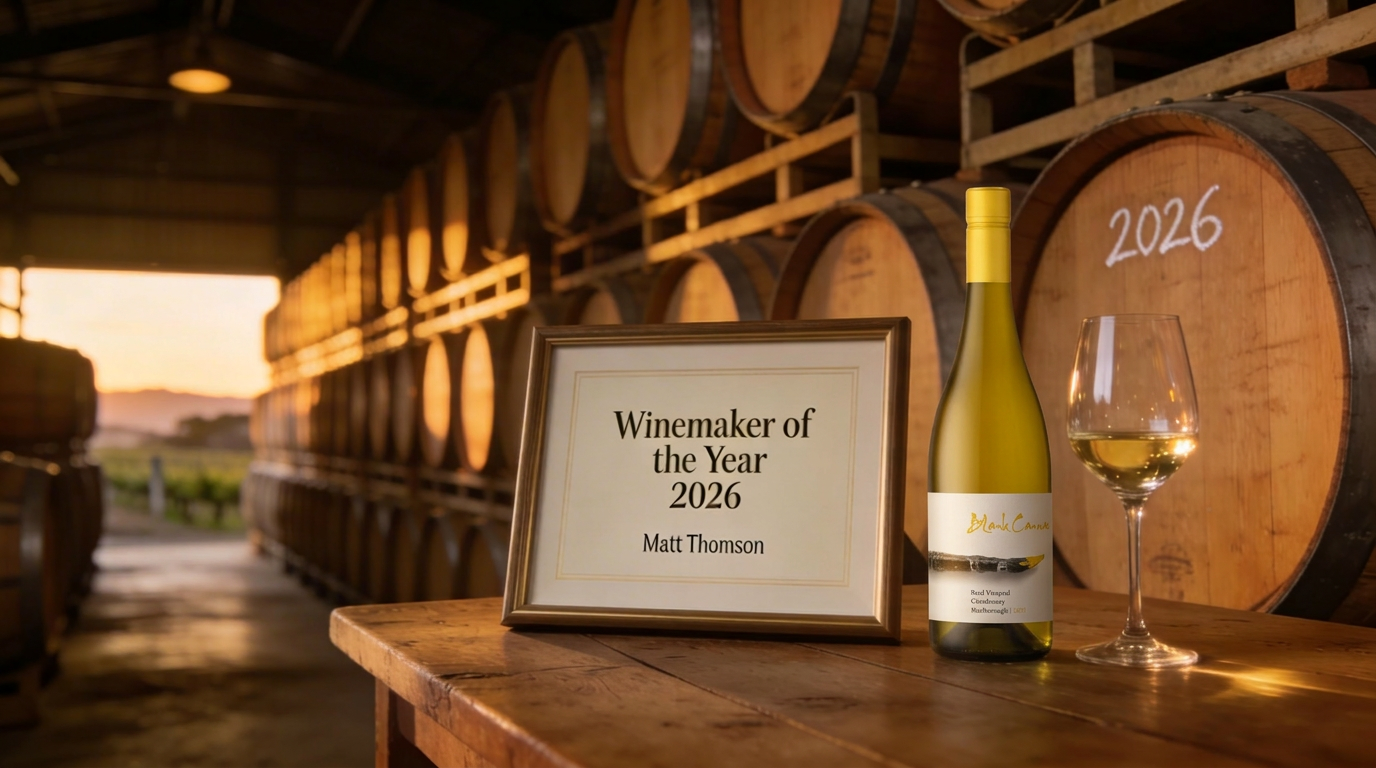
Matt Thomson being named Winemaker of the Year in 2026 felt less like a surprise and more like a moment of overdue alignment. For those who have followed his career across New Zealand and Europe, the title simply put words to a body of work that has been quietly influential for decades. The twist, and the truly satisfying part of the story, is that this recognition arrives at a time when Blank Canvas – the winery he co‑founded with his partner Sophie Parker‑Thomson – has become the purest expression of what he actually wants to say about wine.
How a consultant finally stepped into his own frame
Matt Thomson’s reputation was built long before Blank Canvas existed. For years he moved in the background, shaping wines for other producers, often across multiple hemispheres in the same twelve‑month stretch. That lifestyle honed a forensic understanding of how vineyards behave under pressure, how tiny decisions in the cellar ripple through to a finished bottle, and how to maintain astonishing consistency in the face of wildly variable seasons.
Yet consultancy is always, by definition, someone else’s canvas. There are house styles to respect, commercial expectations to meet, and compromises that must occasionally be accepted. The creation of Blank Canvas changed that equation. Here, and only here, Thomson could step away from the constraints of brand guidelines and volume targets, and instead build wines that answered to a single question: “What does this vineyard want to be if we really listen?”
That is perhaps the most important context for his 2026 accolade. The award does not just acknowledge technical competence. It recognises a long arc in which a seasoned technician allowed himself to become, unapologetically, an artist.
Blank Canvas: when the name actually means something
Blank Canvas is not a marketing phrase. It is a mission statement. The concept is almost disarmingly simple: find sites that fascinate, work with them as transparently as possible, and resist the temptation to impose a prefabricated style. That sounds easy. In practice, it demands an uncomfortable amount of restraint.
Rather than chasing volume, Blank Canvas focuses on small parcels that each tell a different story: a precise Marlborough single‑vineyard Sauvignon Blanc that trades brash fruit for saline detail; a nervy Chardonnay that leans into sulphide complexity and taut acidity; a Pinot Noir that privileges structure and savoury length over easy sweetness. These are wines that expect the drinker to lean in. They reward the palate that has the patience to notice tension rather than fireworks.
What places Blank Canvas apart in a crowded New Zealand landscape is that nothing feels accidental. Every decision – picking earlier than neighbours, choosing a particular coopers’ oak, opting for wild ferments or whole bunch – is taken with the vineyard, not the market, in mind. Winemaker of the Year is always partly about symbolism, and in 2026 the symbolism is clear: this is an endorsement of detail, of curiosity, and of the idea that New Zealand wine can be as much about nuance as it is about impact.
A career that refuses to be one‑dimensional
One of the reasons Thomson’s recognition resonates so strongly is that his career has never been confined to a single region or style. Years of working on both southern and northern hemisphere vintages have given him a rare, almost bilingual fluency in wine. He understands, intimately, how Marlborough Sauvignon Blanc behaves in a cool year versus a warm one, but he can also talk structure and tannin in European reds without missing a beat.
This breadth matters when it comes to Blank Canvas. The wines often feel like conversations between hemispheres. A New Zealand Chardonnay is allowed to flirt with the flinty, reductive language of top white Burgundy. A Pinot Noir is encouraged to speak in a more structural, savoury dialect than the typical fruit‑driven style. Even the handling of Sauvignon Blanc – arguably the country’s most codified variety – shows a deliberate refusal to lean on easy tropics when citrus, herbs and mineral drive can tell a more interesting story.
Being named Winemaker of the Year in 2026 acknowledges that this cross‑pollination has lifted the standard of more than one region. It hints at something many wine professionals already knew: that Matt Thomson has been influencing the way others think about balance and texture for a very long time.
Featured Wines
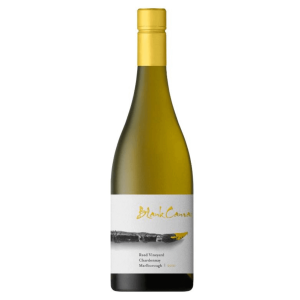
Blank Canvas Reed Vineyard Chardonnay 2024 (6 Bottles) Marlborough, NZ
Add to Cart
$65.33
/ bottle
$392.00 for a case of 6
Why Blank Canvas resonates with serious drinkers
Here is something quietly fascinating about Blank Canvas. The wines are not designed for casual, distracted drinking. They pull focus. A Sauvignon Blanc that emphasises chalk, nettle and preserved lemon over passionfruit does not flatter the palate in the first two seconds; it unfolds over a glass, sometimes over an evening. A Pinot Noir that opens with spice and finely grained tannin rather than a gush of cherry fruit demands food, conversation and time.
For serious drinkers, this is exactly the point. Blank Canvas has become shorthand for wines that respect the intelligence of the person holding the glass. They invite questions. Why is this parcel handled with wild ferments whilst another sees a more classical regime? Why is oak almost invisible in one cuvée yet a sculpting presence in another? Each bottle feels like a case study in restraint and intentionality, which makes them particularly compelling for a readership that wants to understand the “why”, not just the “what”.
In that context, the 2026 Winemaker of the Year title reads as a kind of nudge. It tells curious drinkers, “If you have not been paying attention to Blank Canvas and to what Matt Thomson is doing there, it is time you did.”
Recognition at exactly the right moment
Awards can be mistimed. Some arrive too early, burdening a winemaker with expectations before their style has fully settled. Others arrive too late, as a kind of lifetime‑achievement nod after the most interesting work has already been completed. The timing of Matt Thomson’s 2026 recognition feels just right.
Blank Canvas is mature enough as a project to show a clear through‑line. The early “what if we tried this?” phase has given way to a more assured, confident period where each release feels like another piece in a coherent puzzle. At the same time, there is no sense of inertia. New vineyards continue to appear, new experiments quietly bubble away in the background, and there is still the palpable energy of someone who does not believe their best wine has already been made.
In other words, this is not a curtain call. It is an interlude.
What this means for the wider New Zealand conversation
The ripple effect of naming Matt Thomson Winemaker of the Year in 2026 extends beyond the walls of Blank Canvas. It reinforces a set of values that many in the New Zealand industry are increasingly embracing: precision over power, transparency over polish, site expression over homogeneity. It implicitly rewards a career spent listening to vineyards rather than bending them into neat commercial boxes.
For younger winemakers, the message is clear. One can spend years in the background, honing craft quietly, and still find that patience rewarded. One can build a label like Blank Canvas on uncompromising ideas about balance and restraint and still earn mainstream recognition. For drinkers, the takeaway is even simpler. When a winemaker with this much accumulated experience puts his own name, in effect, behind a set of bottles, those bottles are worth seeking out.
The story of 2026, then, is not just that Matt Thomson has finally been given a title he has long deserved. It is that the wines of Blank Canvas – thoughtful, precise, sometimes demanding – have been affirmed as central to the way New Zealand wants to talk about itself. And for anyone who has ever swirled one of those glasses and felt it quietly rearrange their expectations, that feels exactly right.
 Shiraz
 Cabernet Sauvignon
 Pinot Noir
 Grenache
 Merlot
 Red Wine Blends
 Chardonnay
 Riesling
 Pinot Gris
 Semillon
 Viognier
 Grenache Rosé
 Pinot Noir Rosé
 Shiraz Rosé
 Sangiovese Rosé
 Aglianico Rosé
 Clairette Rose
 Champagne
 Prosecco
 Sparkling Shiraz
 Blanc de Blanc
 Blanc de Noir
 Pet Nat
 Moscato
 Topaque
 Port
Port Sherry (dry & sweet)
 Muscat & Tokay
 Vermouth