 0473 644 098 · Mon–Fri 9am–5pm AESTHelp & FAQ


When Cretan Winemakers Discovered the Romans Couldn’t Tell the Difference

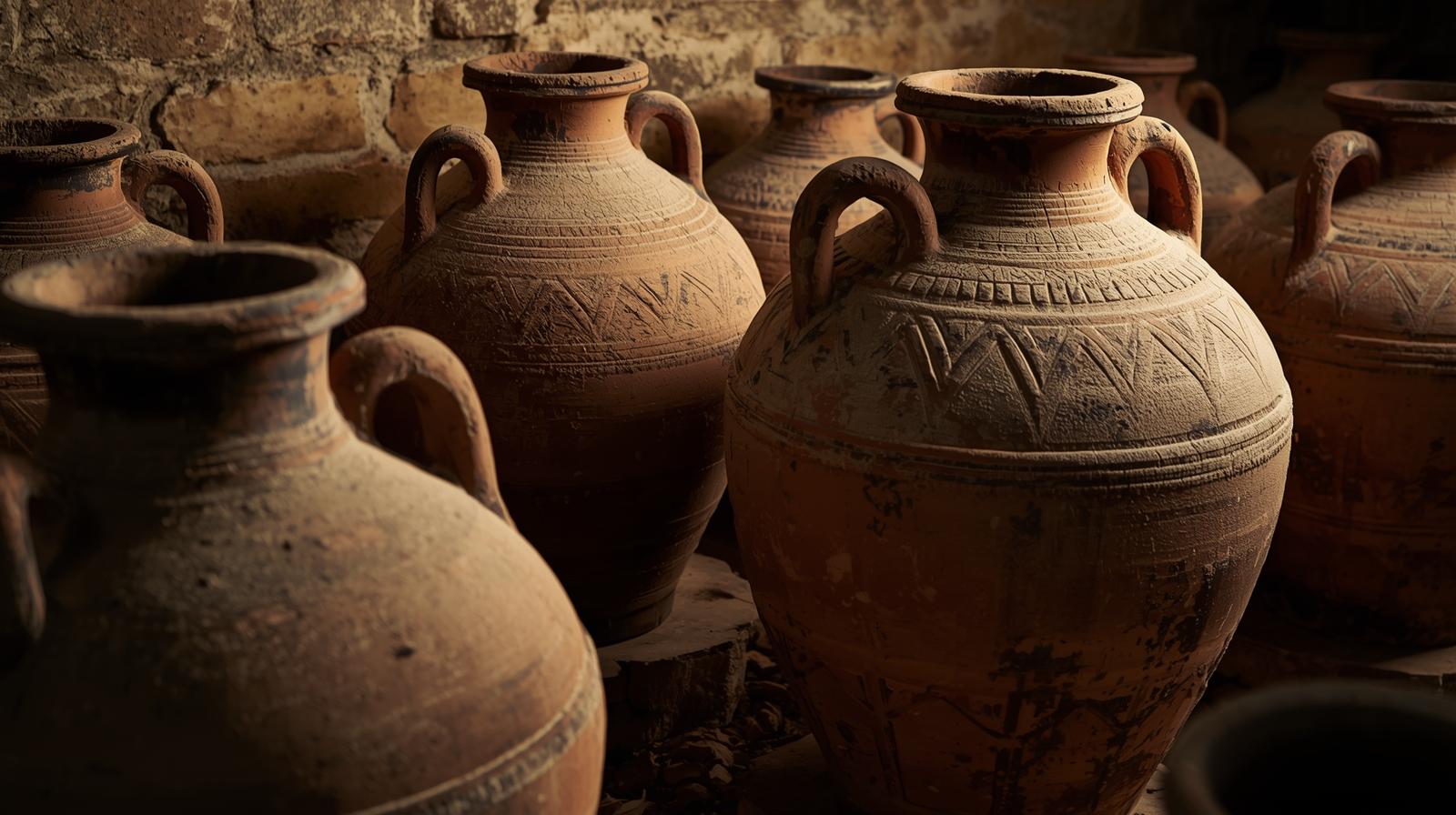
For centuries, raisin wine represented luxury in the ancient Mediterranean. These intensely sweet wines demanded patience, time, and meticulous attention. Roman agricultural writers like Columella noted that the combined drying and fermentation process required at least a month. Pliny the Elder described a technique involving partial vine-drying followed by eight days on racks before pressing. This was not casual winemaking. This was craftsmanship, the kind that commanded premium prices in Rome’s wine markets.
Yet archaeological evidence emerging from Knossos on Crete suggests something remarkable: the Cretans may have been cutting corners. Not occasionally. Not experimentally. Systematically, at scale, for generations. And the Romans, despite their sophisticated palates and wine culture, either didn’t notice or didn’t particularly care.
Dr. Conor Trainor, Assistant Professor at University College Dublin, has spent the past decade investigating wine production at Knossos, the site famous for its earlier Minoan remains but equally renowned throughout the Roman Empire for producing high-end sweet raisin wine. His findings, published in The Conversation, hint at something that looks suspiciously like organised deception. “What my archaeological investigations of a wine production site, as well as at wine shipping container (amphora) production sites at Knossos, reveal is that Cretan wine-producers may have been deceiving their Roman-era customers with a knock-off version of passum,” Trainor explains. The pattern he’s uncovered suggests a deliberate deviation from the traditional, time-consuming methods of raisin wine production.
The Economics of Conquest: How Rome Created Its Own Problem
Crete’s winemaking legacy stretches back millennia. Archaeological evidence from Myrtos suggests wine production as early as 2170 BC. By the time Rome conquered the island after a brutal three-year campaign ending in 67 BC, Cretan wine already carried a reputation for quality. The Romans, recognising this, established a colony at Knossos and dramatically expanded wine production to capitalise on the island’s strategic location and established viticultural expertise.
The sheer volume of amphorae (clay jars used for transporting wine) found at Roman-era sites in Crete reveals a massive export operation. Romans were eager buyers, partly because of convenient shipping logistics. Grain shipments from Alexandria to Italy, vital for feeding Rome’s growing populace, frequently stopped at Crete. Merchants could load additional cargo without deviating from established routes. This logistical convenience transformed Crete into a wine hub almost by accident.
But the primary driver was reputation. Cretan raisin wine functioned as a luxury item, analogous to Italy’s modern appassimento wines. Beyond flavour, it carried supposed medicinal properties. Pedanius Dioscorides, the Roman army physician whose medical text Materia Medica became the foundation of pharmacology for over 1,500 years, claimed Cretan raisin wine cured headaches, expelled worms, and promoted fertility. Whether these claims held merit mattered less than whether Romans believed them.
This sudden surge in demand during the early days of the Empire created pressure. Winemakers who had previously produced modest quantities for regional consumption now faced orders from Rome and the Bay of Naples at unprecedented scale. The traditional methods for making raisin wine couldn’t scale easily. Drying grapes for weeks or months represented a production bottleneck. Something had to give.
The Honey Hypothesis: Archaeology Reveals the Shortcut
Pliny the Elder documented one known shortcut for raisin wine production: boiling grape juice in large containers to concentrate sugars artificially. Yet the mixing basins unearthed at Knossos show no evidence of heating. This eliminates boiling as the method and points toward something else entirely.
Trainor’s team uncovered a repeated pattern at Roman-era pottery kilns in one specific region of Knossos: four key artefacts appearing together consistently. Amphorae for wine transport. Amphora stands for filling. Large ceramic mixing bowls. And, most tellingly, ceramic beehives.
These beehives, identifiable by their rough interior surfaces designed for honeycomb attachment, create a direct connection between winemaking and honey production. Similar discoveries at other Greek sites reinforce the pattern. “These beehives, identifiable by their rough interior surfaces designed for honeycomb attachment, strongly suggest a direct connection between winemaking and honey production,” according to Trainor’s analysis. The proximity of these beehives to wine production and shipping areas creates a correlation too strong to ignore.
The implication becomes clear: rather than drying grapes for weeks to concentrate their sugars naturally, Cretan producers were blending honey into wine before shipping. This method would have been significantly quicker and dramatically cheaper than the traditional process. Where authentic raisin wine required patience and carried the risk of spoilage during the lengthy drying phase, honey-sweetened wine could be produced on demand, scaled up or down based on orders, and shipped immediately.
But if Cretan producers were substituting honey for traditional grape-drying techniques, was the result genuinely raisin wine? Or was it simply honey-sweetened wine marketed as something it wasn’t?
The Question of Authenticity: Did the Romans Know?
This is where the story becomes genuinely interesting. The archaeological record provides an answer, though perhaps not the one that reflects well on Roman wine connoisseurship.
Cretan wine amphorae appear throughout archaeological sites across Rome in staggering quantities. The sheer volume of now-empty containers suggests that Roman buyers consumed Cretan wine enthusiastically, continuously, and at scale. If the wine had been obviously fraudulent, if it tasted markedly different from authentic raisin wine, demand would have collapsed. Roman wine culture was sophisticated enough to distinguish quality. Wine literature from the period demonstrates detailed knowledge of regional characteristics, production methods, and aging potential.
Yet the demand persisted. Trainor suspects this reflects a pragmatic calculation by Roman consumers. “The substantial quantities of Cretan wine imported into Rome suggest that buyers were not overly concerned with these distinctions,” he notes. Authenticity may have mattered less than availability, price, and perceived quality. The Roman populace, it seems, prioritised having access to sweet wine that approximated the expensive raisin wine experience over insisting on absolute production authenticity.
This pattern mirrors modern wine markets in revealing ways. Consumers often respond more strongly to branding, reputation, and price signals than to objective quality differences detectable through blind tasting. If the wine arrived in containers marked as Cretan, if it tasted sweet and pleasant, if it cost what one expected to pay for imported luxury, many buyers likely accepted it without question. The Romans might have been unwitting beneficiaries, or victims, of ancient Cretan ingenuity, but the relationship appears to have been mutually beneficial enough that it continued for generations.
What This Reveals About Ancient Wine Commerce
The Knossos findings illuminate something broader about wine trade in the ancient Mediterranean. Fraud, shortcuts, and substitutions weren’t aberrations. They were responses to market pressures, technological constraints, and economic incentives that persist in wine commerce today.
Authentic raisin wine production faced genuine constraints. The drying process couldn’t be rushed without sacrificing quality. Weather affected outcomes unpredictably. Spoilage risk increased with every additional day grapes spent drying. Capital remained tied up in inventory for months before products could ship. For producers facing surging demand from the world’s most powerful empire, these constraints became existential problems.
Honey offered an elegant solution. It was available locally (hence the beehives at production sites). It dissolved easily into wine. It created the sweetness Romans expected from Cretan imports. It allowed producers to respond quickly to orders without maintaining extensive drying facilities or enduring months-long production cycles. From a business perspective, the switch from grape-drying to honey-sweetening was rational, even inevitable.
The fact that this practice appears to have been widespread, operating openly at major production sites rather than hidden in clandestine operations, suggests it may not have been viewed as fraud by the Cretans themselves. Perhaps they considered it a reasonable adaptation of traditional methods. Perhaps the distinction between honey-sweetened wine and grape-dried wine mattered less in their cultural context than it would to modern appellations lawyers. Or perhaps they simply recognised that Romans couldn’t tell the difference and adjusted their production accordingly.
The Modern Parallel: Appellation Rules Exist for a Reason
This ancient wine controversy illuminates why modern wine regulations exist. Protected appellations, production method requirements, and ingredient restrictions aren’t bureaucratic nuisances. They’re responses to exactly this kind of substitution and mislabelling. When Champagne rules mandate bottle fermentation, when Madeira requires specific grape varieties and aging protocols, when Barolo restricts production to defined geographical boundaries, these rules protect consumers from paying premium prices for approximations rather than authentic expressions.
The Romans lacked these protections. They relied on reputation, branding (the amphora stamps and inscriptions), and their own palates. For the most part, this system worked well enough. Wine flowed from Crete to Rome in massive quantities for centuries. Both sides apparently prospered. But the relationship rested on information asymmetry, on producers knowing something about their product that consumers didn’t.
Modern wine drinkers face similar challenges despite regulatory frameworks. Clever producers still find ways to approximate expensive wine characteristics using cheaper methods. Oak chips replace barrel aging. Micro-oxygenation mimics slow development. Additives adjust colour, texture, and mouthfeel. The tools have changed. The incentives remain identical.
What We Can Learn from Ancient Cretan Pragmatism
The Knossos findings don’t reveal villainy so much as adaptation. Cretan winemakers faced impossible demand using traditional methods. They improvised. They found a shortcut that satisfied customers and sustained their businesses. The fact that Romans continued buying their wine for generations suggests the product, however made, delivered satisfaction.
Perhaps the lesson isn’t that ancient Cretans were dishonest but that authenticity in wine production has always been more flexible than we like to admit. The line between innovation and deception, between adaptation and fraud, depends largely on transparency and expectation. If Romans had known they were buying honey-sweetened wine rather than grape-dried raisin wine and chosen to purchase it anyway, would the transaction have been fraudulent? Or would it simply have been commerce?
These questions remain relevant. Every time a modern winery uses a new technique to approximate traditional results faster or cheaper, they navigate this same territory. Every time a consumer chooses based on price rather than production method, they participate in the same dynamic that made Cretan wine successful in Roman markets.
The amphorae are empty now. The wine is long gone. But the pattern persists, as immediate and recognisable today as it was two thousand years ago when Cretan merchants loaded honey-sweetened wine into containers marked for Rome.
 Shiraz
 Cabernet Sauvignon
 Pinot Noir
 Grenache
 Merlot
 Red Wine Blends
 Chardonnay
 Riesling
 Pinot Gris
 Semillon
 Viognier
 Grenache Rosé
 Pinot Noir Rosé
 Shiraz Rosé
 Sangiovese Rosé
 Aglianico Rosé
 Clairette Rose
 Champagne
 Prosecco
 Sparkling Shiraz
 Blanc de Blanc
 Blanc de Noir
 Pet Nat
 Moscato
 Topaque
 Port
Port Sherry (dry & sweet)
 Muscat & Tokay
 Vermouth