 0473 644 098 · Mon–Fri 9am–5pm AESTHelp & FAQ





Should You Buy Young Riesling or Let the Winery Age It for You?

By Kurt, In-House Wine Tester | Published 25 November 2026 | 8 min read
Some wines in this guide are sold on Cellars.com.au. I recommend them because they work with this young-versus-aged Riesling comparison, not because we sell them.
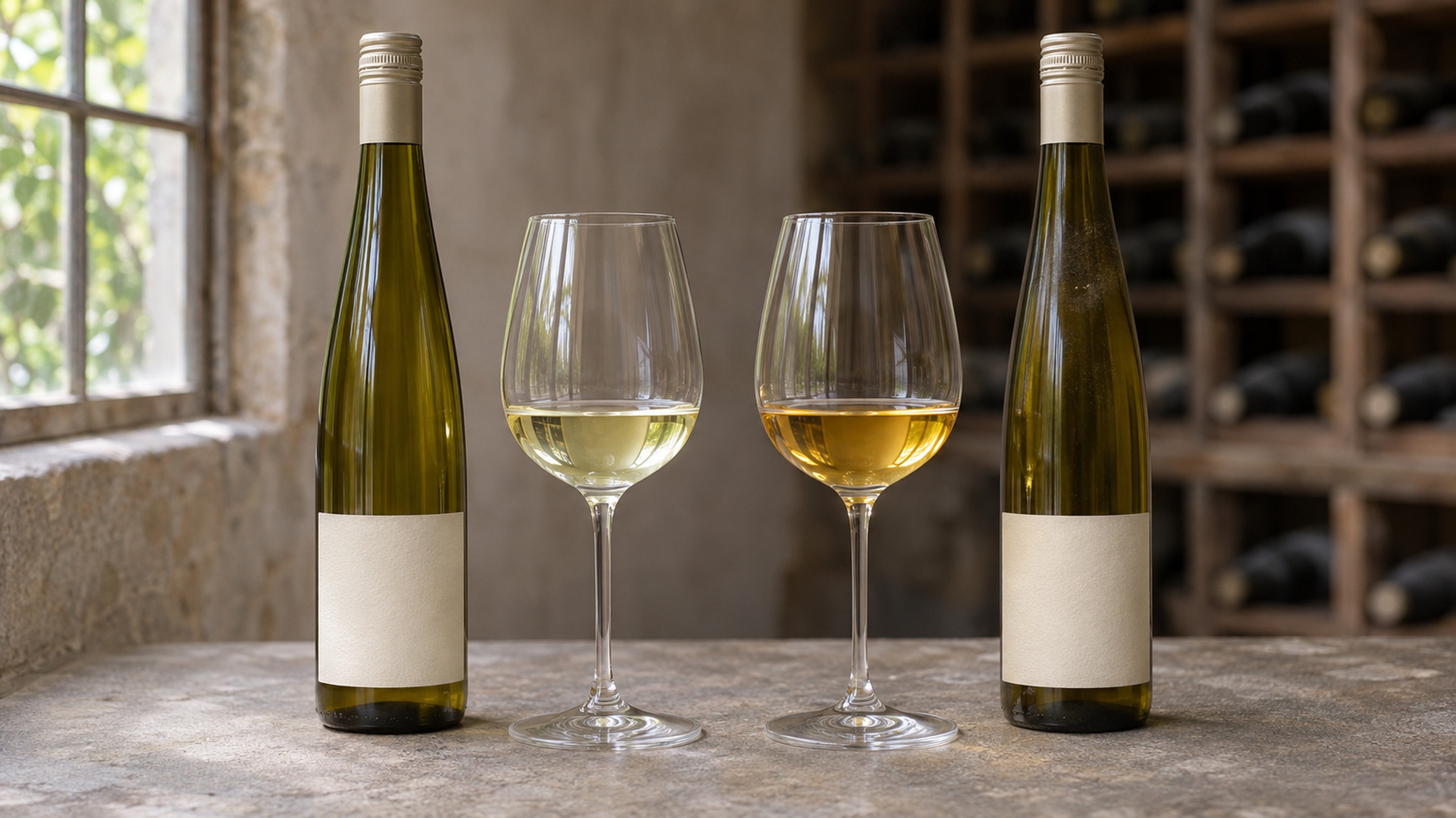
Buy young Riesling for the lime. Buy aged Riesling when you want the toast as well. At this month’s Melbourne Royal Wine Awards, Leo Buring’s 2026 Eden Valley Leonay won Best Riesling, while its 2022 Maturation Release took Top Gold in another Riesling class. The younger wine won the trophy. The older one makes a good case for opening something other than the latest vintage.
Buy for the bottle you want to open
A young, dry Australian Riesling is the one I’d put with prawns straight off the barbie. Its bright citrus and firm acidity do more for sweet prawn meat than a more developed wine would. You don’t have to put a bottle like that away to get your money’s worth. That snap is the reason to buy it now.
Aged dry Riesling is a better bet with something like flathead in brown butter. You still get acidity to cut through the sauce, but the wine can meet the browned, nutty flavours rather than only cutting through them. The food doesn’t have to be fancy. Roast chicken with crisp skin and a squeeze of lemon will do nicely.
| What you want | What to buy | What to check |
|---|---|---|
| Lime, lift and a crisp finish tonight | Young dry Riesling | Look for dry and confirm the vintage you’ll get |
| Some developed flavour without the wait | Museum or late-release dry Riesling | Check the producer’s release notes and the full case price |
| A wine you can follow over several years | Cellar-worthy dry Riesling | Look for a producer drinking window for that vintage and make sure you have cool storage |
What changes in the bottle
The citrus in a dry Riesling doesn’t simply vanish on its fifth birthday. It can shift from a bright, just-cut lime smell towards preserved lemon or lime marmalade as the fresh fruit aromas recede. Toast or honey can come through as well. The interesting bottles still have enough freshness underneath all that development to make you want another taste.
Some mature Rieslings also develop a kerosene note. A compound called TDN contributes that aroma and can build during bottle ageing. It doesn’t climb at the same rate in every wine, and some people notice it at lower levels than others. A trace behind the citrus is one thing. If it’s the only thing you can smell, you don’t have to call that complexity.
Honey on the nose is not evidence of residual sugar, the sugar left in the wine after fermentation. A dry Riesling doesn’t turn sweet in the cellar. That distinction matters when you’re shopping from tasting notes alone. The word honey describes something you might smell, while dry tells you something about how the wine drinks. For the broader style differences, see our guide to why Australian Riesling gets overlooked.
There’s another reason to look for the producer’s notes when you’re comparing two bottles. A wine with some sugar can still finish briskly if it has plenty of acidity, so tasting words like crisp won’t settle the question. Look for the producer’s description of sweetness alongside the residual sugar figure. For a first side-by-side tasting, leave the sweeter bottle for another dinner so you’re not trying to untangle sweetness and age at the same time.
What the winery is charging you for
An old vintage tells you when the grapes were picked. A museum release tells you something about how the wine came to market. Look past the term and see what the winery actually did. Pewsey Vale, for instance, says it bottles The Contours in the year it’s made and holds it for five years before release. That’s more useful than an old date on a bottle with an unclear storage history.
Part of the value is knowing where the bottle spent those years. The other part is getting a wine ready for the dinner you’re planning now, rather than buying a project. Neither makes a late release automatically better value. A higher price might also reflect a particular vineyard or a different selection of fruit, so don’t assume you can recreate it by keeping the winery’s regular Riesling in a cupboard.
For an Eden Valley example, look at the Spinifex Late Release Riesling 2017. The Clare Valley Mitchell McNicol Riesling 2016 is another aged release, but Mitchell describes a touch of sweetness, so don’t use it as your bone-dry benchmark. The 2022 Leonay Maturation Release is slated for July 2027. Put that one on a watch list, not on this summer’s menu.
An ordinary release from an older vintage can still be an excellent buy. The question is who’s kept it since release. A bottle shipped recently from the producer’s cellar is a different proposition from one that’s been sitting in a sunny shop window. Ask where the stock has been stored. If the answer amounts to “we’ve had it for a while”, I wouldn’t pay extra for the date on the label.
The case total deserves a look before you start comparing per-bottle figures. A mature Riesling can make sense for one dinner without making sense by the dozen. If you’re new to the style, try a single bottle at a bottle shop or a glass on a wine list before committing to a case.
Check the vintage at checkout, too. A retailer might use the same listing as stock rolls from one year to the next, and the bottle in the photo might not match the one being packed. For a young Riesling at dinner, that may not matter much. For a side-by-side tasting or a particular award winner, it’s the whole point. Ask for confirmation before ordering if the listing shows two years or says the vintage may vary.
When it’s worth doing the waiting yourself
Start with a dry Riesling you already like, preferably one the producer recommends for cellaring in that vintage. A tightly wound wine may open up with time, but an expensive bottle you don’t enjoy is a poor place to start. A region is a useful filter, not a storage plan. You’re choosing the wine in the bottle, not banking on Clare or Eden Valley to do the work for you.
Three bottles are enough to learn something. Open one now and write down two details you’d recognise later, such as how sharp the citrus smells and how long the finish lasts. Keep the next bottle for a couple of years and see whether the change is heading somewhere you like. Decide what to do with the third after that. Those are checkpoints, not drinking deadlines.
The hard part in an Australian house is getting the bottles through summer. Pick somewhere dark and consistently cool. An uninsulated garage, a shed or a cupboard beside the oven is a bad bet for several years of storage. Heat speeds up reactions in the wine, which can mean losing fresh aromas faster than you intended. That’s not the same thing as getting the result of careful cellaring in less time.
A temperature-controlled wine cabinet makes sense if you already have one or you’re storing several cases. I wouldn’t buy one just to keep three bottles of Riesling. The winery has already paid for the cellar space on a late release. If your house gets hot and you have nowhere reliably cool, this is one job worth leaving to the producer.
Keep a note of the vintage and the month you plan to check the next bottle. Tape it to the carton or put it in your calendar. That’s more useful than writing “cellar” on a box and forgetting it. If the first bottle has exactly the kind of lime bite you want, there’s no rule that says the other two have to stay put.
Try the two styles at the same table
The quickest way to decide whether you like bottle age is to pour a small taste of each side by side. Pick two dry wines. For a fairer comparison, find the same bottling across two vintages where you can. If you’re comparing a regular release with a different vineyard bottling, you’re finding out which wine you prefer, not isolating what age did. That’s still useful when the point is choosing what to buy.
Start both bottles at the same temperature, in the same shape of glass. Taste them before the food lands. Then try each with a chip, and again after squeezing lemon onto the next chip. The comparison is more useful than trying to find six tasting notes. Notice whether you prefer the extra citrus or whether the older wine brings something different to the salt and crunch.
Leave a little in each glass to warm naturally while you eat. A wine that seems muted straight from the fridge may show more aroma after a few minutes. You don’t need to decide which one is better in the abstract. Choose the one you’d be happier to pour with that dinner.
For a first purchase, put the money into one well-stored mature bottle you can open soon. You’ll find out more about your taste that way than you will by waiting five years to learn you liked the lime better.
Questions about buying and keeping Riesling
Is late release the same as late harvest?
No. Late release is about when the wine was offered for sale, while late harvest means the grapes were picked late. Late-harvest wines can be sweet, so check the sweetness separately rather than treating the phrases as interchangeable.
Can Riesling age under screwcap?
Yes. A screwcap doesn’t stop the chemical changes that take place inside the bottle, and a cork isn’t a requirement for cellaring. A screwcapped bottle can also be stored upright, which is handy in a small wine cabinet.
Can you judge old Riesling by its colour?
Not reliably. A deeper gold can be an ordinary part of ageing, and the colour isn’t a substitute for smelling and tasting the wine. If a bottle looks unusually brown and smells stale or like bruised apple, it may be oxidised rather than simply mature.
How long will an opened bottle of aged Riesling keep?
Recap it and put it in the fridge, then check it the next day. Some bottles hold up for several days, but an older, delicate wine can lose its lift sooner. The drinking window for the unopened bottle doesn’t tell you how long it will keep once you’ve poured from it.
Is a wine show medal a guide to how long I should keep a bottle?
No. A medal is an assessment of the wine as it showed in the judging, not a date to open it. Check that the award applies to the exact vintage you’re buying, and use the winery’s cellaring advice to decide when it’s likely to suit you.
 Shiraz
 Cabernet Sauvignon
 Pinot Noir
 Grenache
 Merlot
 Red Wine Blends
 Chardonnay
 Riesling
 Pinot Gris
 Semillon
 Viognier
 Grenache Rosé
 Pinot Noir Rosé
 Shiraz Rosé
 Sangiovese Rosé
 Aglianico Rosé
 Clairette Rose
 Champagne
 Prosecco
 Sparkling Shiraz
 Blanc de Blanc
 Blanc de Noir
 Pet Nat
 Moscato
 Topaque
 Port
 Sherry (dry & sweet)
 Muscat & Tokay
 Vermouth
