 0473 644 098 · Mon–Fri 9am–5pm AESTHelp & FAQ


The Oversupply Crunch: Why Australian Wine Has Too Much Stock and Not Enough Demand

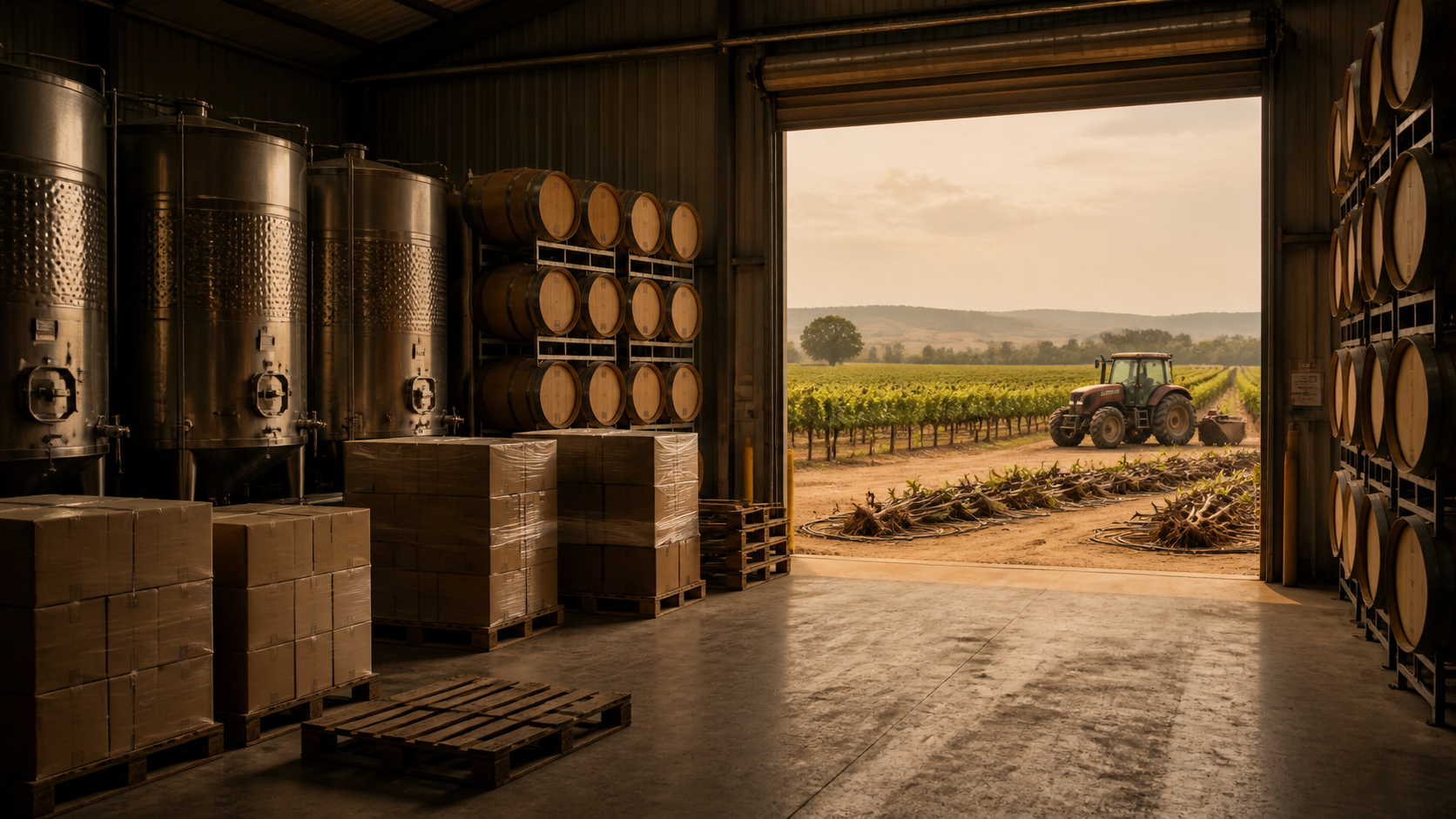
Australian wine oversupply crisis: how did we get here?
The phrase “oversupply crisis” can sound abstract until someone realises that Australia is sitting on more than two billion litres of wine, roughly two years’ worth of production, with nowhere obvious for a lot of it to go. Wine Australia’s latest production, sales and inventory figures show that in 2024–25, the country produced around 52 million litres more wine than it sold, pushing national inventories to an estimated 2.06 billion litres.
This is not a one‑off blip. For several years, production has tended to outpace demand, so each vintage adds another layer of stock to an already full system. At the same time, global wine consumption is falling, and domestic drinkers are moderating their intake, which means the “overflow” has fewer and fewer outlets. The result is a structural oversupply, particularly in commercial red and now increasingly in white wine, that cannot be solved by one good sales year.
Wine production, inventory and stock‑to‑sales: the numbers behind the glut
To make sense of the oversupply crunch, it helps to unpack a couple of key concepts: inventory and stock‑to‑sales ratios. Wine Australia’s inventory report estimates that as of 30 June 2025, Australian wineries held around 2.06 billion litres of wine in storage, about 5 per cent higher than both the previous year and the ten‑year average of 1.96 billion litres. On its own, a large inventory is not necessarily a problem; in fact, ageworthy wines need time.
The challenge appears in the stock‑to‑sales ratio, a metric that compares how much wine is in stock to how much is being sold. In 2024–25, this ratio rose to about 1.9, roughly 15 per cent above its long‑term average of 1.66, implying that stocks are far higher than what would be expected in a balanced market. Wine Australia calculates that there is around 262 million litres of “excess” wine above what would normally be commercially healthy at current sales levels.
For growers, the numbers are even more confronting when translated back into grapes. Murray Valley Winegrowers point out that the surplus equates to about 375,000 tonnes of grapes, and they argue that national crushes may need to drop well below 1.5 million tonnes per year, perhaps closer to 1.2 million, if the market is to rebalance. Until that happens, the industry is effectively carrying a shadow vintage in tanks and barrels, earning little and putting downward pressure on grape prices.
Falling wine demand and changing drinking habits
Oversupply is only half the equation; the other half is demand. Wine Australia’s export figures show that total exports outside China have fallen to their lowest level in more than twenty years, as cost‑of‑living pressures, health concerns and competition from other drinks categories reshape consumer behaviour. At home, wine remains Australia’s most popular alcoholic drink by share of consumption, yet overall per‑capita alcohol use is trending down and drinkers are trading volume for fewer, more deliberate occasions.
One of the most important shifts is that growth is concentrated at the premium end. Analysts at the University of Wollongong note that there is an oversupply of budget wine but an undersupply of truly premium wine, especially in export markets that still value Australian quality. This means that inland regions geared towards high‑volume, lower‑priced wine are bearing the brunt of the crisis, while cooler regions making smaller volumes of higher‑value wine may be experiencing a very different reality.
From the drinker’s perspective, this shows up as heavy discounting on supermarket shelves and in online retail, with some commercial wines being sold at or below cost simply to clear stock. The short‑term upside is cheaper wine; the long‑term question is whether the producers behind those bottles can survive years of selling below sustainable margins.
 $31.00
/ bottle
$186.00 for a case of 6
$31.00
/ bottle
$186.00 for a case of 6
Lowe Wines Jodie Wilbetree Sparkling Rosé
Shipped by
Lowe Family Wine Co
$31.00
/ bottle
$186.00 for a case of 6
 $29.17
/ bottle
$175.00 for a case of 6
$29.17
/ bottle
$175.00 for a case of 6
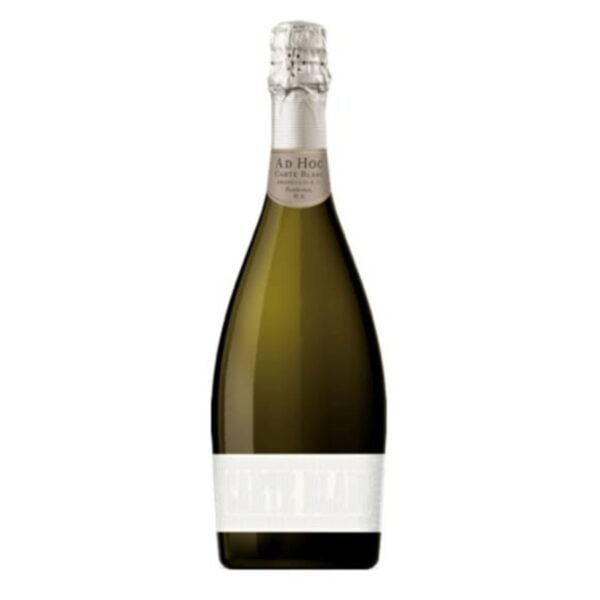
Ad Hoc ‘Carte Blanc’ Prosecco NV
Shipped by
Oatley Fine Wine Merchants
$29.17
/ bottle
$175.00 for a case of 6
 $44.17
/ bottle
$265.00 for a case of 6
$44.17
/ bottle
$265.00 for a case of 6
Hungerford Hill Cardinal Sparkling Shiraz NV
Shipped by
Hungerford Hill
$44.17
/ bottle
$265.00 for a case of 6

 $22.25
/ bottle
$267.00 for a case of 12
$22.25
/ bottle
$267.00 for a case of 12

 $24.58
/ bottle
$295.00 for a case of 12
$24.58
/ bottle
$295.00 for a case of 12
 $19.50
/ bottle
$117.00 for a case of 6
$19.50
/ bottle
$117.00 for a case of 6
 186 pts
 Inland wine regions and vineyard pull‑outs: who pays the price?
The human cost of the oversupply crunch is most visible in inland irrigation regions like the Riverland in South Australia, the Riverina in New South Wales and parts of the Murray Valley. These areas were built around large volumes of fruit destined for affordable red blends and bulk wine, historically supported by strong export demand, including into China.
With red wine stocks already high, indicative prices for Shiraz in the Riverland for the 2026 vintage are reported at around 80 to 120 dollars per tonne, while production costs sit above 350 dollars per tonne. When growers are losing money on every tonne they harvest, something eventually has to give. For many, the only viable option is to pull vines out altogether.
Reports from ABC News and Reuters describe thousands of hectares of vines being removed, with some growers abandoning blocks and others switching to alternative crops that offer more reliable returns. In the Riverina alone, local industry leaders estimate that approximately 5,000 hectares have already been taken out, with more likely to follow if prices do not recover. KPMG has suggested that around 20,000 hectares may ultimately need to be removed nationwide to restore balance to the market.
For regional communities, this is not just a vineyard issue; it is a structural shift. Wineries, contractors, transport operators and hospitality businesses all feel the knock‑on effects when grape income collapses. The oversupply crunch therefore becomes a broader story about rural economies and livelihoods, not just about what sits on retail shelves.
China, exports and the global wine demand crunch
Any discussion of Australia’s wine oversupply needs to acknowledge the role of exports, particularly the China market. In the years leading up to 2020, China absorbed a significant share of Australian red wine exports, especially from inland regions producing competitively priced styles. When tariffs and political tensions disrupted that trade, volumes that would once have been shipped offshore suddenly had to find new homes, either domestically or in other export markets.
At the same time, global wine demand has been weakening. Wine Australia’s export reports and international analysis highlight a broad pattern: mature markets in Europe and North America are drinking less wine overall, younger consumers are exploring other categories, and the growth pockets that do exist often favour lighter, fresher styles and premium brands. Bulk wine and entry‑level reds are precisely the categories facing the most pressure.
Producers have responded by discounting, rebranding, and in some cases diverting wine into alternative products like fortifieds, RTDs or industrial alcohol. However, there are limits to how much can be absorbed this way, especially when similar oversupply issues are playing out in other producing countries. The global market does not simply “soak up” excess Australian wine without a clear positioning and demand story.
What the oversupply crunch means for wine drinkers
From a drinker’s vantage point, the oversupply crunch can feel paradoxical. On one hand, there is more choice than ever at the value end, with aggressive promotions and multi‑buy deals. On the other hand, news of growers ripping out vines and regions under stress can make the whole landscape feel fragile.
There are a few practical implications worth understanding.
First, the cheap deals are real, but they come at a cost somewhere else in the chain. When a bottle is being sold below what it cost to grow and make, someone is absorbing the loss, often the grower. Drinkers who care about the long‑term health of Australian wine might choose, where budgets allow, to support producers and regions that are clearly investing in quality and sustainability rather than chasing the absolute lowest shelf price.
Second, some of the best value in the market right now lies in wines that were originally destined for slightly higher price points but are being discounted to move stock. For enthusiasts, this can be an opportunity to explore better fruit sources or more carefully made wines without paying a premium, essentially riding the industry’s need to clear inventory.
Third, the oversupply crunch may accelerate a shift in style and focus. As lower‑margin, high‑volume vineyards disappear, the wines that remain from inland regions may increasingly emphasise differentiation, whether through alternative varieties, sustainability credentials or more distinctive regional branding. Drinkers who are attentive to labels and back stories may start to notice a gradual recalibration of what “Riverland” or “Murray Darling” means on a bottle.
For drinkers who want to take advantage of the current value window without simply chasing the lowest price, curated value red wine and Australian white wine selections from reputable Australian retailers can be a smarter way to buy wine online, aligning bargains with quality rather than just clearance.
The future of Australian wine supply and demand
Industry bodies such as Australian Grape & Wine argue that the current oversupply is not just a short‑term problem but a structural crisis requiring deliberate adjustment. Their 2026–27 pre‑budget submission calls for targeted government support to help growers exit or transition, rebuild export demand and support regional mental health services. They warn that, left unmanaged, the adjustment will be disorderly, prolonged and deeply damaging for wine regions.
Wine Australia’s own analysis suggests that without significant reductions in vineyard area, especially for oversupplied varieties, grape prices are unlikely to recover and the sector will remain under financial pressure. Some analysts frame this as a painful but necessary reset that could eventually leave a leaner, more premium‑focused industry better aligned with global demand.
For drinkers, this raises an intriguing question about their role in the story. Every bottle purchased becomes, in a small way, a vote for a particular version of Australian wine. Choosing thoughtfully made wines, supporting regions navigating transition and paying attention to how producers communicate about their challenges all contribute to the kind of industry that emerges on the other side of the oversupply crunch.
The oversupply story can sound bleak, but it also forces a return to fundamentals. In the long run, the wines that survive will be those that people genuinely want to drink, at prices that make sense for both sides of the counter. In that sense, the most powerful thing a drinker can do in the face of the oversupply crunch is deceptively simple: stay curious, buy consciously and keep seeking out wines that offer real character and value.






 Shiraz
 Cabernet Sauvignon
 Pinot Noir
 Grenache
 Merlot
 Red Wine Blends
 Chardonnay
 Riesling
 Pinot Gris
 Semillon
 Viognier
 Grenache Rosé
 Pinot Noir Rosé
 Shiraz Rosé
 Sangiovese Rosé
 Aglianico Rosé
 Clairette Rose
 Champagne
 Prosecco
 Sparkling Shiraz
 Blanc de Blanc
 Blanc de Noir
 Pet Nat
 Moscato
 Topaque
 Port
Port Sherry (dry & sweet)
 Muscat & Tokay
 Vermouth