 0473 644 098 · Mon–Fri 9am–5pm AESTHelp & FAQ


Is Pinot Grigio Sweet? Spoiler: It’s Probably Not What You Think

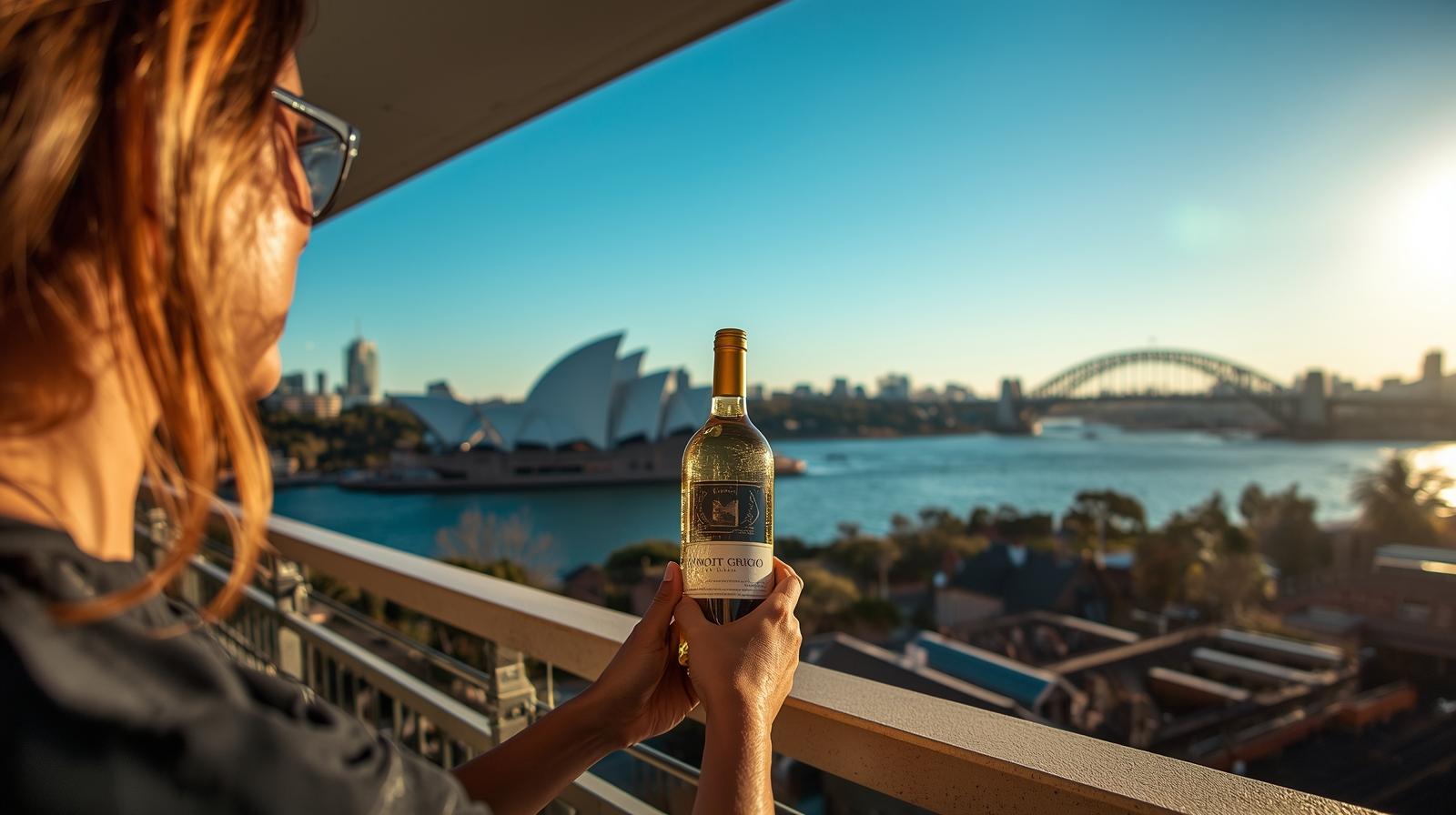
Here’s the thing about Pinot Grigio that nobody seems to want to tell you straight: most of it is bone-dry. But somehow, across wine bars, dinner tables, and liquor stores everywhere, the question persists like an urban legend no one’s bothered to fact-check. You’ll taste a glass, find yourself surprised by the crisp acidity and bright fruit, and inevitably someone will say it’s sweet. They’re not lying. They’re just confused.
The confusion runs deeper than simple misinformation. It reveals something fundamental about how the wine industry has marketed Pinot Grigio, how consumers have come to expect white wine to taste, and what happens when industrial-scale winemaking colonises a grape’s reputation.
The Fruit Tastes Like Sweetness, But That’s Not How Taste Works
Let’s start with the most obvious misunderstanding: fruity flavours don’t equal sweetness. Pinot Grigio delivers green apple, ripe pear, white peach, citrus, sometimes honeysuckle. When your brain encounters these notes, especially on a hot summer afternoon, it can mistake abundant fruit character for residual sugar. It’s a reasonable mistake. But it’s still a mistake.
Sweetness in wine is actually about residual sugar that remains after fermentation. Think of it this way: the yeast during fermentation eats grape sugars and converts them into alcohol. If winemakers allow this process to go nearly to completion, which they do with Pinot Grigio, the resulting wine has minimal sugar left over. What you’re tasting instead is the interplay between fruit, acidity, and alcohol, with each element playing its part in creating freshness rather than sweetness.
Acidity here is the secret weapon. Pinot Grigio typically exhibits high acidity which creates brightness and crispness on the palate. This acid-driven profile actually makes the wine taste drier, not sweeter, even when the fruit notes are generous. It’s like how a squeeze of lemon juice tastes tart rather than sweet, despite coming from a fruit. The sharpness overrides the sweetness perception.
This is also why someone who understands their own palate might correctly identify a wine as “not sweet” but still describe it as refreshing or fruity. These aren’t contradictory statements. A dry wine can absolutely be fruity.
Where the Real Pinot Grigio Lives, and Why You’ve Never Met It
Here’s where the story gets interesting. Northern Italy has been making serious Pinot Grigio for decades, and these wines represent something almost entirely unknown to most consumers outside specialty wine shops. The classic Italian expression, particularly from regions like Friuli and Alto Adige, sits in an entirely different universe from the mass-market bottles crowding supermarket shelves.
Jancis Robinson, who writes for JancisRobinson.com, describes the grape as “relatively soft” with “rarely marked” acidity, capable of reaching high alcohol depending on ripeness, and possessing “quite a spicy perfume” in its full-bodied expression. She notes that carelessly made Italian Pinot Grigio picked too early results in wines with “quite a bit of acidity and not much else,” but points to examples from Friuli’s Collio that are “stunningly fruity with real zest and a blossomy scent, while still retaining enough acidity (sometimes a certain saltiness and often a little carbon dioxide) to keep them lively.” These wines are dry. They’re also thrilling.
Alto Adige sits in the Alpine foothills where cooling nocturnal breezes help preserve acidity and ripeness happens in measured steps. Wines from this region display power, structure, and a sense of place that most drinkers have never experienced in Pinot Grigio. Expect ripe peach, nectarine, honeysuckle, ginger, clove, and a distinct saline edge that creates an almost tannic-like grip. The impression of bitter almonds appears in the finish. These wines are full-bodied and elegant, existing somewhere between the light Italian style and the richer French Pinot Gris expression. They’re remarkably food-friendly and absolutely dry.
Friuli’s Collio and Colli Orientali zones sit on the eastern edge of northern Italy, with marl and limestone hillsides allowing producers to achieve full ripeness at moderate yields. These are wines with poise, persistence, and genuine complexity. Utterly different from the watery industrial expressions that dominate.
Ian D’Agata, who writes for his publication Ian D’Agata’s Best Buys in Italian Wine, highlighted Lo Triolet Pinot Gris Valle d’Aosta as “certainly one of its four or five best” Pinot Grigio expressions in Italy. He described it as “pure and precise, with notes of pear, peach, hazelnut, and menthol dominating on the nose and in the mouth, complicated by hints of minerals, lime, sage that help turn it into something profound,” with a “pleasant, honeyed and citrusy finish” offering “a distinctly refreshing saline bite.” Notice the language here: precise, profound, complicated. Nobody uses those words for sweet wine.
The Great Misconception: When Fruity Got Mistaken for Sweet
Mass-market Pinot Grigio has created an interesting problem. These inexpensive, widely available bottles don’t necessarily contain residual sugar in amounts that would technically make them sweet. But they often taste softer and less acidic than their serious Italian cousins. The winemaking approach here prioritises fruit-forward character and immediate drinkability over terroir expression or complexity. This softness, combined with ripe fruit character, creates the illusion of sweetness for drinkers accustomed to this style.
What’s happening is that these industrial wines eliminate the acidic bite and mineral tension that define great Pinot Grigio. Without sharp acidity to frame the fruit, without minerality to provide contrast, without the structural elements that create interest, the wine feels flabbier, rounder, more indulgent. Drinkers often interpret this softness as sweetness. It’s not quite that. It’s more like the wine has had its backbone removed.
Some cheaper producers also deliberately leave slightly more residual sugar than the classic style would demand. The economics of mass production favour wines that sell immediately, appeal broadly, and don’t challenge. Residual sugar is an easy way to achieve this. But these remain exceptions rather than the rule, and most supermarket Pinot Grigio is actually dry, just lacking the complexity and acidity that makes dry wine interesting.
When Pinot Gris Actually Gets Sweet (And Where That Happens)
Alsace produces genuinely sweet Pinot Gris under the Vendanges Tardives and Sélection de Grains Nobles designations. These are different creatures entirely. Vendanges Tardives (late harvest) requires minimum natural sugar potential of 243 grams per litre for Pinot Gris, with grapes hand-harvested from a single declared vintage, and no enrichment permitted. These wines offer concentrated flavours of ripe stone fruits, honey, ginger, and spice, with luscious textures balanced by vibrant acidity. They sit somewhere between dry white wine and dessert wine, capable of standing on their own as an aperitif or pairing beautifully with certain dishes.
Sélection de Grains Nobles demands even higher sugar levels at 279 grams per litre, produced through successive sorting of botrytised grapes. These are profound dessert wines with candied fruit, citrus peel, and the complexity that noble rot (botrytis) brings. The sweetness here is genuine and purposeful, though always tempered by characteristic Alsatian acidity that prevents them from becoming cloying.
Tim Atkin, Master of Wine and wine critic, describes late-harvest Alsatian Pinot Gris as “distinctly exotic, with notes of honey, ginger, spice and tropical fruit,” noting that both dry and sweet versions “tend to have pronounced alcohol levels” due to the region’s dry, sunny autumns permitting healthy grapes to hang well into October and November. These are expressions where the grape reaches full maturity and the winemaker’s intent shifts toward capturing richness rather than freshness. They’re worlds away from typical Pinot Grigio.
Why The Market Rewards Confusion
The real issue here isn’t that Pinot Grigio sometimes tastes sweet. It’s that industrial marketing has created a void where understanding used to be. For decades, supermarket Pinot Grigio sold on the promise of being easy, approachable, and safe. Marketing teams avoided complexity, emphasising words like “crisp” and “refreshing” while pricing the wine to compete with value bottles of other varieties.
This commodity approach worked brilliantly for volume. It didn’t work for reputation. A generation of drinkers was introduced to Pinot Grigio as an uncomplicated, mild-mannered white wine. When they encountered exceptions, they couldn’t place them. When they found complexity, they called it heaviness. When they discovered serious Pinot Grigio with structure and texture, they sometimes complained it wasn’t “typical.” The market had trained them to expect something entirely different.
The cheap supermarket segment continues creating slightly sweet Pinot Grigio specifically to appeal to casual drinkers hunting for something easy and fruit-forward. These wines exist as commercial products, bearing little relationship to what the grape can achieve when treated seriously. They’re designed to move volume, not express terroir or varietal character.
What Actually Happens When You Drink The Good Stuff
Classic Italian Pinot Grigio, the real thing, is dry, mineral-driven, and defined by high acidity with minimal sweetness. The style emphasises freshness, sometimes a touch of saltiness, and a brisk, lively finish. Some late-harvest examples from warmer regions like Australia or California can achieve moderate sweetness with richer stone fruit flavours, but these remain rare exceptions explicitly marked as such.
The Australian approach tends toward juicy, tropical fruit-flavoured expressions, particularly from regions like Orange and Mornington Peninsula, though most still trend dry despite their generosity of fruit. These wines show what happens when Pinot Grigio ripens fully in a warmer climate without being picked too early or cropped too heavily: fuller body, rounder texture, more expressive fruit, but still fundamentally dry in style.
When you encounter quality Pinot Grigio at a proper tasting, the surprise often comes from texture, salinity, and complexity rather than any sweetness. There’s sometimes a faint effervescence, a touch of carbon dioxide captured during bottling that creates a subtle prickling sensation. Minerality presents as wet stones or limestone. The finish might show bitter almonds or white pepper. These are the characteristics that define seriousness in this category. What you’re experiencing is a grape being allowed to express itself rather than being squeezed into a commercial mould.
The next time someone insists that Pinot Grigio is sweet, ask them which one. Ask them where it came from. The answer will likely reveal that they’ve only encountered supermarket examples, industrial expressions designed for maximum appeal rather than maximum truth. Serious Pinot Grigio from the regions that invented the style remains dry, textured, and far more interesting than reputation suggests. It’s been waiting patiently for drinkers willing to look beyond the stereotype.
 Shiraz
 Cabernet Sauvignon
 Pinot Noir
 Grenache
 Merlot
 Red Wine Blends
 Chardonnay
 Riesling
 Pinot Gris
 Semillon
 Viognier
 Grenache Rosé
 Pinot Noir Rosé
 Shiraz Rosé
 Sangiovese Rosé
 Aglianico Rosé
 Clairette Rose
 Champagne
 Prosecco
 Sparkling Shiraz
 Blanc de Blanc
 Blanc de Noir
 Pet Nat
 Moscato
 Topaque
 Port
Port Sherry (dry & sweet)
 Muscat & Tokay
 Vermouth