 0473 644 098 · Mon–Fri 9am–5pm AESTHelp & FAQ


Why You Should Be Drinking Calabrian Wine (And Why You Probably Haven’t Heard of It Yet)

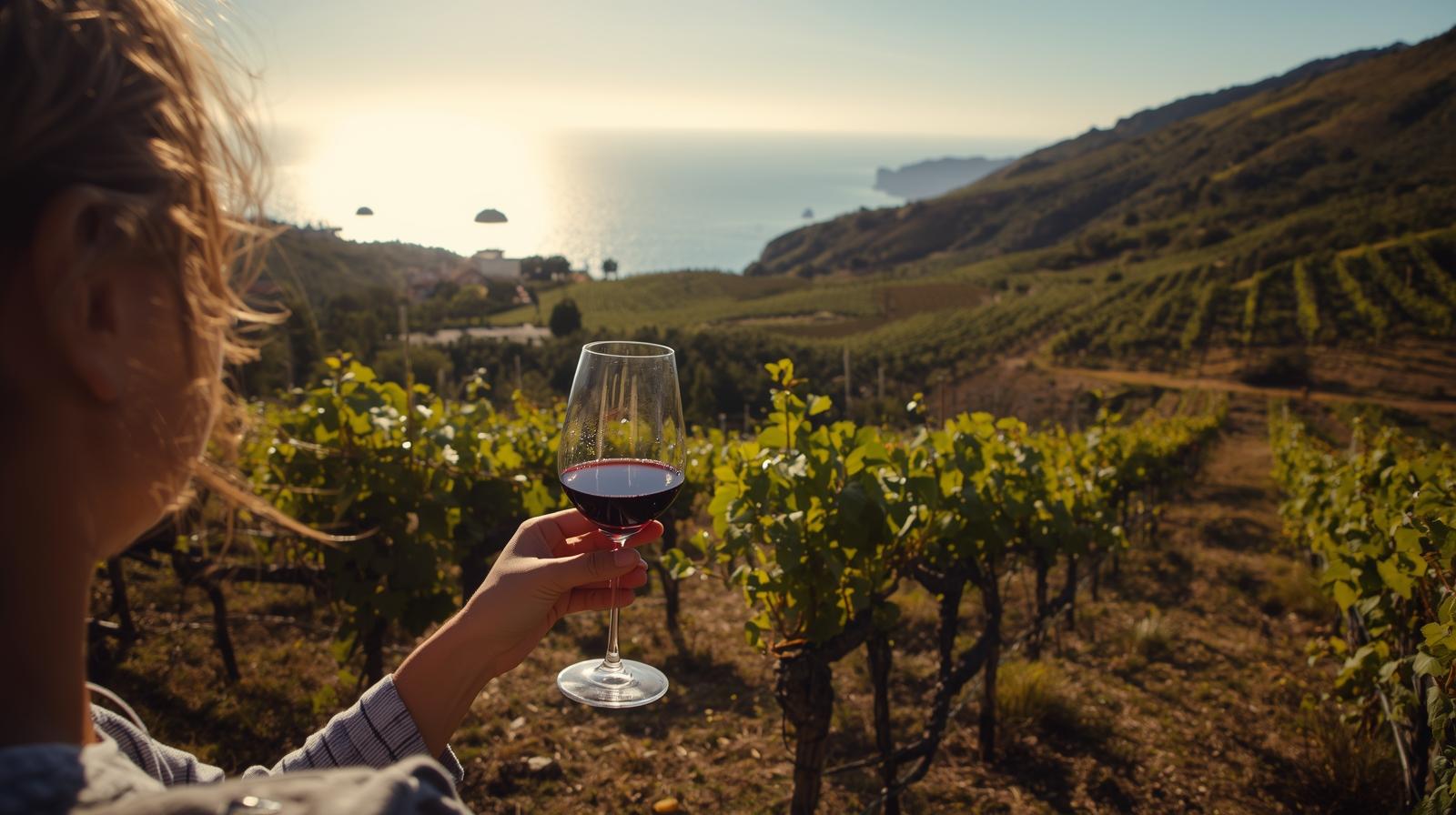
Here’s the thing about Calabrian wine. For something that’s been around for 2,500 years, it’s remarkably good at staying under the radar. While wine lovers have been falling over themselves for Tuscan Brunellos and Piedmont’s Barolos, Calabria, the toe of Italy’s boot, has been quietly making wines that the ancient Greeks once served to Olympic champions.
And now, finally, the secret’s getting out.
The Region That Time Forgot (Until Now)
Let me paint you a picture. You’re standing on the Ionian coast in southern Italy, looking out over vineyards that drop down to sparkling blue water. The Greeks who settled here in the 8th century BC called this place Oenotria, literally “the land of wine.” They were so convinced of its potential that they brought vine cuttings from home and started making wine centuries before Rome was anything more than a shepherd’s village.
But somewhere along the way, Calabria fell off the wine world’s map. The region became synonymous with bulk wine, the kind shipped north to beef up weaker vintages in Piedmont and Tuscany, or even across the border into France. Paolo Librandi, whose family has been making wine in Calabria since 1953, puts it bluntly: “Until recently, the strong Calabrian wines were mainly exported from the region as bulk products, blended into wines in the north of Italy, and even France.”
Not exactly the origin story you’d expect for wines that once fuelled ancient athletes.
The Grape That Refuses to Be Boring
If Calabrian wine has a protagonist, it’s Gaglioppo, pronounced “gahl-YO-poh”. This thick-skinned, late-ripening red grape accounts for 40 per cent of plantings in Calabria, and for decades it had a reputation problem. Old-school producers extracted the hell out of it. Brutal, long maceration periods wrung out harsh, unpolished tannins. The resulting wines were powerful but crude. Gaglioppo became emblematic of everything people thought was wrong with Calabrian wine: rustic, unrefined, not worth serious attention.
But here’s what changed. Someone finally asked, “What if we’ve just been making it wrong this whole time?”
Paolo Librandi’s family was among the first to figure it out. They realised that Gaglioppo, like Nebbiolo or Nerello Mascalese, needed finesse rather than force. Higher altitude plantings. Shorter maceration periods. Precise temperature control. When handled properly, Gaglioppo produces wines that are mineral, elegant, and structured. Wines with clear lineage to those ancient Greek traditions.
In 1988, Librandi’s Cirò Rosso Classico Superiore Duca Sanfelice Riserva appeared in the prestigious Gambero Rosso Tre Bicchieri guide. Paolo admits, “Many Italians were quite surprised to learn that a quality wine could come from Calabria.” That single recognition was a watershed moment. Proof that Gaglioppo could compete with any fine Italian red.
The Philosophy: Authenticity Over Fashion
What makes the current Calabrian wine movement different from, say, Sicily’s transformation in the 1990s, is its stubborn commitment to indigenous grapes. When Sicily wanted international credibility, it planted Syrah and Cabernet. Calabria’s doing the opposite.
Paolo Librandi is refreshingly clear about this: “Authenticity is not invented, it’s here forever.” The Librandi family did plant international varieties like Chardonnay and Cabernet Sauvignon back in the 1980s, a defensive hedge when they weren’t sure native grapes could carry the business. But now? Seventy-five per cent of their plantings are indigenous varieties, and that percentage is growing.
The Librandi philosophy extends beyond mere grape selection. In the early 1990s, they turned their original fifteen-acre vineyard into an experimental research plot dedicated to recovering ancient Calabrian varieties. Working with the University of Milan, they’ve identified, analysed, and propagated clones of Gaglioppo, Magliocco, and Mantonico, creating the first officially registered clones that other Calabrian producers can now use. As the family describes it: “We started from tradition, from Gaglioppo, from Greco and from the large quantity of native varieties present in the territory of our region. Far from wanting to invent or change anything, through science we simply wanted to better and definitively understand what great things we had at our disposal.”
It’s a profoundly different mindset. Not “How do we make wines the market wants?” but “How do we make the wines this land is meant to produce?”
The Big News: Cirò Gets Its DOCG
In 2023, something significant happened. Cirò Classico was elevated to DOCG status, Italy’s highest wine classification. For a region that spent decades as the forgotten stepchild of Italian wine, this was vindication.
Carlo Siciliani, president of the Cirò winemakers’ consortium, describes the designation as confirming “our long-standing tradition, established quality, and a cooperative production community.” More importantly, he sees it as the beginning of something bigger: “This DOCG designation is a crucial turning point for Calabrian wine. It will usher in an era of increased interest, respect, and curiosity for our products.”
Fabio Mecca, a consultant winemaker working across southern Italy, agrees that the recognition changes everything: “Cirò is a special terroir, with vineyards overlooking the sea or vineyards on the hills. This milestone bolsters Cirò’s credibility both domestically and internationally.”
The DOCG isn’t just a bureaucratic pat on the back. It’s a statement that Calabrian wine and specifically wines made from Gaglioppo in the Cirò region deserve to be mentioned in the same breath as Barolo, Brunello, and Chianti Classico.
What These Wines Actually Taste Like
Right, enough history. Let’s talk about what you’ll experience when you open a bottle.
Cirò Rosso Classico Superiore, the region’s apex expression, is not what you’d expect from a hot Mediterranean climate. These aren’t jammy, fruit-bomb wines. Instead, they project austere elegance. Think plum, dark cherry, and dried fig, but integrated with pronounced minerality reflecting the calcareous soils underlying the best vineyards. The proximity to the Ionian Sea moderates temperatures during the growing season, extending ripening and allowing fuller flavour development without turning the wine into fruit soup.
A wine like Ippolito 1845 Cirò Rosso Classico Superiore embodies this character perfectly. Restrained red fruit on the nose, hints of black pepper and liquorice, distinct maritime salinity. On the palate, the structure is dry and linear, with tannins that feel refined rather than aggressive. The finish persists without becoming monotonous. It’s wine that rewards contemplation.
And here’s the kicker: these wines age beautifully. A well-made Cirò Riserva will evolve gracefully over 15 to 20 years, with tannins softening into silky integration whilst the mineral and spice characters deepen.
Then there’s Greco di Bianco, a sweet wine from Reggio Calabria in the far south that might be the oldest continuous viticultural tradition in Italy. Made from partially dried Greco grapes, it emerges as a nectarous elixir: straw-yellow tinged with amber, dominated by beeswax and orange blossom, with honeyed sweetness balanced against mineral undertones. Unlike many sweet wines that cloy, Greco di Bianco maintains inherent freshness.
The Value Proposition (Or: Why Your Wallet Will Thank You)
For Australian wine drinkers accustomed to paying premium prices for European bottles, here’s the really good news. Calabrian wines are absurdly underpriced for their quality.
A Cirò Rosso Classico Superiore Riserva from an established producer like Librandi or Ippolito typically retails between $35 and $55 AUD. That’s barely enough to secure an entry-level Bordeaux of equivalent complexity. Yet these wines offer genuine complexity, ageability, and a sense of place that punches well above their price point.
This value window won’t last forever. As the DOCG designation gains international recognition, as more critics start paying attention, and as importing networks expand beyond specialist retailers, prices will inevitably rise. Right now, there’s a genuine opportunity to build a cellar of seriously good Italian wine at genuinely fair prices.
The Producers You Need to Know
Librandi remains the benchmark. Their flagship Gravello (60 per cent Gaglioppo, 40 per cent Cabernet Sauvignon) is what Paolo calls the wine that “represents our turning point.” It’s balanced, elegant, structured. The perfect bridge between Calabrian tradition and international polish.
Ippolito 1845 is Calabria’s oldest winery, founded in (you guessed it) 1845. They were instrumental in establishing the first Cirò denomination back in the 1960s and produced Colli del Mancuso Cirò Riserva, the first Cru of Calabria, in 1989. They’ve also revived Pecorello, an ancient white grape that had nearly vanished.
Sergio Arcuri represents the new generation of artisan producers. Fourth-generation grower Sergio works just 4 hectares of vineyards, some planted in 1948 with traditional bush-training. His approach is minimal intervention: spontaneous fermentations with indigenous yeasts, vinification in open concrete tanks called palmenti. The wines are challenging, austere, mineral-driven. They’re not for everyone, but they’re absolutely authentic expressions of place.
What to Drink It With
Calabrian wines evolved alongside Calabrian food, which means they’re built for robust, spicy flavours. The region’s cuisine centres on chilli pepper. Paolo Librandi explains that because “there was never wealth” in Calabria, people learned to “make amazing recipes based on nothing,” relying on chilli and herbs to add complexity.
Cirò Rosso pairs beautifully with those flavours. Try it with pork slow-cooked in red wine with bay leaves, the traditional pairing. Spicy sausage and pasta with Calabrian chilli works brilliantly. Grilled lamb with herbs is another natural match. Even roasted salmon pairs well, thanks to the wine’s acidity and lighter tannin structure.
And here’s a tip: serve Cirò Rosso lightly chilled. It might feel counterintuitive, but the wine’s structure and freshness actually benefit from it, especially on a warm evening.
Why This Matters Now
The Calabrian wine renaissance isn’t just another regional Italian wine story. It’s a case study in what happens when producers commit to place over fashion, when they trust that their indigenous grapes and traditional methods have value rather than trying to mimic what’s already successful elsewhere.
The Greeks weren’t wrong when they called this “the land of wine.” That designation just needed 2,500 years and a generation of determined, thoughtful producers to reclaim its truth.
For Australian wine lovers, this is your moment to get in early on something genuinely exciting. You’ll be drinking wines with ancient pedigree, modern winemaking, and prices that still reflect a region finding its feet on the world stage.
Pour yourself a glass of Cirò Rosso, taste the mineral salinity of the Ionian coast, and wonder why it took this long to discover what the Olympic champions knew all along.
 Shiraz
 Cabernet Sauvignon
 Pinot Noir
 Grenache
 Merlot
 Red Wine Blends
 Chardonnay
 Riesling
 Pinot Gris
 Semillon
 Viognier
 Grenache Rosé
 Pinot Noir Rosé
 Shiraz Rosé
 Sangiovese Rosé
 Aglianico Rosé
 Clairette Rose
 Champagne
 Prosecco
 Sparkling Shiraz
 Blanc de Blanc
 Blanc de Noir
 Pet Nat
 Moscato
 Topaque
 Port
Port Sherry (dry & sweet)
 Muscat & Tokay
 Vermouth