 0473 644 098 · Mon–Fri 9am–5pm AESTHelp & FAQ


Australia’s Non-Alcoholic Wine Revolution: From Industry Afterthought to Global Excellence

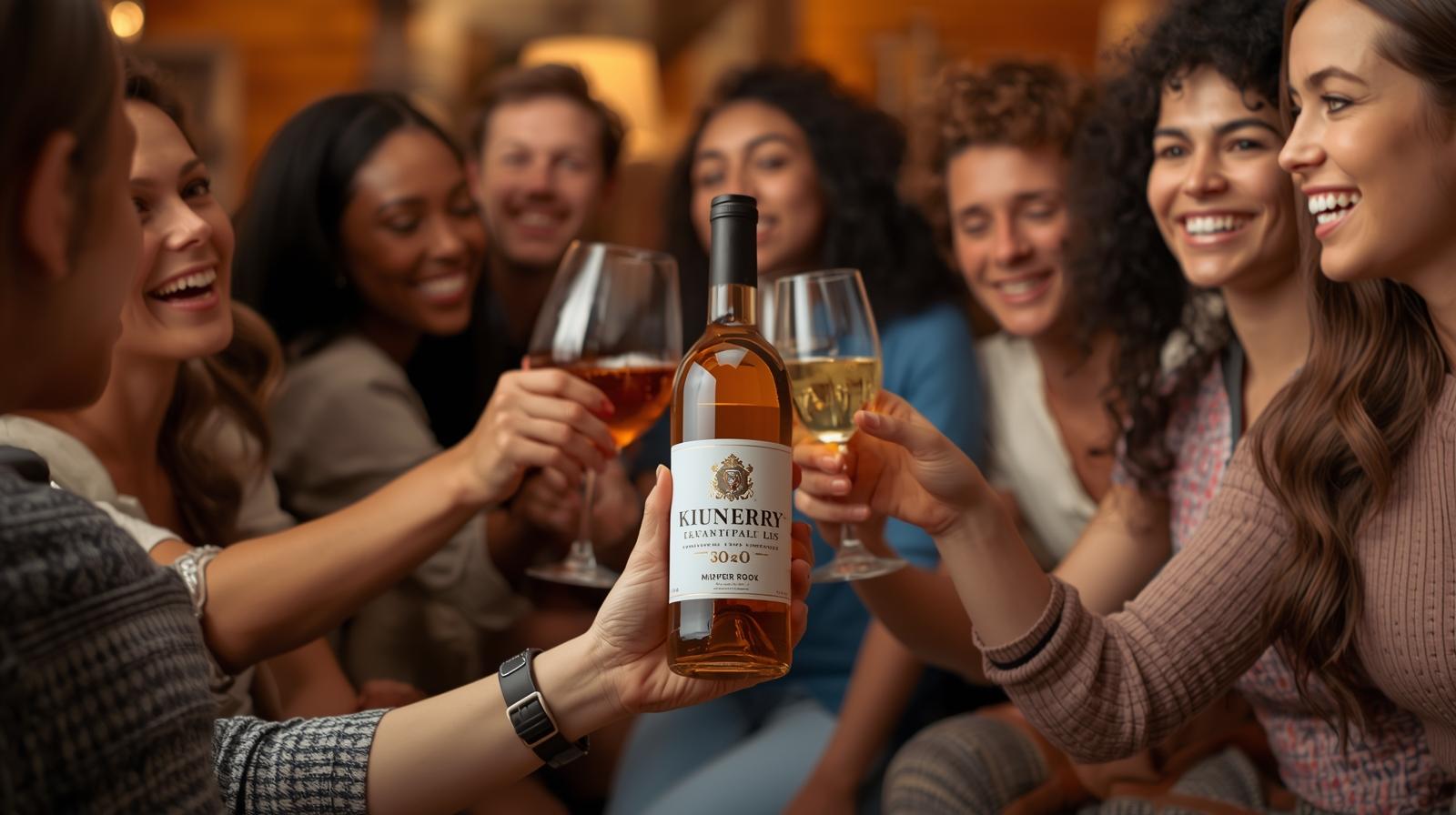
The non-alcoholic wine category has undergone a remarkable transformation in Australia, evolving from a niche market of questionable quality to a sophisticated sector producing world-class bottles that rival their alcoholic counterparts. In a striking validation of this progress, Australian producer Tread Softly claimed the title of Non-Alcoholic Wine of the Year at the 2025 London Wine Competition, while Edenvale won the prestigious 2024 International Wine & Spirit Competition Low and No Producer Trophy.
This is not the alcohol-free wine of a decade ago. Advanced dealcoholisation technology, significant investment from major producers, and a fundamental shift in consumer attitudes have converged to create a category that serious wine enthusiasts can no longer dismiss. The numbers tell the story: with more than one in three restaurant visits now alcohol-free, and the category representing one of the fastest-growing segments in the wine industry, Australia has positioned itself at the forefront of this global movement.
Understanding the Technology Behind Quality Non-Alcoholic Wine
| Technology | Process | Key Characteristics |
|---|---|---|
| Spinning Cone Column | Centrifugal force separates wine into aroma, alcohol, and body at low temperature (28-40°C) under vacuum | Preserves delicate aromas, two-stage process, widely used in Australia |
| GoLo Technology | Advanced single-pass system combining heating and cooling, separates into three components | More efficient than spinning cone, 50% less volume loss, better flavour retention, fossil fuel-free |
| Vacuum Distillation | Evaporates alcohol at low temperatures to prevent “cooking” the wine | Gentle on wine, maintains structural integrity |
| Reverse Osmosis | Filters wine to separate alcohol from flavour compounds, then recombines | Removes alcohol but can strip phenolics and tannins |
The quality breakthrough in non-alcoholic wine stems directly from technological advancement. The spinning cone column, pioneered in Australia and refined over two decades, uses centrifugal force and vacuum distillation to gently remove alcohol while preserving the wine’s essential character.
“We start by creating premium, full-strength New Zealand wine. Then, we use innovative spinning cone technology to gently distill the wine into three layers: aroma, alcohol, and the body of the wine. We collect the delicate aroma and recombine it with the body of the wine, adding just a touch of premium grape juice to produce our final blend,” explains the Giesen winemaking team, whose investment of over $1 million in specialised spinning cone technology has set new standards for the category.
The process operates in stages. First, wine passes through the column at low vacuum pressure (0.04 atm) and temperature (around 28°C) to recover ultra-light volatile wine aromas. This aromatic component is condensed and saved. The now-dearomatised wine then undergoes a second treatment at slightly higher vacuum pressure and temperature (around 38°C) to remove the alcohol. Finally, the saved aromas are recombined with the dealcoholised wine base.
The latest evolution, GoLo technology, represents a quantum leap forward. Edenvale’s world-first facility in the Murray-Darling region, commissioned in 2024 with a $5 million investment, showcases this breakthrough. “The GoLo separates wine into three parts, alcohol, dealcoholised liquid and essence, and then blends the essence back with the dealcoholised liquid to create the final alcohol-removed base wines,” the producer explains. The system loses 50 percent less wine volume than older technologies and returns more heavy aromatic essence to the final product for improved flavour.
Perhaps most impressively, the GoLo unit operates entirely without fossil fuels, powered by a heat pump that simultaneously heats and cools in one process. This reduces energy use by half compared to traditional spinning cone technology and produces 2,200 litres of wine per hour.
Treasury Wine Estates has followed suit, opening a $15 million in-house dealcoholisation facility in South Australia’s Barossa Valley in 2025. The facility features customised, exclusive GoLo equipment alongside proprietary processes that delicately handle the wine’s extracted essence. “The wine that goes through the process is separated into three components: dealcoholised wine, high-strength alcohol, and a smaller volume of liquid rich in aromas and volatile flavour compounds, which we refer to as the wine’s ‘essence’,” explains Group Winemaker Toby Barlow. “The end-to-end process is distinctly different to other dealcoholisation techniques because of the proprietary procedure to process and reintegrate the essence so it’s locked into the final reduced-alcohol wine.”
The Challenge of Replicating Wine Without Alcohol
The fundamental challenge in non-alcoholic wine production extends beyond simply removing alcohol. Ethanol comprises 12 to 15 percent of traditional wine and, while it has no distinct flavour, it provides crucial mouthfeel, body, and weight. Removing alcohol also removes perception of sweetness and bitterness while increasing perception of acidity and astringency. The heat shock of alcohol removal can strip away phenolics, tannins, and texture.
“Alcohol is also a component of the taste. Removing it will never result in a wine that tastes the exact same but doesn’t get you buzzed,” observes one industry expert. The art of non-alcoholic winemaking lies in calibrating the beverage once the alcohol is removed to restore aroma, mouthfeel, and body without adding excessive sugar or artificial flavours.
Not all wine styles adapt equally well to dealcoholisation. Generally speaking, acid-driven wines like fresh whites or sparkling wines can be dealcoholised with much more success than reds driven by their tannins. This explains why the most successful non-alcoholic wines tend to be sparkling varieties, crisp whites, and lighter-bodied reds.
Australia’s Leading Non-Alcoholic Wine Brands
Tread Softly Everything Except
Fourth Wave Wine’s Tread Softly claimed the ultimate validation when its Everything Except Pinot Noir 2024 won Non-Alcoholic Wine of the Year at the 2025 London Wine Competition, scoring an impressive 97 points. The wine displays aromas of cherry, plum, and warm spices with juicy fruit flavours complemented by soft tannins and a citrus lift.
“It’s great to have received multiple awards and medals at this year’s London Wine Competition. We see our zero brands as being leaders in quality and so it’s great recognition being named Non-Alcoholic Wine of the Year for our Tread Softly Pinot Noir,” said Fourth Wave Wine founder Nicholas Crampton. The range also includes Everything Except Rosé (93 points), Sauvignon Blanc, Shiraz, Pinot Grigio, and Prosecco.
The brand’s commitment extends beyond the bottle. For every case sold, Tread Softly plants an Australian native tree. To date, over 2.8 million trees have been planted in partnership with Carbon Neutral, creating the “Tread Softly Forest.”
Edenvale
Edenvale won the 2024 International Wine & Spirit Competition Low and No Producer Trophy, with judges noting: “Edenvale should win the IWSC Low & No Producer trophy for its groundbreaking 2024 dealcoholisation plant. This world-first, fossil-fuel-free facility, developed with GoLo technology, enhances wine flavour, reduces waste, and increases energy efficiency.”
The Premium Reserve Sparkling Shiraz earned a Gold medal and 98 points at the 2024 IWSC Alternative Drinks Judging. Described as “almost indistinguishable from a regular sparkling red,” the wine shows complex savoury Shiraz flavour with tangy blackberry, currant, and exotic spices.
Edenvale’s range spans the full spectrum from sparkling wines to whites, reds, and rosé, all sourced from certified sustainable vineyards. The producer has operated in the alcohol-removed wine space for 18 years, giving it unmatched expertise in crafting sophisticated zero-alcohol options.
McGuigan Zero
McGuigan has been perfecting dealcoholisation techniques for over twenty years and operates Australia’s most modern spinning cone column technology. The McGuigan Zero range has become the number one selling alcohol-free wine in Australia, New Zealand, and the United Kingdom.
“The importance of the base wine cannot be understated as it is a wine abundant with varietal flavours and aromas, made by our experienced and award-winning winemakers specifically for McGuigan Zero,” the producer explains. “More time and energy is spent on this stage of our signature method than any other to ensure, after the alcohol is removed, McGuigan Zero retains as much of the original wine’s varietal flavours and aromas as possible.”
The range includes Chardonnay, Shiraz, Cabernet Sauvignon, Sauvignon Blanc, Pinot Grigio, Rosé, Prosecco, Moscato, and Sparkling varieties. All wines are sourced from premium South Eastern Australian vineyards and crafted at the Buronga Hill winery, a state-of-the-art facility 100 percent powered by wind and solar.
Giesen 0%
New Zealand’s Giesen brothers brought their acclaimed winemaking expertise to the non-alcoholic category in 2020 with the launch of Giesen 0% Marlborough Sauvignon Blanc. The wine won Best Wine and Best White Wine trophies at Australia’s first Zero Alcohol Wine Show in 2022, with Giesen also claiming Best Winemaker.
“It is our absolute goal to produce 0% wines that taste like wine and not like grape juice, with as low calories as possible,” states the producer. Since 2020, Giesen has invested over $1 million in specialised spinning cone technology to achieve this goal.
The Giesen 0% range now includes Sauvignon Blanc (13 calories per 100ml, 1.3g sugar per 100ml), Pinot Gris, Rosé, Riesling, Sparkling Brut, and Premium Red. Each wine smells exactly like what you would expect of the variety, with vibrant, passionfruit-driven aromas for Sauvignon Blanc and crushed red berries with plum and toasted oak for the Premium Red.
Altina Drinks
Australian brand Altina has taken an innovative approach by creating dealcoholised wine with native Australian ingredients. The Sparkling Brut, made from dealcoholised wine with the addition of native peach, scored immediate success. “It is made in the style of a sparkling Chardonnay Brut wine and with less than 0.1g of fat and carbohydrate sugars, this more than aligns with me when I am trying to be good,” noted one reviewer.
The Finger Lime Sauvignon Blanc adds native Australian finger lime to dealcoholised Sauvignon Blanc, creating a unique dimension with just 17 calories per 100ml and 1g sugar per 100ml. “Light and lively,” with the finger lime adding a distinct citrus burst that sparks conversation.
Award Recognition and Critical Acclaim
The 2022 Winepilot Zero Alcohol Wine Show, Australia’s first wine show dedicated exclusively to zero-alcohol wines, established a framework for evaluating these wines on their own merits rather than as lesser versions of alcoholic wines. Five of Australia’s leading wine judges, including PJ Charteris, Mike DeGaris, Angus Hughson, and Annette Lacey MW, tasted through 49 wines across four classes.
“Zero alcohol and low alcohol is the fast-growing wine category and our judging showed that, at this moment in time, the larger wineries are leading the pack,” noted founder Angus Hughson. “It was also fascinating to see that some wine styles are better suited to zero alcohol than others and that some unusual styles, such as Sparkling Riesling, actually work very well in a zero-alcohol context.”
The 2025 Global Low and No Alcohol Wine Masters, judged in London, confirmed that sparkling wines dominate medal winners for no-alcohol wines. Four sparkling rosés received particular praise, with Edenvale from Australia earning a Silver medal. Tempus Two’s Zero Pinot Grigio was awarded Gold, while Edenvale’s Expedition Series Verdejo Sauvignon Blanc, Kim Crawford’s Illuminate Sauvignon Blanc 0%, and other Australian producers earned Silver medals.
Perhaps most significantly, international competitions now judge Australian non-alcoholic wines against global counterparts. The 2025 London Wine Competition placed Tread Softly’s Everything Except Pinot Noir above entries from France, Spain, Italy, Germany, and other established wine regions, a remarkable achievement that signals Australian producers have mastered this challenging category.
What Australian Drinkers Need to Know
The Australian non-alcoholic wine market has reached critical mass. Restaurant Botanic in Melbourne won Australia’s Best Non-Alcoholic List for the second consecutive year in 2025, with judge Peter Forrestal praising the establishment’s commitment to serious zero-alcohol options. This restaurant recognition reflects broader industry acceptance that non-alcoholic wine deserves the same respect as traditional wine.
For consumers navigating this category, several factors distinguish quality from mediocrity. First, look for wines that start as fully fermented wine before dealcoholisation rather than simple grape juice. Second, check the production method. Spinning cone or GoLo technology generally produces superior results compared to reverse osmosis. Third, examine the base wine quality. Premium producers like McGuigan, Edenvale, and Tread Softly invest heavily in the quality of wine before alcohol removal, understanding that garbage in equals garbage out.
Calorie and sugar content vary significantly across brands. Giesen 0% Sauvignon Blanc contains just 13 calories per 100ml (80 percent fewer than traditional Sauvignon Blanc) with 1.3g sugar per 100ml. Altina Sparkling Brut offers 17 calories per 100ml with less than 0.1g sugar. By comparison, traditional wine contains 80 to 120 calories per 100ml.
Legal classification requires wines labelled “non-alcoholic” or “alcohol-free” to contain less than 0.5 percent ABV (alcohol by volume), similar to the amount found in fresh fruit juice and ripe bananas. Some wines marketed as “zero alcohol” may contain trace amounts up to this legal limit, which is important for those abstaining for religious or medical reasons.
The price point for quality non-alcoholic wine typically ranges from $8 for entry-level options like Lindemans Alcohol Free Semillon Chardonnay to $25 for premium bottles like Thomson & Scott Noughty Sparkling Chardonnay or Altina’s range. This pricing reflects the additional production costs of dealcoholisation without removing the expense of growing grapes and initial winemaking.
Where the Category is Heading
Australia’s investment in non-alcoholic wine technology and infrastructure positions the country as a global leader in this rapidly expanding category. Treasury Wine Estates’ $15 million facility, Edenvale’s world-first sustainable plant, and McGuigan’s two decades of refinement demonstrate that major producers view this as a long-term strategic priority rather than a passing trend.
The technology continues to evolve. GoLo represents a significant advance over traditional spinning cone columns, but producers are already working on next-generation systems that promise even better flavour retention and efficiency. CSIRO’s patented technology for reducing fermentable sugar in grape juice before alcoholic fermentation offers another approach entirely, potentially creating lower-alcohol wines without the sensory changes that dealcoholisation can cause.
Consumer acceptance is the real story. Wine critics who dismissed non-alcoholic wine as undrinkable just five years ago now acknowledge that the best examples can legitimately replace alcoholic wine in most contexts. The category has moved beyond pregnant women and designated drivers to include health-conscious consumers, those moderating alcohol intake, and anyone seeking variety in their drinking choices.
The restaurant industry’s embrace, evidenced by sophisticated non-alcoholic lists at top establishments, signals that sommeliers recognise quality when they taste it, regardless of alcohol content. As Carolina Seibel, assistant head sommelier at Petrus, notes: “People always ask about no and low.”
For Australian wine producers, the non-alcoholic category offers opportunity at a challenging time for the broader industry. Export markets increasingly favour lower-alcohol options due to health trends and taxation structures that penalise higher-alcohol wines. Climate change pushes grape sugar levels higher, making dealcoholisation technology useful even for producers focused on traditional wines who need to adjust alcohol levels downward.
The fundamental question has shifted. A decade ago, the industry asked whether non-alcoholic wine could ever taste good. Today, with Australian producers winning international awards and major wineries investing millions in dedicated facilities, the question is which styles and techniques will define excellence as the category matures. Based on current trajectory, Australian producers will play a central role in answering that question.
 Shiraz
 Cabernet Sauvignon
 Pinot Noir
 Grenache
 Merlot
 Red Wine Blends
 Chardonnay
 Riesling
 Pinot Gris
 Semillon
 Viognier
 Grenache Rosé
 Pinot Noir Rosé
 Shiraz Rosé
 Sangiovese Rosé
 Aglianico Rosé
 Clairette Rose
 Champagne
 Prosecco
 Sparkling Shiraz
 Blanc de Blanc
 Blanc de Noir
 Pet Nat
 Moscato
 Topaque
 Port
Port Sherry (dry & sweet)
 Muscat & Tokay
 Vermouth